
Sludge Conditioner and PAM: Dose Order and Cake Checks
Sludge conditioner and PAM are often bought as a pair and then treated as one "dewatering chemical." That is usually where the trouble starts. The cake turns sticky and blinds the cloth, or the flocs stay weak, the filtrate runs dirty, and the cake never dries. The conditioner changes charge, pH and structure; the polymer then bridges the prepared solids into flocs the machine can dewater. The test is cake release, moisture and filtrate, not the stroke setting on a single pump. Lime and ferric rates are covered in sludge conditioning with lime and ferric. This article stays on how sludge conditioner and PAM should be sequenced, where the quills belong, and how to read the cake.
What each chemical is actually doing
A sludge conditioner is usually lime, a ferric or alum salt, or a proprietary blend. Its job is to move charge and pH into a workable window so a flocculant has something to grab. PAM is the high-molecular-weight flocculant. It takes already-conditioned particles and builds flocs large enough for a belt press, a screw press or a decanter.
Some plants assume that once lime or ferric is in the sludge, polymer can be cut or dropped. Most municipal and industrial sludges do not work that way. A conditioner rarely grows a floc that can go straight onto the machine. Polymer alone, with charge and pH still off, usually burns a high dose and still makes small, weak flocs. The two reagents complement each other; one does not replace the other. Typical polymer ranges are in polymer dosage ranges. The actual dose still has to be set from the sludge and the cake.
Do not make the two solutions down in one tank. Ferric, lime slurry and a PAM solution will form gels or precipitates where they meet, and the mess ends up in the pump head and the tubing. Use two tanks, two metering pumps and two lines for sludge conditioner and PAM.
How to sequence sludge conditioner and PAM
There is really one order that holds up: add the sludge conditioner and PAM only after the conditioner has had time to mix and react. Charge and pH do not snap into place at the instant the quill discharges. If the polymer arrives too early, part of it adsorbs on particles that are not ready, and later conditioner cannot repair flocs that have already been sheared or tightly wrapped.
Residence time on the drawing is not the same as contact in the tank. Dead zones or a mixer that is too weak or too violent will leave some sludge untreated and some already over-sheared. Disperse the conditioner in a tank or an in-line mixer, check that pH or charge has entered the window, then send the sludge to the polymer point. Polymer mixing should be hard at the instant of injection, then gentle. Machine-specific points are in belt filter press polymer dosing and screw press polymer dosing. The conditioner quill stays upstream of the polymer quill, with enough time between them to react. If the order is reversed, operators often keep raising the polymer dose while the sludge still will not floc, or the flocs look large and then fall apart on the machine. Before you change polymer grade, check the sequence and the spacing of sludge conditioner and PAM.
Feed points for sludge conditioner and PAM
Place the conditioner early: into a conditioning tank, mid-way along the sludge line, or on the discharge from a thickener, as long as mixing can finish downstream. The quill should sit in the main flow, not in a stagnant layer along the wall.
The polymer point should sit closer to the dewatering machine. Too far upstream, flocs are sheared in elbows and in a feed pump. Too close, the polymer has not dispersed, and the cake shows both starved patches and overdosed streaks.
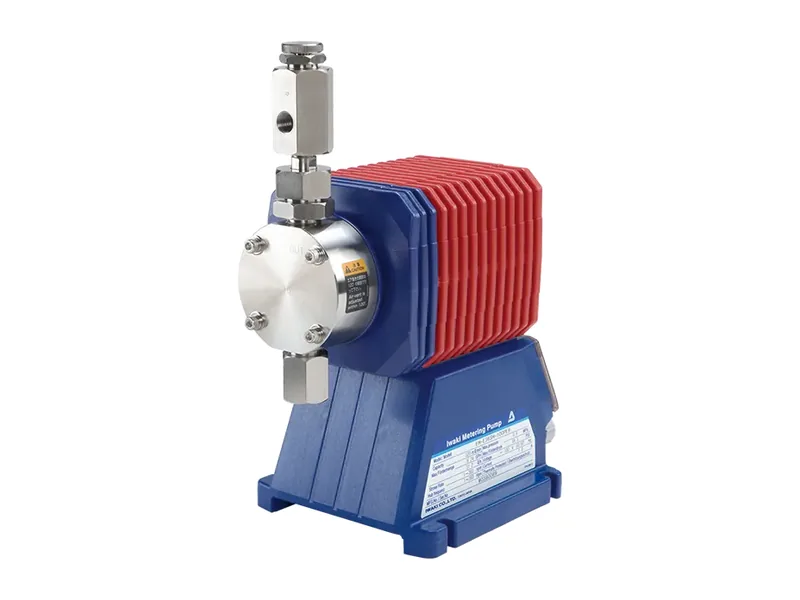
Do not tee both lines into one unisolated header, and do not dose both chemicals with one pump and a change-over valve. Residue of sludge conditioner and PAM left in the head and the tubing will spoil the next chemical. Liquid duties can use separate solenoid diaphragm metering pumps. IWAKI electromagnetic diaphragm pumps are a common choice for these modest flows where frequency is adjusted during a trial. Confirm the wet-end material against the actual reagent. Product pages are on IWAKI and the metering pump category. Send the sludge flow, the solution strengths and the number of injection points, and we can check the pump selection.
How to read the cake when sludge conditioner and PAM are in use
Do not rely only on a dryness reading on the panel. Check the result in this order:
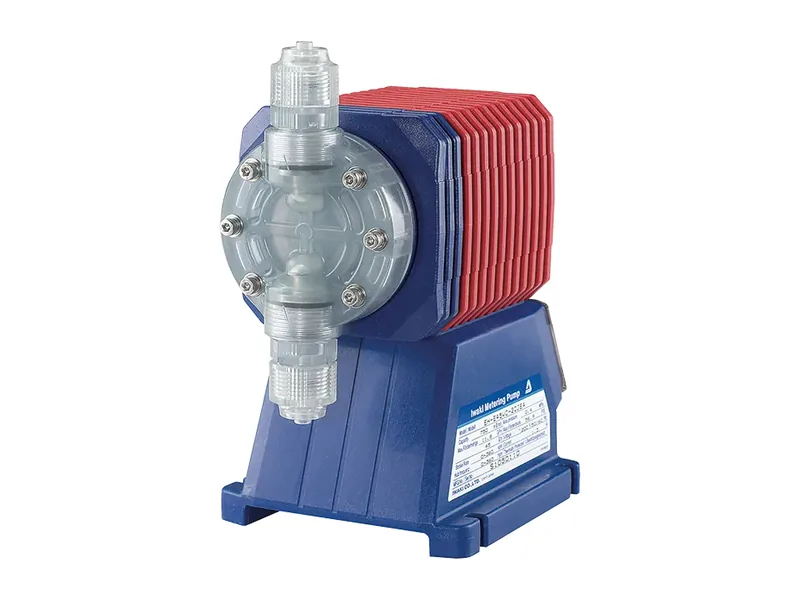
Figure 1: IWAKI EH-E VC electromagnetic diaphragm metering pump. Image source: IWAKI official website
- Look at the floc just before the machine: is it uniform, brittle or stringy?
- See whether the cake releases from the cloth or the screw, and whether the break face is still wet inside.
- Check whether the filtrate is clear and whether it feels sticky.
When sludge conditioner and PAM are working together, flocs are fairly uniform, the cake lifts off the cloth, and the break face is not glossy or stringy. Filtrate should be clear or only slightly cloudy, and it should not feel sticky.
If the conditioner dose is short, polymer use climbs and the flocs stay small. The cake is soft and wet, and the filtrate carries fines. If the conditioner is overdosed, pH leaves the working range of the polymer, flocs become brittle, and the cake surface looks pale and hard while the inside is still wet. Polymer overdose makes a sticky, stringy cake and a viscous filtrate. Cut the polymer first and watch. Do not add more sludge conditioner and PAM in the hope of "neutralising" a sticky cake. Change only one reagent at a time, and write down sludge quality, flow and both stroke settings. When you sample, wait a minute or two; in the first seconds after polymer injection the floc is still growing.
Conclusion
Feed sludge conditioner and PAM from separate tanks, in that order: condition, allow reaction time, then add polymer at a point with lower shear. Keep the quills one after the other, and do not share pipe, pumps or tanks between sludge conditioner and PAM. Judge the result by the cake, the filtrate and the floc entering the machine, and trim doses against the sludge in front of you. Send the sludge flow, the conditioner and polymer strengths you use now, and the type of dewatering machine, and we can review the two metering pumps for flow, materials and injection points.
FAQ
Can sludge conditioner and PAM be made down in the same day tank?
No. The two reagents will react or gel in the tank, which wastes active ingredient and can block the pump. Use separate tanks, pumps and lines, and let them meet only in the sludge, in sequence.
If we already add lime or ferric, do we still need polymer?
On most sludges, yes. The conditioner changes charge and structure; the polymer grows the floc to a size the machine can handle. Whether you can cut the polymer dose is a cake and filtrate question, not a question of whether conditioner was added.
The cake is sticky and wet. Do we change the conditioner or the polymer first?
Read the filtrate and the floc. Sticky filtrate and a stringy cake: cut polymer first. Small flocs, dirty filtrate and a soft cake that does not string: check the conditioner dose and the pH window. Change only one chemical at a time when you are tuning sludge conditioner and PAM.
How much pipe or tank volume is needed between the two points?
There is no single length that fits every plant. On the conditioning side, mixing should be even and pH or charge should be in the window. On the polymer side, the floc should have grown but should not be sheared to pieces before the machine. After you change the spacing, still judge by the cake.
Can one metering pump dose both chemicals by switching?
We do not recommend it. Residue in the head and tubing spoils the other reagent, and the dose is unstable during the change-over. Liquid sludge conditioner and PAM should each have its own metering pump running continuously.