
How to Reduce Chemical Consumption at the Dosing Point
You do not reduce chemical consumption just by turning the stroke knob down a notch. In many plants the chemical is wasted because the injection point sits in a dead zone, the pump keeps a fixed stroke while the flow changes, or coagulant and polymer are added in the wrong order and the operator keeps turning both pumps up. This article is for operations and process staff at a water or wastewater plant. It stays on injection points and control methods that use less chemical, not on usage logs or on cutting power.
Move the injection point first if you want to reduce chemical consumption
Once the chemical is in the water, it needs time and space to disperse and react. If the injection point is late, against a wall, or close to an outlet weir, the dose leaves before it has mixed. The effluent looks poor, and the shift turns the stroke up. The amount was not low; it never opened out. To reduce chemical consumption, move the injection point into water that will carry the chemical, before you raise the dose.
Coagulant belongs at a static mixer or on the inlet pipe, with a short but real mixing time before flocculation or settling. Polymer should follow after microfloc has started to form: too close, and the floc is sheared; too far, and it never grows. Placement is covered in how to choose a coagulant dosing point. Do not fire the injection line at a wall or a corner. The injection valve should reach into the main flow.
The same raw water, dosed after a static mixer instead of at the clarifier inlet, can often run at a lower dose and still give a clearer supernatant. The first step when you want to reduce chemical consumption is to let the chemical you already add actually work.
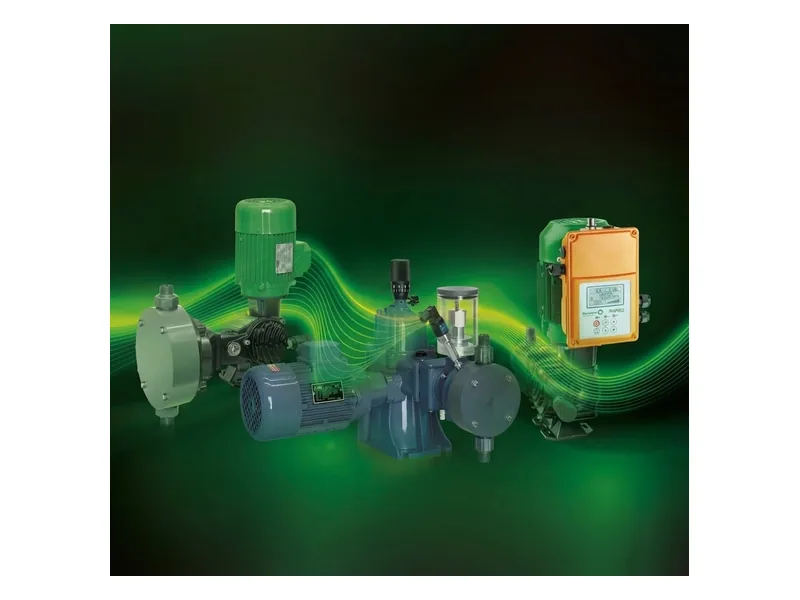
A Doseuro mechanical diaphragm metering pump is often used for this kind of continuous feed. Match the liquid end to the chemical, and fit a back-pressure valve so a low-resistance line cannot siphon extra product. The range is on the Doseuro product page.
A fixed stroke wastes chemical when the flow moves
In a plant whose flow swings through the day, a fixed stroke almost always uses too much chemical. At low flow the same stroke pushes the unit dose up; at high flow it may not be enough. To reduce chemical consumption, pace the pump to flow with pulses or an analog signal from a water meter or flowmeter. Wiring and settings are in pulse water meter proportional dosing.
Flow pacing is not the same as turning the stroke down. It keeps the dose in step with the water being treated. If the signal drops out or the meter stops, the pump may stop, or it may freeze at the last frequency. Both failure modes have to be decided in advance, so a low-flow period does not keep running at a peak setting. A reliable residual, turbidity or pH instrument can trim the dose, but the instrument has to be checked. A drifted probe will push chemical the wrong way.
If flow and quality are steady, a fixed stroke can work, but it is usually sized for the peak and will run rich at low flow. If flow rises and falls through the day, pacing saves chemical. If quality also moves, and the instruments are trustworthy, add feedback last. Get the injection point right, then pace to flow, then add feedback. Do not build a complex loop that still doses into a dead corner.
Wrong order makes it harder to reduce chemical consumption
If PAC and PAM are reversed, or the two injection points are too close, the floc is poor, and the first reaction on the shift is to turn both pumps up. That will not reduce chemical consumption. It will make the water sticky. Sequence and spacing are in PAC and PAM dosing sequence. Polymer doses should stay modest, and sludge dewatering is not the same range as clarification; typical bands are in polymer dosage ranges.
Coagulants also have a pH window. If alkalinity is low or pH is off, more PAC will not grow a floc. Adjust pH or change the chemical, rather than keep adding. In winter, colder water and higher viscosity slow mixing, and it can look like "not enough chemical" when the reaction is simply slower. Improve mixing or give the reaction a little more time before you open the stroke.
On a duty/standby pair, the standby pump may still be sitting at a high stroke. After a changeover the unit dose jumps. Check the standby against the current flow before you switch, and do not treat a "just in case" high setting as the normal value.
How to tell the dose is already enough
To reduce chemical consumption you need a "that's enough" rule, not a habit of adding more whenever the water still looks cloudy. A jar test on that day's raw water is the most direct check. Do not copy a neighbour's number. Watch supernatant turbidity, floc size, and how the filter or press behaves. Once the floc is tight and the supernatant is clear, more chemical is usually waste. A sticky cake or a belt that will not wash often means too much polymer.
A workable order is:
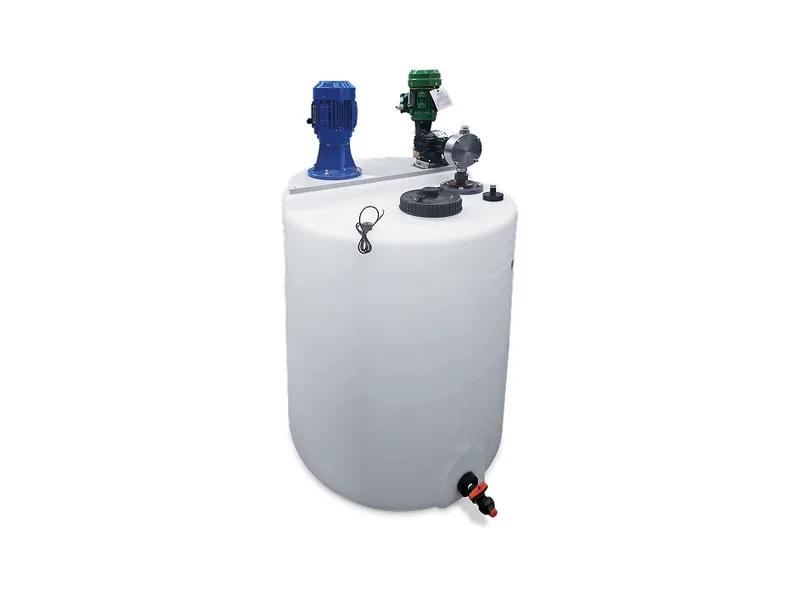
Figure 1: Doseuro dosing tank with mixer and pump. Image source: Doseuro official website
- Check that the injection point is in the main flow and that mixing is adequate
- Then check that the control mode follows flow
- Then check sequence and pH
- Only then touch the stroke, and treat it as a small trim Before you move an injection point or break an injection valve on a corrosive or oxidizing chemical, depressurize and use the right protection. Do not open a line under pressure.
Conclusion
You reduce chemical consumption by putting the injection point where mixing can happen, by replacing a long-term fixed stroke with flow pacing or a reliable residual trim, and by deciding the dosing order and a clear "enough" rule. The stroke knob is the last trim, not the first move. Send us the flow range, injection points, chemicals and control mode, and we can look at where a cut is most likely when you contact us for selection.
FAQ
Will turning the stroke down by itself reduce chemical consumption?
Usually it is not the main method. If the injection point is still in a dead zone, or the unit dose rises again when flow changes, the effluent will bounce back. Move the point and the control mode first, then trim the stroke if you want to reduce chemical consumption.
If there is no water-quality instrument, can flow pacing still reduce chemical consumption?
Yes. In a plant whose flow swings, pacing is often leaner and steadier than a fixed stroke. Without a residual or turbidity meter you can still get the dose in step with the water, then close it with lab checks and jar tests.
PAC is already high and the water is still cloudy. Should we add more?
Not yet. Check the injection point, mixing, pH and whether the polymer is in the right place. Too much PAC can make the water worse to settle. Adding more rarely helps you reduce chemical consumption, and it can spoil the flocculation that follows.
After the injection point is moved, can the old stroke still be used?
Usually you should repeat the jar test and recalibrate under the new mixing conditions. The same stroke may already be high. Start a little low, then trim against the supernatant, rather than keep the old setting.
If the pacing signal is lost and the pump keeps running, will the dose overshoot?
It can. Agree in advance whether a lost signal stops the pump or returns it to a conservative low frequency, rather than leaving it at the last peak. If that rule is missing, one fault can wipe out the work done to reduce chemical consumption.