
Potassium Permanganate Dosing: Dissolve, Materials, Lines
Potassium permanganate dosing is a pre-oxidation feed on raw water, used to take down odour, some organics and a share of the load on later processes. It is not an ozone plant, and this article is not a general survey of every pre-oxidant. Three points decide whether the dose will run: the solid must be dissolved and clarified before it reaches the pump; the liquid end and the pipe must resist an oxidizer; and manganese dioxide will drop out in the line, so the pipe has to be flushable. This article is for operations and equipment staff at a water works, or any plant that uses permanganate ahead of clarification.
Dissolve first, then start potassium permanganate dosing
Most potassium permanganate arrives as a solid or a crystalline product. Do not pump a slurry that still holds undissolved crystals. The check valves and the liquid end will seize or score quickly. Dissolve the solid in the day tank until no crystals remain, let it stand or pass it through a filter, and pump only the clear supernatant. Do not make the solution stronger than you need. A rich make-down is harder to finish and more likely to throw solids later. The arithmetic for a solid make-down is in how to calculate chemical dilution.
Use reasonably clean dissolving water, and avoid a diluent loaded with reducing matter. Make the solution for the shift or the day, rather than leaving it on the tank floor for a long period. Do not stir bottom sludge and manganese dioxide back into the suction. The suction side of potassium permanganate dosing should have a strainer, and that strainer should be cleaned on a schedule. If the mesh is black or stiff, clear it before the pump loses prime.
Check these items before the pump is started:
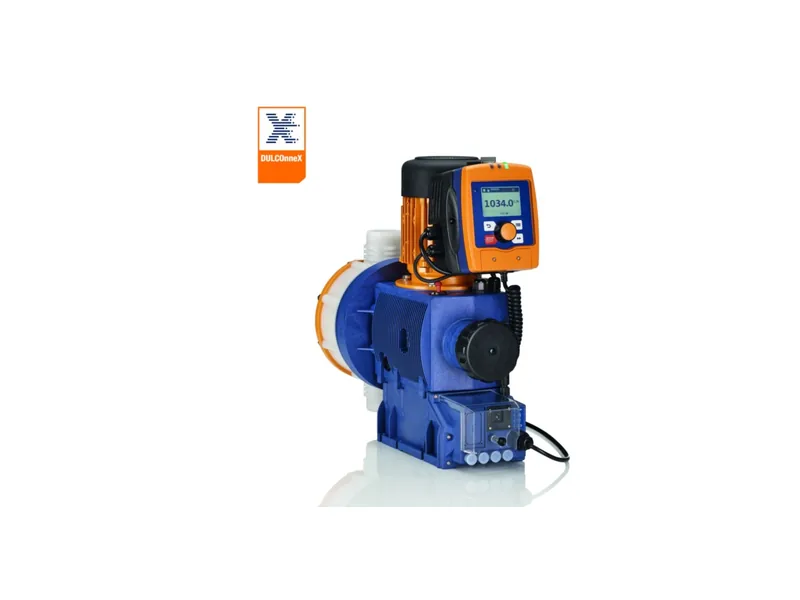
Figure 1: ProMinent Sigma/X S3Cb motor-driven metering pump. Image source: ProMinent official website
- The solid is fully dissolved, with no crystals visible
- The solution has been settled or filtered, and only the clear liquid will be pumped
- The suction strainer is in place and is not blinded by deposit
- Bottom residue is drained separately and does not enter the metering pump
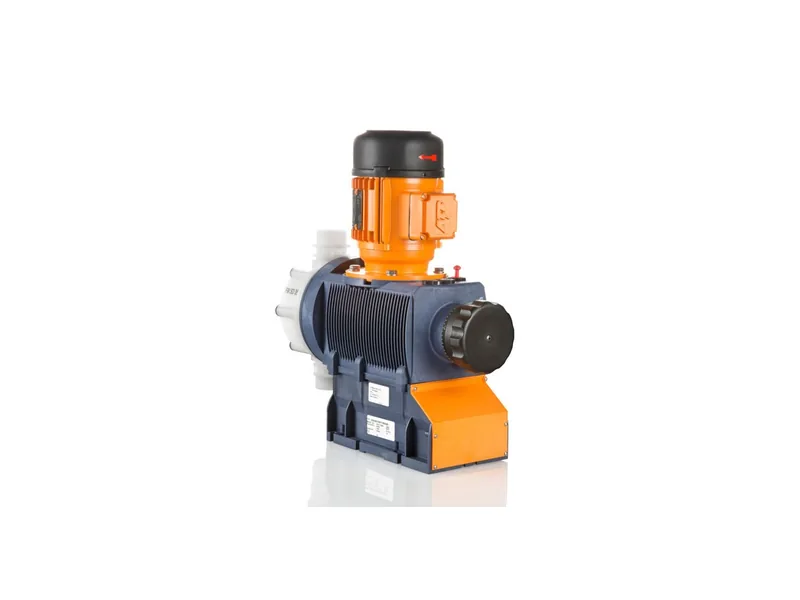
A motor-driven diaphragm pump such as a ProMinent Sigma is often used for continuous plant feed. The liquid end has to be chosen for an oxidizing chemical. The range is on the ProMinent product page.
Materials and pipework for potassium permanganate dosing
Potassium permanganate is a strong oxidizer. Ordinary stainless steel, some elastomers and the wrong plastics age, crack or oxidize quickly. The head, diaphragm, valve balls, seals and tubing have to be checked against a compatibility table for oxidizing service. How to read that check is in chemical compatibility in dosing lines. A fluoropolymer head with an oxidant-rated diaphragm is a common field choice, but the manufacturer's medium list is the authority. Do not assume that a liquid end which once fed hypochlorite is automatically acceptable.
The discharge line also has to resist oxidation, and it should be kept short, with few low points. Manganese dioxide settles in those lows. If the line is not flushed, the bore narrows, flow falls and pressure rises. The injection valve should check back-flow so raw water cannot run into the chemical line. If potassium permanganate dosing shares a trench or a manifold with chlorine, a reductant or another reagent, keep the systems strictly separate.
The injection point is usually in the pre-oxidation stretch ahead of flocculation or settling. That is not the same system as later chlorination. Plant chlorination points are covered in pre-chlorination and post-chlorination feed points. Do not tee permanganate into a chlorine line.
What to check when the line blinds or the colour goes wrong
The most common field problem in potassium permanganate dosing is not a failed pump. It is manganese dioxide in the pipe, or crystals that reached the head. If flow falls, check the strainer, the injection valve and the low points before you pull a diaphragm. If the solution is cloudy and the tank has a brown deposit, the make-down or the storage has gone wrong. Clean first, then resume potassium permanganate dosing.
A clear pink in the water or in the pipe often means the dose is high or mixing is poor. Lower the stroke and check that the injection point sits in the main flow. Brown staining is usually manganese dioxide. Plan a flush, or a clean that matches the chemical and the pipe material. Do not scrape the head with a steel brush. Once crystals have been through the pump, a check valve may no longer seat, and the flow will wander or the liquid will fall back.
In winter, solubility drops, and the same make-down may not finish. It is better to make a weaker solution more often than to run with crystals still in the tank. Before you sample, open a tank or break a line, depressurize, wear protection, and keep powder dust and splashes off skin and eyes.
Safety around potassium permanganate dosing cannot be casual
Potassium permanganate is a strong oxidizer. Do not store it with organics, oils or reductants, and keep dissolving tools for this chemical only. Dust and strong solutions irritate skin, eyes and the airway. Provide ventilation and protection when you make down the tank. Do not heat the mix to an undocumented high temperature to "speed it up", and do not tip large amounts of dry powder in a tight room.
Any combination with an acid, a coagulant or another oxidizer has to follow compatibility and sequence. Do not improvise a blend in the same tank or the same pipe. Spills should be collected as an oxidizing solid or solution, not covered with an ordinary organic absorbent. Keep the motor and the terminals dry, and keep solution off the electrics.
Conclusion
Potassium permanganate dosing works when the solid is dissolved and clarified before the pump, when the liquid end and the pipe can resist an oxidizer, and when the line can be flushed of manganese dioxide. It is not a substitute write-up for ozone or for chlorination. Send us the raw-water duty, the planned injection point, the liquid-end materials you have and the way you make down the tank, and we can look at the pump and the pipework when you contact us for selection.
FAQ
Can potassium permanganate dosing be done by pumping the suspension in the dissolving tank?
No. Wait until the crystals are gone, and pump only the clear liquid. A suspension will jam valves and score the diaphragm in a short time. A strainer is not a licence to pump while the solid is still dissolving.
Can a pump that used to feed hypochlorite be switched to potassium permanganate dosing?
Not automatically. Both are oxidizers, but the compatibility lists are not always the same, and residue in the pipe can still react. Recheck the head, diaphragm, valves and tubing for permanganate, and flush the old system thoroughly before you change over.
If the pipe turns pink or brown after potassium permanganate dosing, what is going on?
Pink often means the dose is high or mixing is poor. Brown is usually manganese dioxide on the wall. Cut the dose, check the injection point and the strainer, then plan a flush. Do not treat every colour change as a sudden shift in raw water.
Can a made-down solution sit in the tank for several days before potassium permanganate dosing?
Long storage is a poor idea. The solution slowly decomposes, solids drop out, and the strength drifts from the make-down value. A shift-wise or daily batch is more stable. Do not pump the bottom deposit.
Should potassium permanganate dosing share a pump or a line with chlorine?
No. Keep the two chemicals, and the two injection points, on separate pumps and separate valves, so they cannot be mixed by mistake and cannot react with residue. Chlorination points are a different line of work. Do not connect permanganate into a chlorine pipe.