
Chemical Compatibility in Dosing Lines: What Must Not Be Mixed
Chemical compatibility in a dosing system is about whether two or more reagents may meet in storage, in a pipe or at an injection point. The fact that a process can use them in sequence does not mean they may share one pipe, one drum or one quill. General reminders include: sodium hypochlorite should not be mixed with acids or reducing agents, and PAM should not be mixed carelessly with high-valence metal salts in the same place. Those lines are only reminders. The incompatibles in that product's safety data sheet still govern, and this page gives no formula figures.
How to check chemical compatibility, without memorising a ratio
The first step is to read the incompatibles and stability sections of the safety data sheet, then compare them with the other chemicals and cleaners already on site. A similar trade name may have a different additive, so another brand's habit is not a substitute. PAC and PAM dose order is in PAC and PAM dosing sequence. That is a process sequence, and it is still not a reason to pour both into one drum. Hypochlorite site safety is in sodium hypochlorite dosing room safety.
Wetted materials should be read at the same time, in head and valve-ball materials. A material that resists one chemical may not resist a mixture, and it certainly does not mean the two chemicals may mix before the pump. If chemical compatibility is unclear, do not "try a little" inside a pipe.
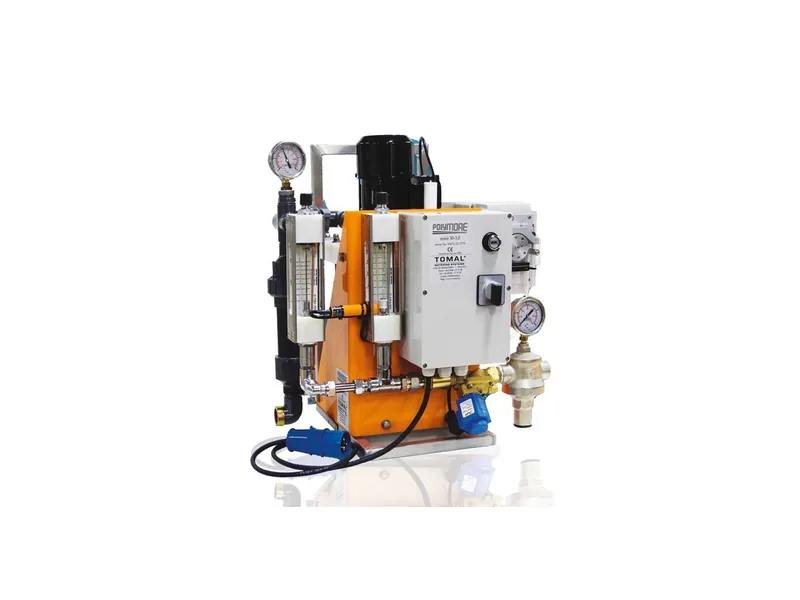
A ProMinent POLYMORE unit is a polymer make-up system. The official photograph only shows that polymer is often prepared on its own path; it does not mean the unit may share a pipe with any flocculant. Polymer and metal salts should usually be dosed on separate lines, and they should meet only at a process-allowed point, not early inside a dosing hose. That is a chemical compatibility choice as much as a process choice.
Risks in a changeover, a shared pipe and a shared injection point
When the chemical in a system will change, use a short list like this:
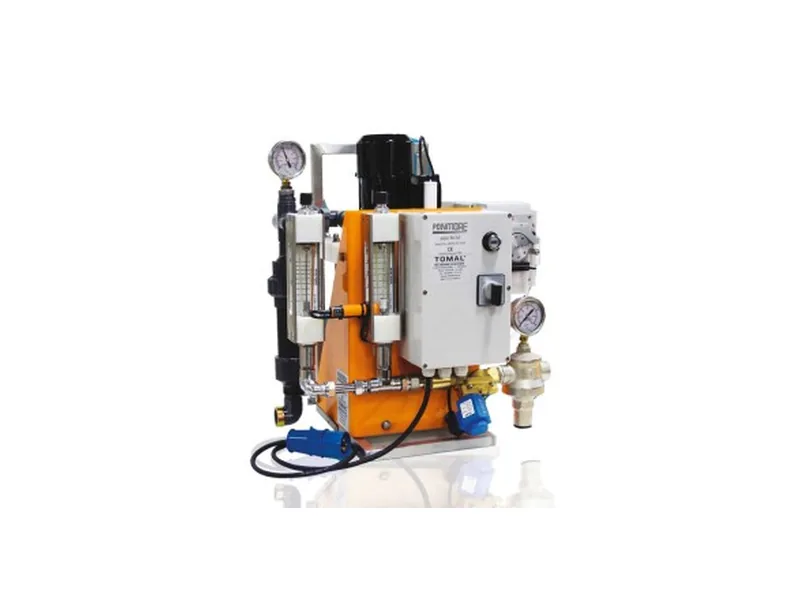
Figure 1: ProMinent POLYMORE polymer preparation unit, shown as a separate polymer make-up path. Image source: ProMinent official website
- Drain the old chemical, then flush the pump, valves and pipe with compatible water or an agreed cleaner, following dosing line flushing;
- Change labels and setpoints so the next shift does not dose the new chemical at the old strength;
- Do not let incompatible chemicals share one discharge line or one injection valve if you can avoid it. If they must share, you need a reliable isolation and flush, and you should assess the residual-reaction risk.
A shared injection point looks like a saved valve, but if two chemicals meet inside the valve or the short pipe, crystallisation, heat or gas can follow. Separate them if you can. Storage areas are part of the same chemical compatibility rule; do not run one rule in the tank farm and a conflicting one on the pipe rack.
How to keep the rule on the floor
Write a clear list of which chemicals may not share a pipe, a drum or an injection point, put it in the dosing room, and update it with the safety data sheet version. A new chemical should complete a chemical compatibility check before any hose is connected. If a mix-up occurs, follow the emergency steps for those products, then find whether a label, a valve or a habit was at fault.
The list should change as products enter and leave the plant. Remove a withdrawn product from the shared-pipe drawing, and check a new product before hook-up. A drawing that does not match the valves is a common reason a valve is opened in error. When you train a new person, point to the actual pumps, drums and quills that must stay apart, rather than only reciting a principle. Temporary hoses during maintenance often connect two lines that were meant to stay apart, so assess chemical compatibility again before a temporary tie-in. If a label has fallen off or a colour code is unclear, restore it before you operate. Lab reagents and cleaners belong in the same check, not only the large process drums. If a sink or a drain can receive different residues, ask whether they will meet downstream.
If you want the list or the isolation checked, send the chemicals in use and the pipe routing, and contact us. Any isolation advice will be based on the documents you provide, not on a recipe written here. Equipment types are listed under ProMinent. Whether a mix is allowed still depends on the product file and a process review. Chemical compatibility has to live on the pipe and the post, not only on a poster.
Conclusion
Chemical compatibility should be checked from the incompatibles in the safety data sheet. General reminders are not a recipe. Flush and relabel on a changeover, and do not share a pipe or an injection point if you can keep them apart. PAM with metal salts, and hypochlorite with acids or reducing agents, are among the groups that usually need their own path, but the product file still decides. Put the keep-apart list on the pipework and the post, and a mix-up is less likely in a busy shift. Used that way, chemical compatibility is a practical isolation rule, not a set of made-up ratios.
FAQ
If two chemicals are used together in the process, does that mean chemical compatibility is already settled?
No. A process may allow them to meet in the water in a set order, and still forbid a premix in a dosing pipe or a tank. Write both the order and the isolation.
What happens if I change chemical without a complete flush?
Residual may react with the new product and form a solid, a gas or a corrosive mix. Finish the flush, and confirm that labels have been changed, before you start.
Why does this page give no mixing ratios?
A ratio belongs to a named product and a process condition, and a single set of numbers would be used in the wrong place. Chemical compatibility is about whether two substances may meet, not about a formula.
If two chemicals share an injection valve, is a check valve enough?
A check valve can reduce backflow; it is not a reason to mix. Incompatible chemicals should still have separate valves and pipes if you can arrange it.
If a new cleaner arrives, do I need another chemical compatibility check?
Yes. Cleaners can also react with residual product. Any liquid that will enter a dosing pipe or a tank should be brought into the same check.