
Nitrate Probe Use in Denitrification and Carbon-Source Control
A wastewater plant that must take nitrate down in the anoxic zone will under-dose carbon if the feed is shy, and will waste chemical and raise effluent COD if the feed is heavy. A nitrate probe exists to give an online nitrate trend in the anoxic zone or at the effluent, so the carbon-source pump and internal recycle have something to follow. It does not fully replace a standard laboratory method. Probe types include ion-selective electrodes and ultraviolet absorbance, and their maintenance and interferences differ. This note is for process and instrument technicians. Carbon-source dosing is in methanol carbon dosing. The link between aeration and the anoxic zone is in aeration basin DO control.
Where a nitrate probe should sit for denitrification control
Nitrate at the front of the anoxic zone, at the end of that zone and in the secondary effluent is not the same number. The front shows the load entering the zone, the end shows how much remains after the stage, and the effluent is closer to the permit point. When a nitrate probe is used to trim carbon, the more useful location is usually the end of the anoxic zone, or a point where denitrification has had time to work, with an effluent lab check as a correction. If the only probe sits on the influent or in the aerobic tank, the pump will dose methanol against a number that does not match the reaction.
Keep the mounting off bubbles, scum and a direct recycle jet. Flow-through and immersion fittings both need the face to be renewed by flow and not wrapped in sludge. A UV nitrate probe is sensitive to a dirty window; an ion-selective electrode is sensitive to interfering ions and a failing reference. Neither has a short maintenance interval. Changes in sludge concentration also affect some optical probes; see MLSS sensor selection.
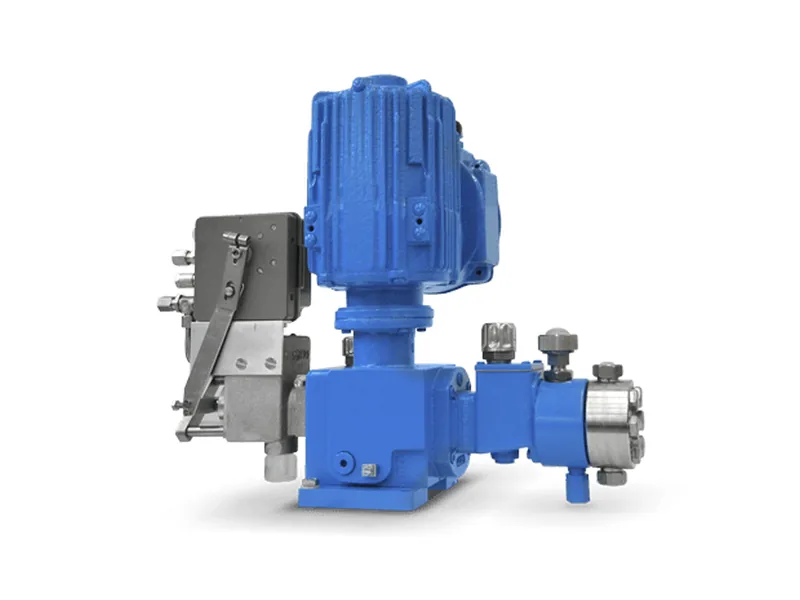
A ProMinent process analyzer can take a nitrate signal and send it to a PLC or a carbon-source metering pump. The probe does not know methanol from sodium acetate. The control logic belongs in the PLC, with a dose ceiling and a fail-to-manual action, so a dirty nitrate probe does not drive the carbon pump to maximum. A LEWA FC laboratory diaphragm metering pump can feed a small carbon-source stream. When it is interlocked with a nitrate probe, the ceiling is mandatory, so a dirty window cannot fill the tank with methanol.
How to link a nitrate probe to the carbon pump without over- or under-feeding
The reading from a nitrate probe lags, and the carbon also needs reaction time. The loop should have a dead band and a delay, and should not keep dosing on a short spike. Laboratory nitrate and the online value will show a systematic offset. Compare them on a schedule and use the offset to read the trend; do not fit a new curve every day. When the influent load jumps, first see whether ammonia and dissolved oxygen have pulled the nitrification stage off, then decide whether carbon is the issue.
While the probe is in alarm or in maintenance, hold a trial-proven safe dose or switch to manual. Do not let the loop run on a dead signal. At night, when the load is low, a daytime nitrate setpoint may add too much carbon. Split the setpoint by load if you can.
A mounting, upkeep and comparison list for a nitrate probe
Use these checks in the field:

Figure 1: LEWA FC laboratory metering pump. Image source: LEWA official website
- Is the nitrate probe at the end of the anoxic zone, at the effluent, or somewhere else, and does that match the control goal?
- Are cleaning, calibration or standard checks actually being done, and is the window or the membrane already fouled?
- Are the carbon-pump ceiling, the delay and the fail-to-manual action set?
- Is a comparison between the online value and the laboratory being kept, and is the offset stable?
- Are bubbles, scum and sludge wraps inspected on a schedule?
Brand pages are on ProMinent. A new nitrate probe should be compared on plant water and a laboratory result before it goes to automatic. Do not let a factory demonstration curve run the pump. Keep reagents, membranes or calibration accessories for that model in stock. If a part is missing, stay on manual rather than let a drifting nitrate probe steer the dose for days.
After a seasonal load change, the old setpoint may sit high or low. Read it together with effluent total nitrogen and COD, rather than only loosening the probe alarm. Even a well-tuned loop still needs the required laboratory samples; the online value is not, by itself, a compliance result.
When the weather changes, or when an industrial nitrate load arrives in the influent, the carbon-to-nitrogen ratio in the anoxic zone can move quickly. The shift should watch flow, ammonia and the nitrate probe trend together, not a single instantaneous concentration. Adding carbon alone may not be enough if internal recycle cannot keep up.
Write the probe location, the last laboratory offset and the carbon type in the same operations log. If a spare nitrate probe is fitted in a different part of the tank during a clean, the control loop must be told, or the pump will follow the wrong stage.
If the reading looks wrong, separate the probe from the process
A sudden rise on a nitrate probe may be poorer denitrification, or it may be a dirty window, a bubble or an overdue calibration. Clean and compare with the laboratory before you raise the carbon dose. A sudden drop to near zero while the lab result stays high is more likely a failed probe; raising the dose then only wastes chemical.
Conclusion
A nitrate probe can supply an online trend for the anoxic zone and for carbon-source dosing, but it must sit at a point that matches the control goal and must be compared with the laboratory on a schedule. When it drives a metering pump, use a delay, a ceiling and a safe dose on fault. Send the process stage, the current probe and the carbon type, and contact us so we can review the sample point and the control logic.
FAQ
Can a nitrate probe replace the laboratory nitrate method?
Not completely. It is suitable for process control. Compliance and reporting still need the required laboratory tests.
Should the probe sit at the front or the end of the anoxic zone?
For carbon trim, the end of the zone, or a point where the reaction has had time to work, is more common, with an effluent check. Watching only the front makes overfeed and underfeed more likely.
What happens if the window is dirty?
A UV reading may drift or go low. An ion-selective electrode more often fails at the membrane or the reference. Both need maintenance as the manual says. Do not assume a nitrate probe can run without cleaning for a long time.
We added a lot of carbon, but online nitrate will not fall. What next?
Compare with the laboratory first, and check whether dissolved oxygen is being carried into the anoxic zone, and whether the sludge is active and well mixed. Change the dose only after the nitrate probe itself is trusted.
Can one probe run both the carbon pump and internal recycle?
It can take part in both loops, but the setpoints and the limits must be tuned separately so the two actions do not fight. Make the nitrate probe reliable first, then add a more complex interlock.