
ORP Control for Cyanide Destruction and Chromium Reduction
Plating and surface-treatment shops often run alkaline chlorination for cyanide, and bisulfite reduction for hexavalent chromium, with ORP control starting and stopping the metering pump. Poor ORP control usually starts with the setpoint or the mounting, not with a missing meter. The usual trouble is not a missing analyzer. It is a setpoint copied from another plant, a probe mounted next to the injection tee, and an ORP reading that swings every time pH moves. ORP is an oxidation-reduction potential, not a direct cyanide or Cr(VI) concentration. It only tells you whether the batch is oxidizing or reducing enough. You still have to read it with pH, reaction time and dose. This note is for wastewater and instrument technicians. The general method is in ORP controlled dosing. How ORP differs from a chlorine residual is in ORP vs residual chlorine.
What ORP control is watching in cyanide work and in chromium reduction
Alkaline cyanide destruction is typically two stages. The first stage oxidizes cyanide to cyanate at a higher pH. The second stage takes cyanate further. The ORP targets are not the same, and neither are the pH conditions, so one setpoint cannot run the whole treatment. The probe must see reacted water, not the cloud of hypochlorite just leaving the quill. The chemical is usually sodium hypochlorite or a similar oxidant. The pump is interlocked with both ORP and pH. If either signal is missing, the dose will run long or fall short.
Hexavalent chromium reduction usually runs under acid conditions, with sodium bisulfite or sodium sulfite as the reductant. ORP control on that reducer watches whether the reducing potential has reached the target band. That target is not the same positive value used on a cyanide oxidizer. Reduction is easier at lower pH. If pH rises, the same ORP may still mean incomplete reduction. Chromium loops therefore almost always combine pH and ORP. A single ORP meter is not enough.
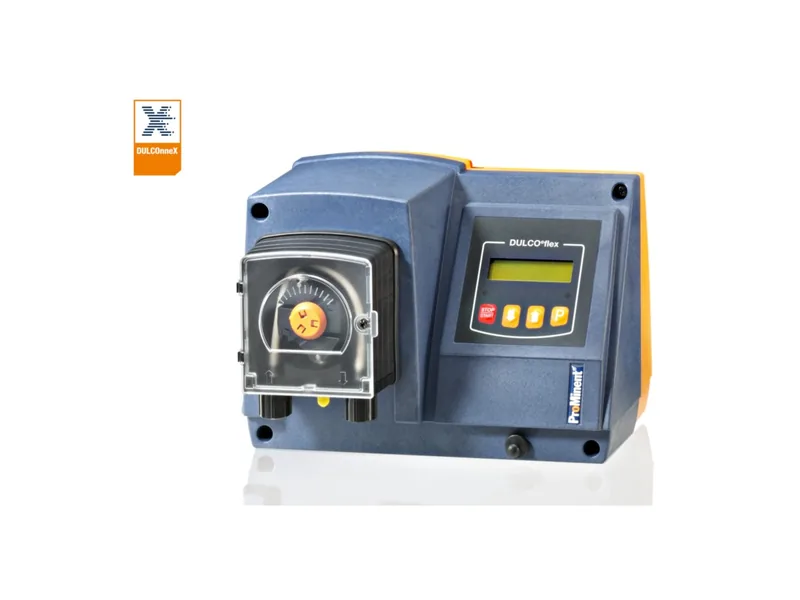
A ProMinent DULCOTEST ORP electrode into a DULCOMETER transmitter can send a signal to a pump or a PLC. The probe does not “know” cyanide from chromium. Setpoints and interlocks have to be tuned for the process. Hypochlorite for cyanide work, or the reductant for chromium, can be fed by a hose pump such as a DULCOFLEX DF4a, started and stopped on the ORP interlock.
Probe location, cleaning, and mistakes that look like a low dose
ORP tips foul with oil, chrome sludge and bubbles. Mount the probe where mixing is reasonably complete and the flow is steady, away from the injection point and from dead legs. A flow cell should run full. Bubbles make the reading jump and the pump then dabs on and off. When the platinum or gold surface is dirty, the potential drifts. It looks like a lack of chemical, but the electrode is just dull. Cleaning intervals depend on oil and solids and are typically tighter than for a clean-water chlorine probe.
If the ORP control reading will not move, do not raise the dose first. Check whether the probe needs cleaning or calibration, whether the reference has failed, and whether the cable shield and earth are picking up noise. The wiring notes in pH, ORP and chlorine analyzer pump control help rule out the instrument before anyone changes a setpoint. If ORP control locks the pump at maximum, you can overfeed hypochlorite or reductant and then spend more on a later neutralization or air strip.
ORP control setpoints should come from a site trial or a staged start-up, not from a typical number in a handbook. Water quality, temperature and co-ions change what a given millivolt value means. During commissioning, dose by hand until the lab result is acceptable, record the ORP and pH at that moment, then hand the loop to automatic with a dead band and a delay so the pump does not chatter.
A field checklist for ORP control start-up and faults
On start-up or during an ORP control fault, walk through these points:
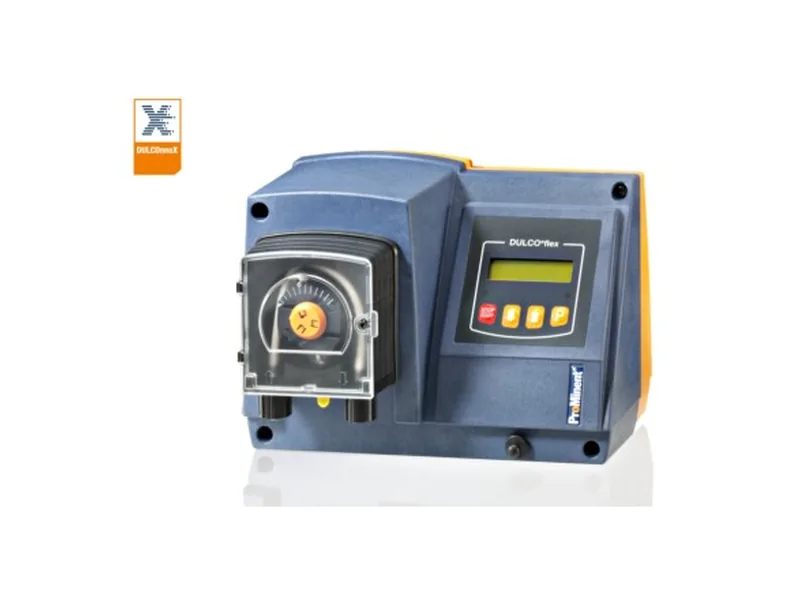
Figure 1: ProMinent DULCOFLEX DF4a. Image source: ProMinent official website
- Is pH already inside the band for that stage, and is ORP being judged only after pH is stable?
- Is the distance from the injection tee, the mixing time and the velocity reasonable?
- When the lab result for cyanide or Cr(VI) is acceptable, what is the online ORP, and is that comparison recorded?
- Are pump limits, delays and a fail-to-manual action set?
- Is a spare ORP electrode on the shelf, and is the surface already passivated?
Products are listed under pH/ORP instruments and on the ProMinent pages. Maintenance is in the online analyzer electrode maintenance guide.
Do not twist the ORP setpoint while pH is still moving
In both cyanide and chromium work, pH movement changes the ORP control reading. That does not automatically mean the redox reaction has changed. Stabilize pH first, then decide whether the chemical dose should change. Do not share one ORP electrode and one setpoint across two stages. Each stage needs its own probe, its own pump and its own lab check.
Temperature also shifts the potential. On a bath with large temperature swings, check whether the manual calls for compensation or a split setpoint. After a dose, allow reaction time. Do not keep adding because ORP has not arrived yet; that is how the loop overshoots.
Conclusion
ORP control can steady reagent feed on cyanide destruction and chromium reduction, but it measures a potential, not a concentration. Setpoints must be checked against the plant laboratory, the probe must sit away from the injection tee, and the loop must be interlocked with pH. When the reading looks wrong, inspect the electrode and the mixing before you change the dose. Send the process stage, the current setpoints and the lab data, and contact us so we can review probe placement and loop tuning.
FAQ
Can I use a cyanide ORP setpoint on a chromium reducer?
No. The potential direction and the pH conditions differ. ORP control targets have to be set separately for each process.
The lab result is already good, but online ORP has not reached the setpoint. Why?
Common causes are a fouled probe, a mounting point that is too far upstream, or a setpoint copied from another plant and set too high. Clean the electrode and make a site comparison before you raise the dose.
Does ORP control have to run together with pH?
On cyanide and chromium work, yes in practice. If pH is outside the band, the same ORP may still mean an incomplete reaction.
How often should the electrode be cleaned?
It depends on oil and solids. A dirty bath may need a look every shift. Do not copy the interval used for clean-water chlorine residual.
Can a plant meet the discharge limit with ORP alone and no laboratory?
The risk is high. ORP does not replace cyanide or Cr(VI) analysis. The automatic loop can steady the dose; compliance still needs the required samples.