
MLSS Sensor Selection: Optical vs Ultrasonic and Where to Mount It
Choosing an MLSS sensor goes in a fixed order: pick the measuring point first, match the measuring principle to the solids range at that point, then settle cleaning and where the signal goes. In the aeration basin, most plants use an immersion optical scattered-light MLSS sensor. On return activated sludge (RAS), waste sludge or thickened sludge lines, where solids are higher and the sensor sits in a pipe, an ultrasonic or inline optical unit is often the better fit. Get the principle wrong and the instrument either runs off the top of its range on day one or fouls every few days. This guide is for process engineers, operators and designers specifying a suspended solids meter for activated sludge.
How an MLSS sensor measures: optical scattering vs ultrasonic
MLSS (mixed liquor suspended solids) is how much activated sludge is in the basin, usually reported in mg/L or g/L.
Optical scattered light. The probe sends infrared light into the sample. Particles scatter it, a receiver measures the scattered intensity, and the transmitter converts that to concentration. Many designs read transmitted light and more than one scattering angle to compensate for color and particle shape. Response is fast and mounting is simple, which is why the optical MLSS sensor dominates in aeration basins. The trade-off is that it needs a clean window.
Ultrasonic attenuation. Sound loses energy as it passes through sludge, and more solids mean more loss. Color does not matter, so it handles higher concentrations and is usually built as an inline pipe sensor. Air bubbles also absorb sound, which rules it out for most aeration basins and means pipe locations with entrained gas should be avoided.
Whichever principle you choose, calibrate on site against lab dry-weight results. Sludge floc differs from plant to plant, and a factory curve used as-is can be noticeably off.
Where to mount the MLSS sensor: aeration basin or RAS line
The measuring point decides most of the specification.
In the aeration basin, place the probe near the outlet end, away from the coarse bubble zone directly above diffusers, and away from walls and dead corners. Use a holder that lets you lift the whole probe out for cleaning, and leave a safe working position at the handrail. Designers forget this surprisingly often.
A RAS concentration sensor goes on the return pump discharge pipe and is used to calculate return ratio and the sludge mass balance. The pipe must run full with stable flow, and the insertion angle should avoid gas collecting at the pipe crown. A second unit on the waste sludge line, paired with a flow meter, gives you dry solids wasted per day.
Thickener underflow and dewatering feed lines carry much higher solids, so specify a high-range model or an ultrasonic inline sensor there.
Range and wipers: the two items buyers miss
Size the range for the real concentration at that point, with some margin, but not much wider. Putting a RAS-range MLSS sensor in the aeration basin costs you resolution exactly where you need it.
Cleaning is the weak spot of any optical instrument. Biofilm, fibers and grease on the window push readings up or down over time. For immersion optical probes, specify an automatic wiper or air-blast cleaning from the start. Operators then only check wiper blade wear. For pipe-mounted sensors, use a retractable assembly with an isolation valve so the probe can be pulled without stopping the pump.
One more site trap: a window facing direct sunlight or a bright basin floor can see stray light. Correct immersion depth and orientation is cheaper than fixing it later.
Using MLSS data for sludge wasting and polymer dosing control
The reason to install an MLSS sensor is to decide how much sludge to waste and how much chemical to feed.
For wasting, basin MLSS and waste sludge concentration tell you how much dry solids to remove, which converts into run time for the waste sludge pump. Sludge age stays steadier than with fixed-time wasting.
For dewatering, polymer demand follows the solids load. A common scheme multiplies feed flow by feed concentration to get dry solids load, then sets the polymer pump speed or stroke from a dose per unit of dry solids. That dose ratio comes from jar tests and site tuning; see our guides on sizing a polymer dosing pump for sludge dewatering and typical polymer dosage ranges.
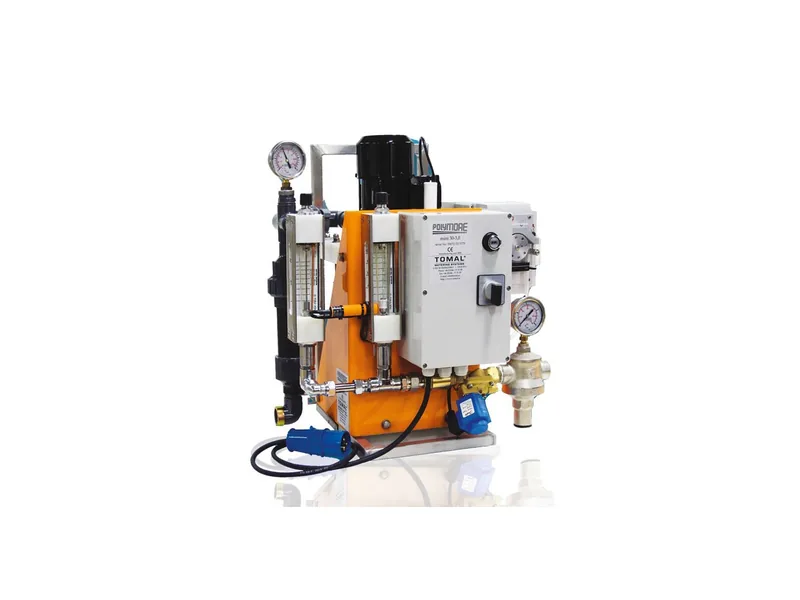
The polymer supply has to keep up as well. The ProMinent POLYMORE system, for example, is an inline preparation unit for liquid polymers that mixes the product with dilution water into a working solution, which metering pumps then dose on signal. Signal-based dosing only works if the solution strength itself is stable.
Questions to ask before you buy an MLSS sensor
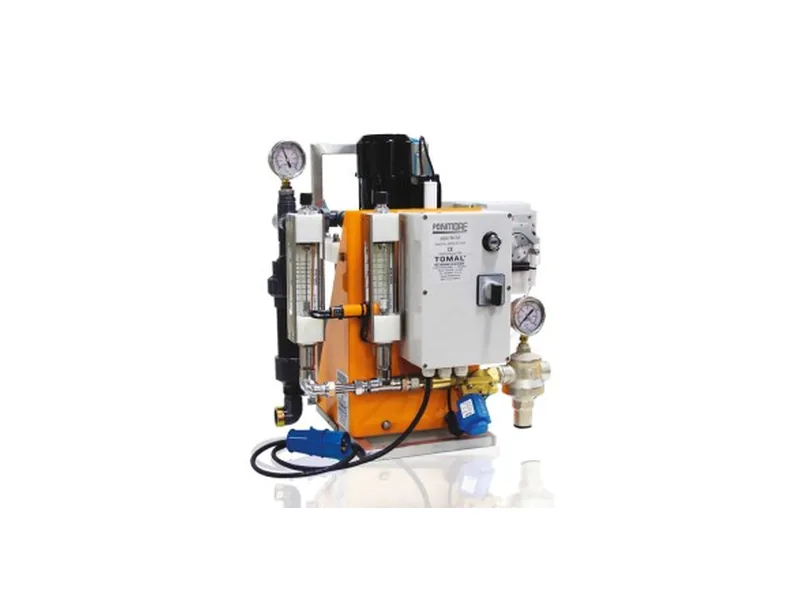
Figure 1: ProMinent POLYMORE liquid polymer make-up unit. Image source: ProMinent official website
- Output: 4-20 mA or a fieldbus, and can it go straight to the PLC?
- Calibration: can the controller accept lab values for a multi-point correction?
- Wetted materials and enclosure rating for permanent immersion.
- Availability of wipers, seals and other wear parts.
Turbidity is a different job. Effluent turbidity needs a low-range turbidimeter with very different accuracy requirements; see online turbidity monitoring in water treatment.
Conclusion
Start MLSS sensor selection with the measuring point. Aeration basins usually suit an optical scattered-light immersion probe with automatic cleaning, while RAS and thickened sludge lines suit ultrasonic or inline optical sensors. Size the range for the point and always calibrate against lab results. The payoff is better control of sludge wasting and polymer feed. Browse water quality instruments or ProMinent dosing equipment, then send us the measuring point, solids range and the pumps the signal should drive, and contact our engineers for a matched setup.
FAQ
Why does my MLSS sensor disagree with the lab?
Clean the probe, take a grab sample at the same time and place, and enter the lab value as a calibration correction. If the gap stays large, check whether the probe sits in a bubble zone or dead corner.
Can one MLSS sensor cover both the basin and the RAS line?
No. The concentrations and mounting methods are too different. Use one sensor per point with its own range.
How often should the wiper blade be replaced?
Base it on inspection. Replace the blade when it is deformed or leaves streaks on the window.
Can an ultrasonic sludge density sensor go in an aeration basin?
It is not recommended. Bubbles attenuate the signal and the reading jumps or reads high.
Can the MLSS sensor signal drive the polymer pump directly?
Yes, but combine it with feed flow to get dry solids load, then apply the dose ratio. Concentration alone, without flow, gives the wrong dose.