
Instrument Surge Protection and Grounding for Field Transmitters
Every storm season someone at a water plant or pumping station reports the same thing: after a thunderstorm several transmitters have no output, or a row of analog input channels in the control room is dead. Usually the site was not struck directly. A nearby strike induced a surge on a long cable. The short answer: instrument surge protection works only when three things are done together: surge protectors at both ends of long signal cables, protection on the power supply, and proper grounding with equipotential bonding across the site. Skip one and the others may not save you. This article is for instrument technicians and the engineers who design instrument and power systems.
Why instrument surge protection starts with induced lightning
A strike creates a strong electromagnetic field. An outdoor signal cable tens or hundreds of meters long acts like an antenna and picks up a high transient voltage. As lightning current flows into the ground, local earth potential also rises for an instant, so the field instrument and the control room suddenly sit at very different potentials. That difference pushes current along the signal pair into the input cards.
The usual victims are outdoor level, flow and analyzer transmitters, loops on overhead or shallow-buried cable, and systems where the field and control room are grounded separately. Instrument surge protection therefore focuses on both ends of long cables.
Choosing a 4-20mA surge protector for instrument surge protection
The signal protector is the core of instrument surge protection. It sits in series with the loop. In normal operation it barely affects the signal; during a surge it diverts the energy to ground. When selecting one:
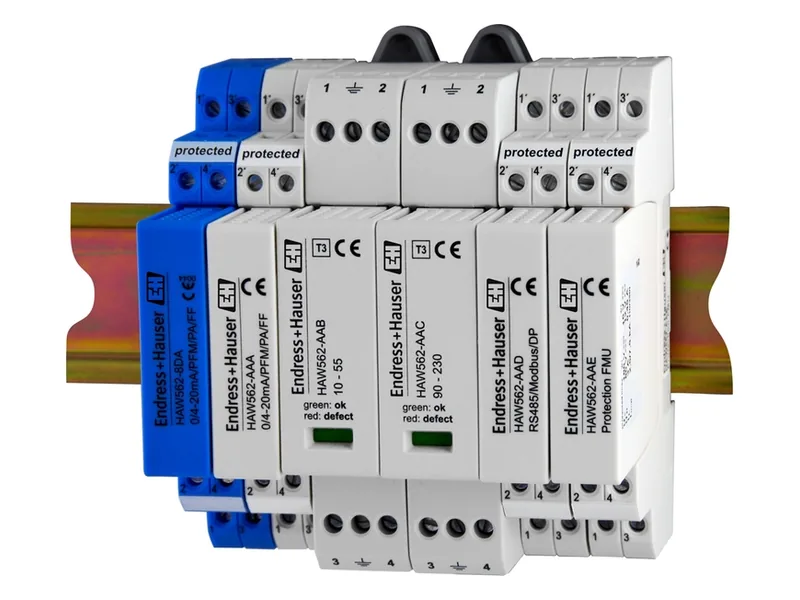
Figure 1: Endress+Hauser HAW562 DIN rail surge arrester. Image source: Endress+Hauser official website
- Match the signal type. There are versions for 4-20mA, RS-485 and HART, and the rated working voltage must suit the loop.
- Fit them at both ends of long cables: one close to the field transmitter and one in the control room ahead of the input card.
- Check the series resistance. On a loop with little spare load capacity, the protector may leave the transmitter short of voltage.
- In hazardous areas, use a type approved for intrinsically safe circuits.
The Endress+Hauser HAW562 is an example of a DIN rail surge arrester fitted next to the cabinet terminals. Some transmitters can be ordered with an overvoltage protection terminal module, which removes the need for a separate device at the field end.
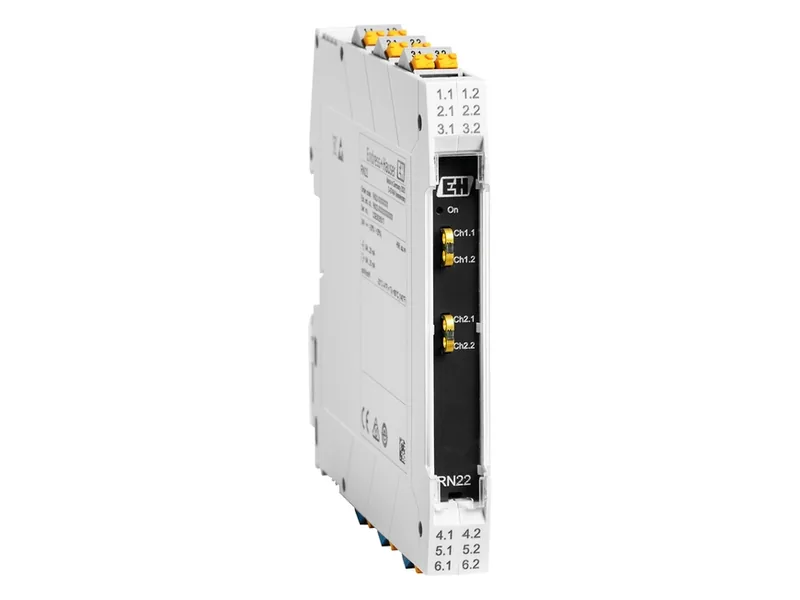
People often ask whether a barrier can replace the protector. An isolating barrier is not instrument surge protection. An active barrier such as the Endress+Hauser RN22 handles loop power and isolation, but it is not built to absorb lightning surges. Use them together, not instead of each other.
Instrument surge protection on the power supply
AC feeds to analyzers and control panels pick up surges too. Power protection is normally staged: a first stage at the main distribution board diverts the large current, and a second stage at the panel incoming supply brings the residual voltage down. A 24 VDC supply that runs outdoors needs instrument surge protection as well.
Keep the protector earth lead short and straight, without loops. The longer the lead, the larger the voltage drop across it during a surge, and the less protection you actually get.
Instrument grounding: why a single point
If the signal ground is connected to earth both in the field and in the control room, any potential difference between the two points drives a ground loop current along the cable. In normal times you see a jumpy reading; during a strike it becomes dangerous. Instrument signal ground is therefore usually collected at one point, the instrument earth bar in the control room, and from there tied to the site earth grid.
Single-point does not mean an isolated earth. Most codes now require all earthing systems to share one earth grid, collected on separate bars and then bonded together, so no large voltage can build up between two earth systems on site.
Cable shield grounding: one end or both?
The overall screen of a signal cable is normally grounded at the control room end only, with the field end cut back and insulated. This prevents ground loop current in the screen and is the most common instrument grounding rule.
Steel armour and steel conduit are treated differently. They are usually grounded at both ends, where they act as a protective shield that weakens external magnetic fields around the cores. On sites with severe interference, some designs connect the far end of the screen to earth through a gas discharge tube, which conducts only during a surge. Follow the project design standard.
Equipotential bonding
Bonding is the base layer of instrument surge protection. It aims to keep every metal part on site at nearly the same potential during a strike: instrument housings, brackets, cable trays, conduit, surge protector earth terminals and panel enclosures, all connected to the same earthing system.
Common gaps include cable tray joints with no bonding jumper, instrument brackets relying only on bolt contact, and screens and surge protectors earthed separately. The checks in metering pump electrical grounding follow the same logic.
Seasonal checks and wiring safety
Instrument surge protection devices wear out. After diverting several large surges, their performance drops. Inspect before and after storm season: check status indicators for color change, tighten terminals, and re-test bonding connections. If a reading is jumpy, check that the screen is not grounded at both ends.
Isolate and prove the circuit dead before wiring or replacing a surge protector, and do not work on outdoor instruments or long cables when a storm is near. For loop wiring into a PLC, see analyzer 4-20mA to PLC wiring.
Conclusion
Instrument surge protection is more than one protector in the panel. Fit signal protectors at both ends of long cables, protect the power supply, collect instrument ground at one point on a shared earth grid, ground cable shields at one end, bond all metalwork, and inspect around storm season. Done together, these instrument surge protection steps cut down the burnt cards after every thunderstorm. Barriers and loop power supplies are listed under barriers and power supplies, and panel layout ideas appear in metering pump control panel options. Send us the number of loops, signal types and cable routes, and contact our engineers for a protection plan.
FAQ
For instrument surge protection, is one protector at the control room end enough?
For short cables and indoor instruments it often is. For long cables to outdoor transmitters, protect the field end too, or the transmitter is usually the first thing to fail.
My reading dropped after adding a 4-20mA surge protector. Is that normal?
The protector's series resistance may have used up the loop's spare load capacity, or the wiring is wrong. Recalculate the loop load, then check wiring and model.
What happens if the cable shield is grounded at both ends?
If the two earth points differ in potential, current flows in the screen, disturbs the signal and can carry surges in. Ground it at one end.
What earth resistance should we aim for?
Use the value in the design standard that applies to your project and region; requirements vary by industry. Measure against the drawing value at handover.
How do I know a surge protector has failed?
Many have a status window that changes color. Without one, test as the manufacturer describes after storm season, or replace modules on a fixed schedule.