
Metering Pump Control Panel: Local, Remote and VFD Options
A metering pump control panel should be specified by how the pump will be controlled. If operators only start and stop it on site, a local panel is enough. If a PLC or DCS starts it and adjusts the dose, you add a local/remote selector and signal wiring. If flow follows motor speed, you add a VFD. Each option needs different parts, so do not default to the most complex one.
Three ways to wire a metering pump control panel
Drawings often say "control panel by others" and leave it there. Purchasing then gets three different interpretations. A clearer split is by control mode:
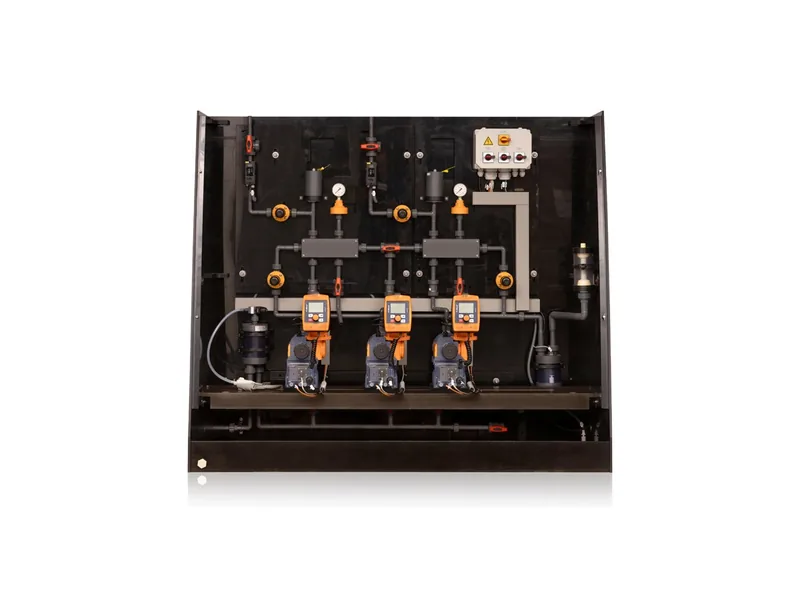
Figure 1: ProMinent DULCODOS panel DSWc dosing system. Image source: ProMinent official website
- Local control: start, stop and emergency stop buttons on site, run, stop and fault lamps, and flow set by hand on the stroke knob.
- Remote control: the local scheme plus a local/remote selector. In remote, the PLC sends start and stop, and the panel returns run and fault status.
- VFD control: the motor is fed from a drive, the PLC sends a 4–20 mA speed signal, and stroke rate and flow follow motor speed.
On most water treatment jobs option two is the usual choice. Option three appears where dose has to track plant flow or an online analyser.
Write the chosen mode into the metering pump control panel datasheet in plain words, for example "local start/stop, remote start/stop from PLC, flow by stroke actuator". Panel builders price and wire exactly what is written, and a one-line description avoids a second visit to add a selector or a terminal strip that nobody asked for.
What a local metering pump control panel contains
For one motor-driven pump, a basic local metering pump control panel typically includes:
- An incoming breaker, ideally with earth leakage protection, because dosing rooms are wet.
- A contactor and overload relay, or a motor protection circuit breaker instead.
- Start and stop buttons, with an emergency stop on the door.
- Run, stop and fault lamps.
- An ammeter if you want to see motor loading.
IP54 is usually enough indoors. Outdoor panels or areas that get hosed down need a higher rating. Mount the metering pump control panel where the operator can see the pump, so a start command can be confirmed by eye.
Extra parts for remote control
Remote operation adds a selector switch and a terminal block to the metering pump control panel. In local, the panel buttons work and remote commands are ignored. In remote, it is the other way round. Feedback to the PLC is usually three volt-free contacts: remote selected, running and fault.
Signal choice is covered in metering pump 4-20mA vs pulse control. If you also want remote flow adjustment on a fixed-speed pump, fit a stroke actuator driven by 4–20 mA; see metering pump stroke control motor.
VFD in the panel or a pump with its own controller
There are two routes to speed control. One puts a drive inside the metering pump control panel and keeps a standard fixed-speed pump. The other uses a pump with an integral controller.
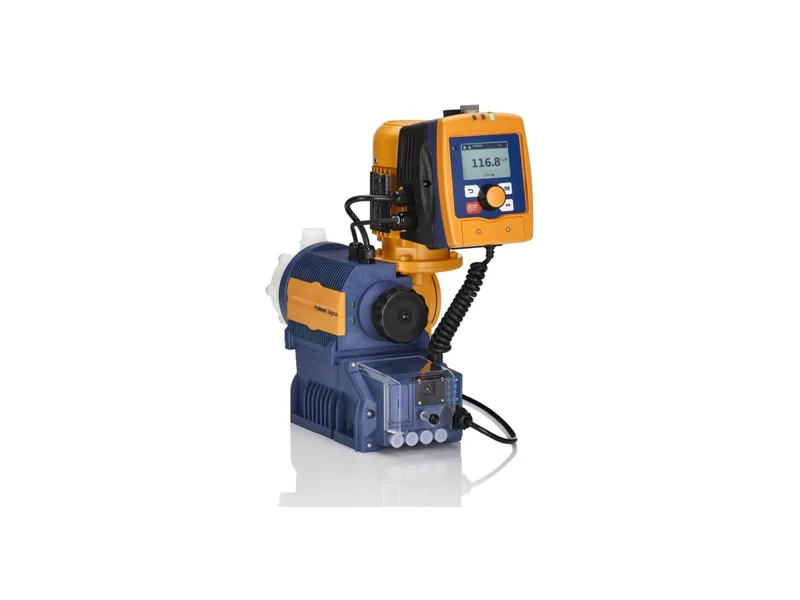
The ProMinent Sigma X control type is an example of the second route. ProMinent lists an integral frequency converter with microprocessor control, a removable operating unit with click wheel and four keys, external control through potential-free contacts with pulse step-up and step-down, batch mode, 0/4–20 mA, integral PROFIBUS, relay outputs, a timer and a logbook of up to 300 events. The S1Cb covers 21 to 117 l/h at 12 to 4 bar. Because the pump handles the signals itself, the external metering pump control panel only needs power, protection and a local emergency stop.
A separate VFD panel still makes sense for retrofits or for special motors. Watch motor cooling at low speed and do not push the speed range too far down; that topic needs its own article.
Plunger pump control panel extras
A plunger pump control panel differs from a diaphragm one mainly in protection. Plunger pumps build pressure quickly if the discharge is blocked, so the panel generally adds:
- A discharge pressure switch or contact gauge that stops the pump and raises an alarm.
- Power and position feedback terminals for a stroke actuator, where fitted.
- Duty/standby selection with automatic changeover on fault.
- Lube oil temperature or level signals on some larger units.
The relief valve is the mechanical protection and the pressure interlock is the electrical one. Use both; neither replaces the other.
Packaged dosing panels
If you want pumps, valves and controls delivered together, a packaged panel is an option. The ProMinent DULCODOS panel DSWc covers 0.01 to 1,000 l/h at 10 to 2 bar and holds up to three pumps, one of which can be standby. Front plug connectors make it close to plug-and-play. In units like this the metering pump control panel and pipework are designed together, which cuts site wiring. More controllers are on our controller product page, and skid wiring is shown in the dosing skid wiring diagram.
Conclusion
Start the metering pump control panel specification with the control mode. A local panel needs a breaker, contactor, buttons and lamps. Remote control adds a selector and volt-free feedback. Automatic dosing adds a stroke actuator or a VFD, and a pump with an integral controller lets you keep the external panel simple. Plunger duty needs pressure interlocks and duty/standby logic. Write these requirements down before drawings are issued, and send them through our contact page if you want a parts list checked.
FAQ
Can one metering pump control panel run several pumps?
Yes, with separate circuits. Each pump needs its own protection and start circuit so one fault does not stop the rest.
Is a local/remote selector really needed?
It is strongly recommended with remote control. Switching to local during maintenance stops the PLC from starting the pump unexpectedly.
What matters when a VFD sits inside the panel?
Heat is the main issue. Provide ventilation or a fan, separate power and signal cables, and use screened signal cable.
Does a plunger pump control panel need to be explosion-proof?
It depends on the area classification. Inside a hazardous zone the panel and motor must suit that zone, or the panel goes into a safe area.
Does a pump with its own controller still need a panel?
Usually a small one. You still want a breaker and a local emergency stop, while signals can wire straight to the pump.