
Open Channel Flow Meter Guide: Parshall Flumes, Weirs and Level
Many plant outfalls and treatment works effluent channels have no full pipe, so a mag meter is not an option and an open channel flow meter is the answer. The short version: an open channel flow meter combines a primary device, a flume or weir, with a level sensor. The flume or weir fixes the relationship between flow and upstream water depth, the level sensor measures that depth, and the transmitter converts it to flow. Accuracy depends half on how well the primary device is built and half on how the sensor is installed. This guide is for operators and contractors responsible for outfall and effluent flow monitoring.
How an open channel flow meter works
When water passes a contraction of known shape and size (a flume) or flows over a plate (a weir), flow and the head at a defined upstream point follow a fixed relationship, usually written as Q = k·hⁿ, with k and n set by the device type and size. The level sensor measures head h; the transmitter applies the formula to give instantaneous flow and totalizes it.
That means the primary device type and size configured in the transmitter must match what is in the channel. Pick the wrong Parshall throat width in the setup menu and the computed flow is badly off, and this kind of error is the hardest to spot in commissioning records.
Parshall flume flow measurement with an open channel flow meter
A Parshall flume has a converging section, a throat and a diverging section, and water speeds up through the throat. It loses little head and has a smooth floor, so grit and debris rarely settle upstream. That is why it is the usual choice for wastewater influent, effluent and outfalls carrying solids.
The head measurement point is defined, within the converging section at a set distance from the throat, not anywhere you like. The other key point is free flow. If downstream water rises high enough to submerge the throat, the flume runs submerged and the free-flow equation no longer holds. Check downstream levels at design, and raise the flume floor or clear the downstream channel if needed.
Choosing a weir flow meter: V-notch or rectangular
A weir is a plate the water spills over. A V-notch weir gives a large change in head at low flows, so resolution is good for small, fairly clean flows such as small industrial outfalls or reuse channels. A rectangular weir handles larger flows.
The drawback is that a weir holds water back. Velocity upstream is low and sediment settles, so heavily loaded wastewater is a poor match. Keep the crest sharp and make sure the nappe is ventilated, with air under the falling sheet of water rather than water clinging to the plate. The approach channel needs a straight, calm run.
Mounting the level sensor: ultrasonic or radar
For an open channel flow meter, head is normally measured with a non-contact ultrasonic or radar sensor mounted directly above the measuring point and aimed straight down at the water.
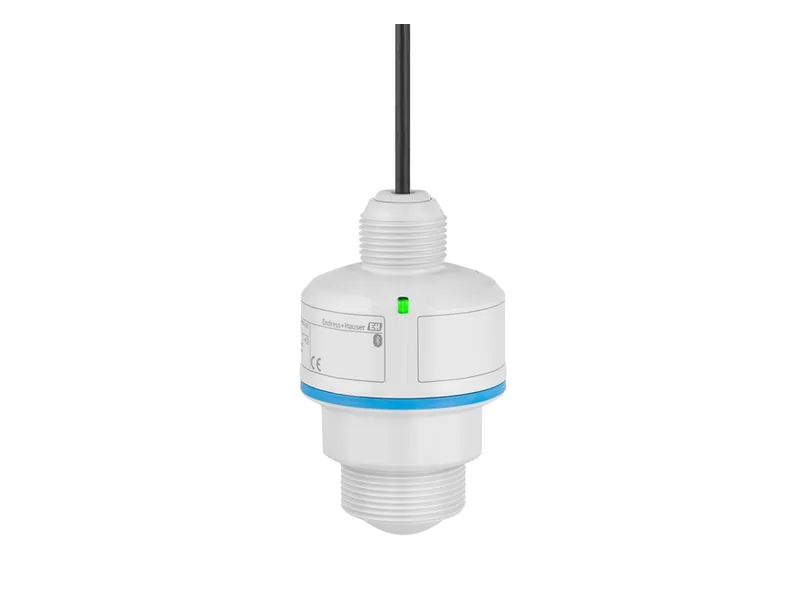
Ultrasonic sensors are the most common open channel flow meter choice. Sound speed varies with air temperature, so temperature compensation matters, and heavy foam absorbs the signal. Radar is less affected by temperature and vapor and is often steadier at sunny outdoor outfalls with foam. The Endress+Hauser Micropilot FMR20B, a radar sensor aimed at water and wastewater duty, is a typical example for this kind of point. For general level sensor selection logic, see chemical tank level sensor selection.
Installation details that matter for any open channel flow meter:
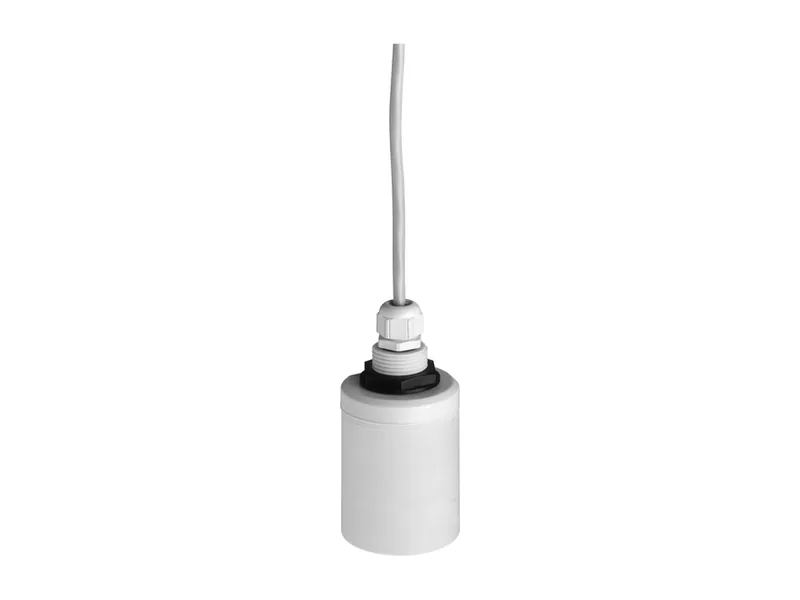
Figure 1: Endress+Hauser Prosonic FDU91 ultrasonic sensor. Image source: Endress+Hauser official website
- Leave the full blocking distance between the sensor face and the highest water level
- Fit a sun and weather shield to reduce direct sun, rain and snow on the sensor
- Keep channel walls and brackets out of the beam
- Use a rigid bracket; a sensor that sways in the wind turns movement into flow noise
Zero calibration: the step people skip
The open channel flow meter computes flow from head, and head is measured from a datum, the weir crest or the flume floor. After installation, measure the actual distance from sensor to datum and enter it, then check head with a steel rule while water is flowing and compare it with the reading. A few millimeters of zero error is very visible at low flows, and V-notch weirs are especially sensitive.
At handover, verify against a portable flow meter or a velocity-area measurement. A number on the display does not mean the job is finished.
Field problems at outfalls
Silt is problem number one for an open channel flow meter. Sediment on the flume floor or behind the weir raises the effective datum, so the meter shows flow when the channel is dry. Clean regularly, and during rounds check that the reading returns to zero at no flow.
Ice is next for any outdoor open channel flow meter. Ice in the flume changes the flow section, and frost on the sensor makes readings jump. Outdoor points in cold climates need insulation, heat tracing or a cover.
Also watch for a flume set out of level, turbulent inflow, floating debris caught in the throat, and spider webs under the sensor. Where effluent disinfection is paced by flow, a bad flow signal also means a wrong chemical dose; see wastewater hypochlorite dosage control.
Conclusion
An accurate open channel flow meter at an outfall needs both halves done right. Use a Parshall flume for solids-laden wastewater and keep it in free flow, a V-notch weir for small clean flows and a rectangular weir for larger ones. Mount the level sensor above the defined measuring point, calibrate zero and verify with a portable meter, and keep an eye on silt, foam and ice. Level sensors are listed under level transmitters and other meters under flow meters. Send us channel width, flow range, water quality and site photos, and contact our engineers to size the flume or weir and sensor.
FAQ
Why does my open channel flow meter show flow when the channel is dry?
Usually silt on the floor or a wrong zero setting, sometimes debris or webs under the sensor. Clean the channel and recheck the zero.
Can we build a Parshall flume on site from concrete or brick?
Yes, but the dimensions must follow the standard exactly. Errors in throat width, length or floor slope all affect the conversion, so a prefabricated flume or an experienced contractor is safer.
Is ultrasonic or radar more accurate?
At a good site both meet typical needs. With foam, large temperature swings or vapor at an outdoor outfall, radar is usually steadier.
The flume is submerged by high downstream water. What now?
Clear or lower the downstream channel first. If that is impossible, raise the flume or use a method that can correct for submerged flow.
How often should the open channel flow meter be verified?
At least once a year with portable equipment, and again after desilting, alterations or any unexplained change in readings. Keep the records.