
Chemical Dosing System Technical Proposal: How to Structure It
A chemical dosing system technical proposal has one job: convince the client and the consulting engineer, before any steel is cut, that you understand the duty, that your configuration will meet it, and that the boundary of your supply is clear. Most strong proposals follow seven sections: project overview, design basis, sizing logic, equipment configuration, control philosophy, scope of supply, and service. This article walks through what each section should say, written for sales engineers and bid managers who put these documents together.
Section 1: Project overview
Open the chemical dosing system technical proposal by describing the project in your own words. What is being treated (boiler feedwater, cooling water, wastewater, potable water), at what capacity, how many chemicals, how many injection points, indoors or outdoors.
Many proposals paste the tender text back to the client. It fills pages but adds nothing. A better overview restates the key constraints you noticed, such as "injection into high-pressure feedwater line", "no instrument air on site" or "hazardous area". An evaluator sees immediately that you read the brief.
Section 2: Design basis of a chemical dosing system technical proposal
Split the design basis into two parts. First, the client inputs: flow, water quality, chemical type and strength, injection pressure, ambient temperature, power supply and DCS interface requirements. Second, the categories of codes the design follows, such as pressure piping, electrical and corrosion protection.
List every input line by line. Where the client gave no value, write "assumed, to be confirmed by client". That one sentence protects you later if the duty changes.
Section 3: Sizing logic, not just results
This is where a chemical dosing system technical proposal shows real engineering. Explain how you got each number:
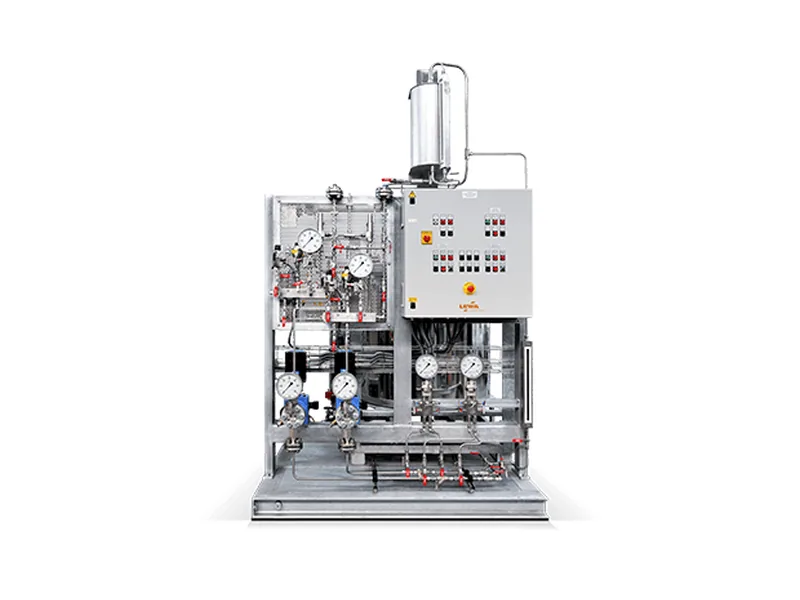
Figure 1: LEWA customer-specific metering system front view. Image source: LEWA official website
- Chemical feed = process flow × design dose ÷ solution strength, with margin for peak conditions
- Tank volume based on how long one batch should last and how often operators can mix
- Pump rated pressure = highest injection pressure + line losses + margin
- Line size checked against velocity and peak pulsating flow, with a pulsation dampener on long runs
A pulsation dampener is a small gas-cushioned vessel on the discharge that smooths the flow pulses of a reciprocating pump. If you show only the final numbers, nobody can check whether they are right.
Section 4: Equipment configuration
In this part of a chemical dosing system technical proposal, list the main items with type, quantity, materials and key ratings: metering pumps, solution tanks, mixers, strainers, relief and back-pressure valves, instruments and the control panel. Say why. "Hydraulic diaphragm pump selected because injection pressure is high" carries more weight than a bare model code.
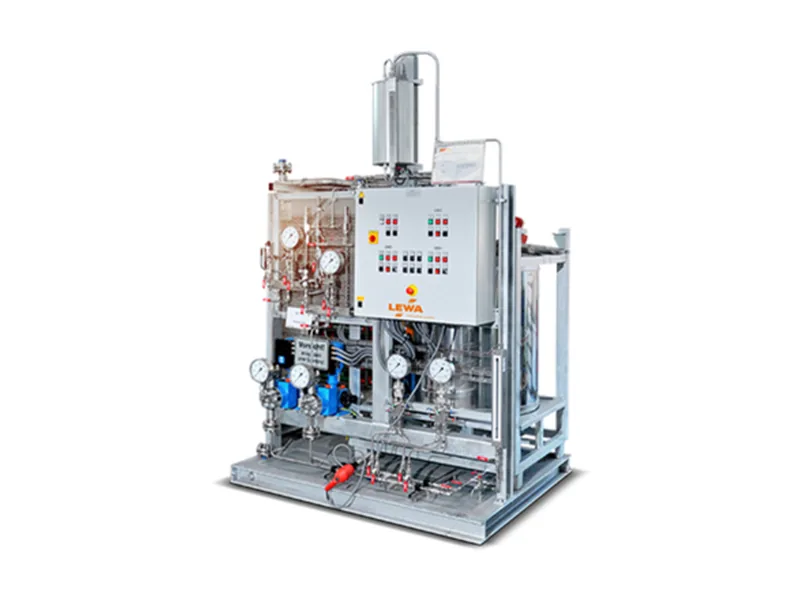
The detailed bill of materials is a separate document. For a line-by-line check, see our guide on how to read a dosing skid bill of materials. If you offer a customer-specific metering system from a brand such as LEWA, state which components come from the pump maker and which are sourced locally.
Section 5: Control philosophy in the chemical dosing system technical proposal
The control section answers three questions: how pumps start and stop, how the dose is adjusted, and what happens on a fault.
Typical modes are manual, flow-paced and closed-loop on a water quality signal. Match the mode to the process; our article on manual, flow-paced and closed-loop dosing control explains the differences. Then list interlocks and alarms: low-level pump stop, high discharge pressure alarm, duty and standby changeover, and every signal exchanged with the DCS. Attach the I/O list as an appendix so nobody argues about it during commissioning.
Section 6: Scope of supply and interfaces
Most variation claims trace back to a vague scope in the chemical dosing system technical proposal. Write it in three columns: supplied by us, supplied by client, and interface points.
Who supplies the injection quill? Where does client piping begin, at which flange? Who pulls the control cables, and who pours the foundation? "Skid outlet flange" is a clear boundary. "Outside the equipment" is not.
Section 7: Service, training and documents
Close the chemical dosing system technical proposal with service: installation supervision, commissioning, operator training, warranty, spare parts, response time and a document list covering drawings, manuals, test reports and material certificates. Skip phrases like "excellent service". State how many engineers, how many days on site and what the training covers.
Common gaps we see
When we review a chemical dosing system technical proposal from another vendor on behalf of a client, the same gaps come up again and again. Pump pressure ratings that ignore line losses. Tanks sized without asking how often the plant can mix. A control section that never mentions what the pump does when the DCS signal is lost. A scope of supply that does not match the commercial price list. Each of these is easy to fix at the writing stage and expensive to fix on site.
Conclusion
A good chemical dosing system technical proposal tells the client: we understand your duty, this is how we configured it, this is why, and this is where our supply ends. Of the seven sections, sizing logic and scope of supply carry the most weight and cause the most disputes. Start from a clear request; our guide to what belongs in a dosing skid RFQ shows the client side of the same document. Browse packaged dosing skids or the LEWA brand page, and when you have flow, chemicals and injection pressure ready, contact our engineers to build a dosing skid design proposal together.
FAQ
How long should a chemical dosing system technical proposal be?
There is no fixed length. A small project may need a dozen pages; a large power plant package with calculations and drawings can run much longer. Every section should carry real content.
Can I write a chemical dosing system technical proposal without water quality data?
Yes. List your assumed values clearly and mark them for client confirmation, so the configuration can be revised later.
Should the proposal name pump brands?
If the tender asks, yes. If not, name a brand range for key items and add "or equal", which keeps some flexibility.
Do I need to attach full calculations?
Attach a short version with formulas, input values and results. It persuades evaluators far better than bare conclusions.
Should price appear in the dosing skid design proposal?
No. Keep price in the commercial offer, but make sure the scope of supply matches the commercial item list exactly.