
Dosing Skid RFQ: What to Include in Your Request for Quotation
A dosing skid RFQ is the package of technical and commercial requirements you send to suppliers so they can quote. It has to answer four questions: what process conditions the chemical is dosed under, what the supplier provides, which standards apply, and what documents come with delivery. Get it right and you can line up bids side by side. Leave it vague and one quote includes the control panel while another does not, one covers installation and the next ignores it. Below is what each section of a dosing skid RFQ should contain.
Why a Dosing Skid RFQ Often Produces Bids You Cannot Compare
Many enquiries say little more than "one sodium hypochlorite dosing system, two pumps, duty and standby". Each supplier then quotes its own interpretation, with different materials, instruments and controls. Technical clarification drags on, items get missed, and after the contract is signed someone discovers that cabling and installation were never in scope.
A complete skid is not a single pump. Pump-level flow, pressure and fluid data are covered in our metering pump selection parameters. A dosing skid RFQ must also describe the tanks, mixers, piping and valves, instruments, controls and site interfaces.
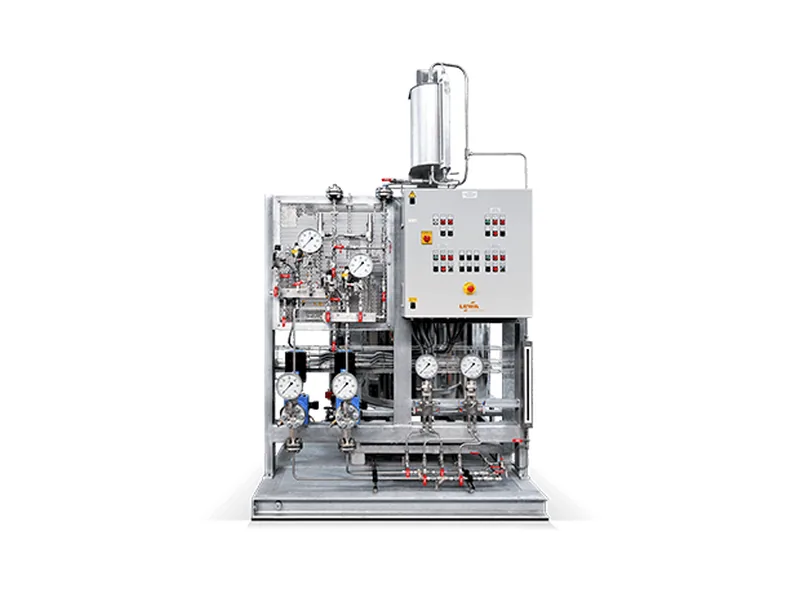
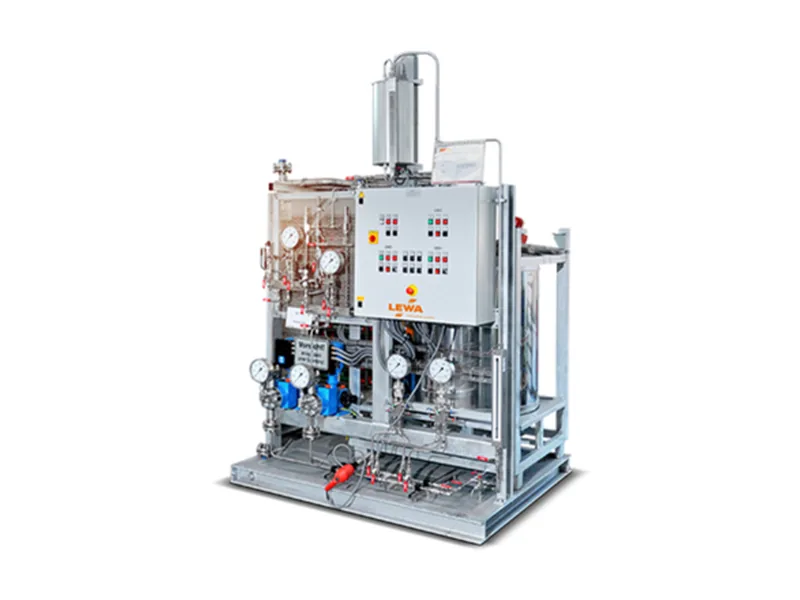
Figure 1: LEWA LEWA engineered metering skid. Image source: LEWA official website
Project Overview and Process Conditions in the Dosing Skid RFQ
Start with background: the industry, the treatment process and where each dosing point sits. Then state process conditions:
- Chemical name, concentration, and whether it is diluted or dissolved on site.
- Dose range, back pressure and pipe run length for every injection point.
- Operating mode: continuous or batch, duty and standby, or several points dosed at once.
- Installation environment: indoor or outdoor, ambient temperature, hazardous area classification, frost protection.
Process data is the foundation of any dosing skid RFQ. If concentration or dose rate is wrong, every downstream choice is wrong too.
Scope of Supply and Battery Limits
This is where disputes start. List exactly what the supplier provides: metering pumps, tanks, mixers, relief valves, back pressure valves, pulsation dampeners, level transmitters, pressure gauges, control panel, and whether it ships as a single skid.
Even more important are battery limits: who owns piping beyond the skid flanges, where power is delivered, who pulls field cables, whether installation and commissioning are included, and whether a transfer pump is needed. Mark the battery limits on a simple sketch attached to the dosing skid RFQ. A drawing is far harder to misread than text.
Technical Requirements and Standards
State material requirements for wetted parts, tanks, piping and valves, or ask the supplier to recommend materials for the chemical and justify them. Define the metering pump type, whether mechanical diaphragm, hydraulic diaphragm or solenoid, and any preferred brands or approved vendor list.
List the applicable standards for pressure piping, electrical equipment and hazardous areas as your project requires. If the owner has its own engineering specification, attach it. Coating, nameplate and colour coding requirements belong here as well.
Customer-specific metering systems from LEWA are a good example. Skids of this kind are engineered around the customer's process data, standards and site conditions, so the more complete your dosing skid RFQ is, the closer the first proposal will be to what you actually need.
Controls and Communication
Describe the control philosophy: manual, local automatic or remote, and whether dosing is paced by flow or a water quality signal. Specify signal types and the communication protocol, plus which points go to the control room, such as run, fault, level and flow. Panel enclosure rating, location and whether variable speed drives are needed also go in this section. List interlocks separately, for example low level pump stop and high level alarm.
Testing and Documentation
Define factory tests such as pressure tests, flow calibration and electrical function checks, and whether the owner will witness a factory acceptance test. Site acceptance steps are covered in our dosing skid acceptance inspection guide.
Documentation is the part of a dosing skid RFQ most often forgotten. Put it in a list: P&ID, general arrangement drawing, electrical schematics and wiring diagrams, equipment list, main component datasheets, operation and maintenance manual, material certificates, test reports, certificates of conformity and spare parts list. Also state language, number of copies, electronic format and submission dates.
Commercial Terms and Price Format
Cover delivery time and place, warranty period, payment terms, packing and shipping, technical service and training. Ask every bidder to use the same price format, broken down into equipment, controls, installation and commissioning, spares and freight, plus a deviation list explaining every clause they do not meet or offer an alternative for. That is what makes a dosing skid RFQ produce comparable answers. For how to read the cost breakdown, see our dosing system price breakdown.
Conclusion
A complete dosing skid RFQ has seven parts: project overview and process conditions, scope and battery limits, technical requirements and standards, controls and communication, testing, documentation and commercial terms. Add a fixed price format and a mandatory deviation list. One extra day spent on the dosing skid RFQ saves weeks of clarification and contract disputes later. If you are preparing an enquiry for a dosing skid, contact us with your process and chemical details and we will help you review the key points.
FAQ
How is a dosing skid RFQ different from a supplier's configuration sheet?
The RFQ is the buyer's statement of requirements. The configuration sheet is the supplier's proposal showing how it intends to meet them. The RFQ comes first, then you check the configuration against it.
Can I write an RFQ without knowing the exact configuration?
Yes. Process conditions and operating requirements must be accurate, but you can let suppliers recommend the configuration, provided they explain why and note it in the deviation list.
Should the RFQ name specific brands?
It depends on the project. If the owner has an approved vendor list, include it. If not, specify performance and ask bidders to state the brand and model of every main component.
How many sets of documents should I request?
There is no fixed rule. A common approach is several paper sets plus one electronic copy. Follow the owner's document control requirements and write them into the RFQ.
Is a deviation list really necessary?
Strongly recommended. Without it, suppliers rarely volunteer what they do not meet, and gaps appear only at acceptance, which costs far more than filling in one extra form.