
Chemical Dosing vs Water Softener: Which Does Your Boiler Need?
Plant engineers ask us this all the time: we already have a water softener, do we still need a dosing system? Or the other way round: we bought a dosing skid, can we skip the softener? The short answer to the chemical dosing vs water softener question is that a softener takes something out of the water, while a dosing system puts something in. They solve different problems, and in most boiler houses and cooling water systems you end up running both.
Chemical dosing vs water softener: how each one works
A water softener is built around sodium-form cation exchange resin. Raw water flows through the resin vessel, calcium and magnesium ions stick to the resin, and sodium ions are released in their place. When the resin is loaded it is regenerated with brine. So a typical softener is a resin vessel or two, a multiport control valve and a brine tank, and the operator's routine job is topping up salt.
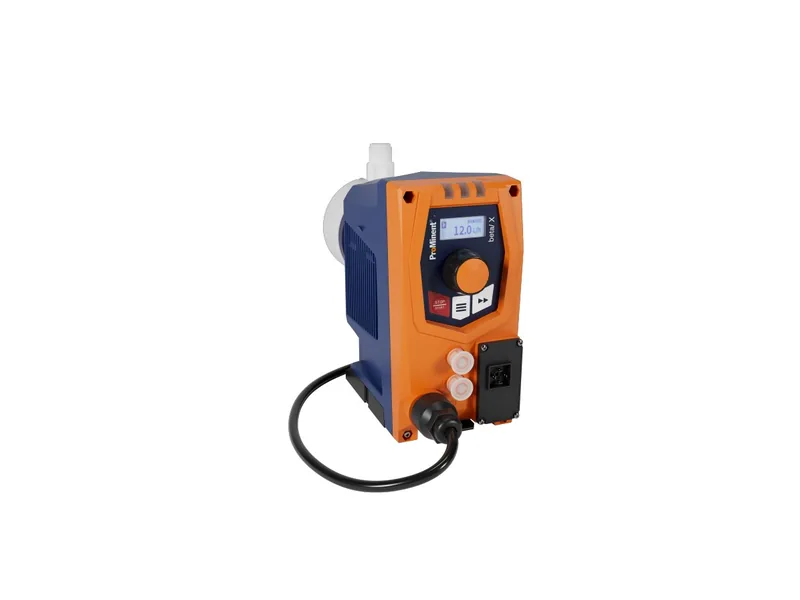
A chemical dosing system is built around a metering pump. Chemical is mixed in a solution tank, and the pump injects it into a pipe or the boiler drum at a set rate. Around the pump you will find an agitator, a level gauge, a pressure relief valve, a back pressure valve and an injection valve. The routine jobs are refilling chemical and looking after diaphragms and check valves.
On site, telling chemical dosing vs water softener equipment apart is easy: one is tanks plus a salt bin, the other is a chemical tank plus a pump.
Chemical dosing vs water softener: what each one solves
A softener does exactly one job: it removes hardness. It does not remove dissolved oxygen, it does not adjust pH, and it does very little for chloride, alkalinity or silica.
What a dosing system does depends on the chemical:
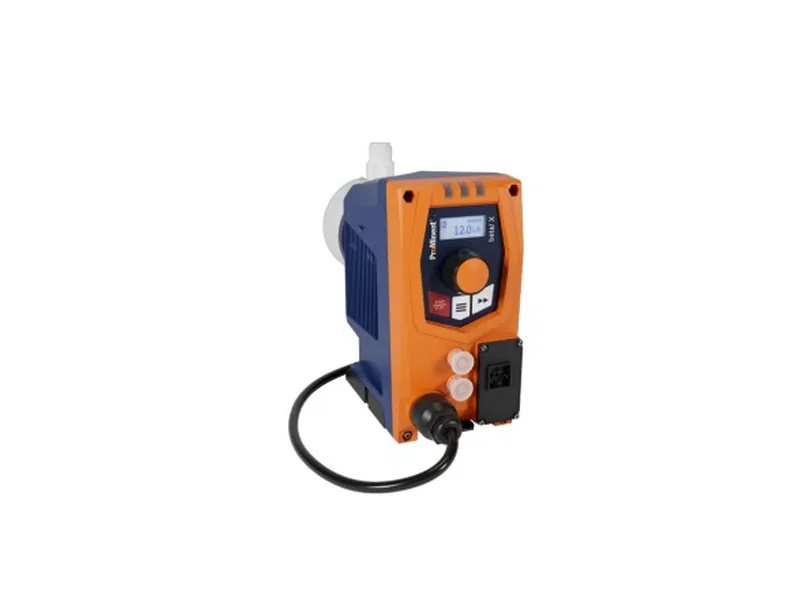
Figure 1: ProMinent ProMinent Beta/X metering pump. Image source: ProMinent official website
- Phosphate into the boiler turns residual hardness into sludge that leaves with blowdown, and it buffers boiler water pH.
- Oxygen scavenger into the feedwater deals with the dissolved oxygen the softener leaves behind.
- Ammonia or amines raise the pH of feedwater and condensate to protect the piping.
- Scale and corrosion inhibitors plus biocide control scale, corrosion and biofouling in cooling water.
So when you weigh chemical dosing vs water softener, think of the softener as handling hardness only. Corrosion, oxygen, pH and microbiology still need chemical treatment. Our article on boiler water treatment covers the chemistry in more detail.
Chemical dosing vs water softener in boilers: why you need both
The usual layout is simple. City water or well water goes through the softener, softened water goes to the deaerator or feed tank, and the dosing skid adds chemical to the feedwater line or the drum. There are three reasons for this:
- Softened water is not zero hardness. When the resin nears exhaustion, hardness leaks through, and phosphate in the boiler is your safety net.
- Softening does nothing for dissolved oxygen, so oxygen pitting still happens in hot water and steam boilers.
- Softened water is less likely to scale, but it is not less corrosive. Sometimes it is noticeably more aggressive, so pH control and corrosion inhibitors still matter.
We once visited a food plant that settled the chemical dosing vs water softener question by assuming the softener had everything covered. The dosing pump had been broken for six months, and the economizer tubes were covered in oxygen pits. For where and how to inject into the feed line, see boiler feedwater chemical dosing.
Chemical dosing vs water softener in cooling water
Some plants use softened makeup for their cooling towers. That lets them run higher cycles of concentration and cut blowdown. But low hardness makeup does not stop dust, algae, bacteria or corrosion in the tower loop, so corrosion inhibitor and biocide dosing are still needed. What changes is the scale inhibitor dose, which should be recalculated for the softer makeup.
So the chemical dosing vs water softener choice in a cooling tower is not either or. The softener changes the makeup water, and the dosing system manages what happens in the loop. If the makeup comes from reverse osmosis instead, antiscalant dosing ahead of the membranes is a separate topic, covered in RO antiscalant dosing.
Can chemical dosing replace a water softener?
This is the question behind most chemical dosing vs water softener debates. Some codes allow small, low pressure boilers to run on internal chemical treatment alone without a softener. The conditions are strict: the raw water must be fairly soft, the boiler pressure low, blowdown well managed, and the local boiler inspector has the final word.
Where raw water hardness is high, dosing alone produces a lot of sludge in the boiler. Blowdown goes up, heat loss goes up, and if blowdown slips you get secondary scale. Our advice is simple: do not expect a dosing skid to replace a softener, and do not expect a softener to replace a dosing skid.
Chemical dosing vs water softener sizing mistakes
- Undersized softener: it regenerates too often, leaks hardness, and forces you to overdose phosphate.
- Dosing pump sized only for maximum flow: at low demand it runs at the bottom of its stroke range and accuracy suffers.
- Wrong chemical for softened water: a scale inhibitor chosen for hard water is often wasted on softened makeup.
- No interlock between the two: makeup flow changes during regeneration, but the dosing pump keeps the same stroke rate, so the chemical concentration swings.
For complete packages see our chemical dosing skids. For small flows, solenoid pumps such as the ProMinent Beta and gamma ranges are a common choice.
Conclusion
The chemical dosing vs water softener question comes down to subtraction and addition. A softener uses resin to remove calcium and magnesium, and a dosing system uses a metering pump to add phosphate, oxygen scavenger, inhibitors or biocide. Their jobs do not overlap, so boilers and cooling systems usually need both, and neither replaces the other. Size them together, pick chemicals that suit softened water, and link the dosing rate to makeup flow. If you are unsure how to configure your system, send us your raw water analysis and boiler data and contact us for selection.
FAQ
If softened water meets spec, do I still need phosphate?
Usually yes. Softeners leave some residual hardness, more so near resin exhaustion. Phosphate in the boiler converts it into removable sludge and stabilizes pH.
Does a water softener remove oxygen?
No. Resin exchanges calcium and magnesium only. Oxygen is removed by thermal deaeration or by an oxygen scavenger fed with a dosing pump.
Chemical dosing vs water softener: which comes first in the line?
The softener comes first. Dosing points are typically on the feedwater line after the deaerator or directly into the drum, depending on the chemical.
Can the softener and dosing skid share one control panel?
Yes, as long as the control loops stay separate. A good setup paces the dosing pump from a makeup flow signal so concentration stays steady during regeneration.
With reverse osmosis, do I still need a softener?
It depends on raw water hardness and the RO design. Some projects soften ahead of the membranes, others dose antiscalant instead. Each has trade-offs that need a water analysis to settle.