
Clamp-On Ultrasonic Flow Meter: When It Fits and How to Install It
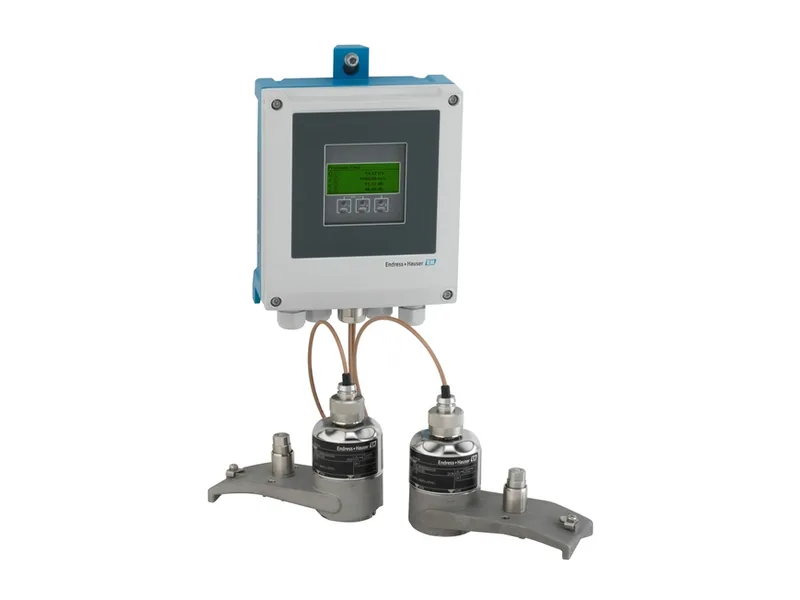
A clamp-on ultrasonic flow meter is the right tool in three situations: a retrofit where the line cannot be cut or shut down, a temporary check on a main pipe whose flow you no longer trust, and liquids such as RO permeate or demineralized water that are too low in conductivity for a magnetic meter. The transducers mount outside the pipe, so nothing touches the liquid and there is no pressure drop. The trade-off is sensitivity: get the pipe data, lining or straight run wrong and the reading drifts. This guide is for designers, retrofit contractors and plant operators measuring main-line flow. It does not cover small pulsing flows at a metering pump outlet.
How a clamp-on ultrasonic flow meter measures
A typical clamp-on ultrasonic flow meter uses the transit-time method. Two transducers on the pipe wall take turns sending and receiving ultrasonic pulses. Sound travels faster with the flow than against it, the time difference is proportional to velocity, and velocity times internal cross-section gives volume flow.
That principle explains the limits. A clamp-on ultrasonic flow meter has to know the true internal diameter, and a small error there grows into a larger flow error. The signal must pass through the wall, any lining and the liquid, so each layer that absorbs sound weakens it. Heavy gas bubbles or solids scatter the pulse and can interrupt the measurement.
Where a non-invasive flow meter makes sense
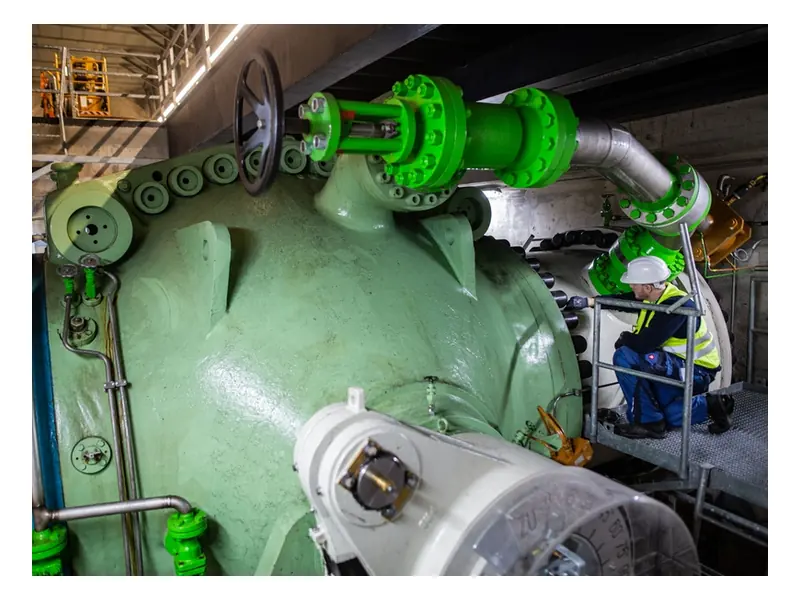
Figure 1: Endress+Hauser Prosonic Flow W 400 installation. Image source: Endress+Hauser official website
- Retrofits. Adding a measuring point to a running plant without cutting pipe or stopping supply.
- Large mains. In-line meters get heavier and more expensive as diameter grows; a clamp-on ultrasonic flow meter typically becomes more attractive on big pipes.
- Non-conductive liquids. Pure water, demineralized water and oils that a mag meter cannot read.
- Verification. When an existing meter looks wrong, or the flow signal behind a flow-paced chemical feed is in doubt, clamp on a portable ultrasonic flow meter and compare.
How the main-line flow signal drives proportional dosing is covered in dosing system control principles.
Pipe material, wall thickness and linings
For a clamp-on ultrasonic flow meter, carbon steel, stainless steel, PVC and PE are generally fine, but enter the material correctly because sound speed differs between them.
Old pipe causes most of the trouble. Tuberculated cast iron, flaking cement lining and internal scale all change the real bore and scatter the signal. Enter lining material and thickness separately. Rubber linings absorb a lot of sound and may force a different mounting arrangement or transducer. Measure wall thickness with an ultrasonic thickness gauge and derive the outside diameter from a measured circumference instead of trusting old drawings.
Clamp-on ultrasonic flow meter installation
Straight run and position
For a clamp-on ultrasonic flow meter, straight run matters more than almost anything else. The usual practice is a generous upstream straight length and a shorter downstream one, away from elbows, valves, pump discharges and reducers. Where space is tight, choose a model with flow-profile compensation.
On horizontal pipe, mount the transducers on the side of the pipe, not on top where air collects or on the bottom where sediment settles. The pipe has to run full; on vertical pipe, pick a section with upward flow.
V, Z or W mounting
In V mode the pulse reflects once off the far wall and both transducers sit on the same side. It is easy to install and common on small and medium pipes. In Z mode the transducers sit on opposite sides and the pulse crosses once, which loses less signal on large pipes or difficult liquids. Very small pipes may use W mode. Let the clamp-on ultrasonic flow meter transmitter calculate transducer spacing from the pipe data and set it exactly.
Coupling and fixing
Apply couplant evenly without trapped air. Gel is fine for short surveys, but it dries out on permanent installations, so coupling pads are the better choice there. Clean paint and rust off the contact area before mounting. Wear fall protection at height and take care not to grind into thin-walled pipe.
Checking meters with a portable ultrasonic flow meter
Most bad comparisons come from wrong pipe data or a test that is too short:
- Measure outside diameter and wall thickness, and confirm material and lining.
- Watch the signal strength and quality indicators; discard readings taken while they are poor.
- Log long enough to average, instead of reading instantaneous values.
- Make sure there are no branches, bypasses or leaks between the two meters.
If the clamp-on ultrasonic flow meter disagrees with a mag meter, do not condemn either one yet. Check the mag meter's conductivity, grounding and full-pipe conditions too, as discussed in magnetic flow meters for chemical dosing.
Example from a manufacturer
The Endress+Hauser Proline Prosonic Flow W 400 is a clamp-on ultrasonic flow meter that the manufacturer specifies for conductive and non-conductive liquids, with bidirectional measurement, pipe sizes DN15 to 4000, medium temperatures from –40 to +130 °C and maintenance-free coupling pads. Its FlowDC function is stated to hold specified accuracy with only 2 × DN of inlet run even with disturbed flow profiles, and a transducer version for GRP and plastic pipe is available. More options are under flow meters, and the general comparison for chemical feed systems is in dosing pump flow meter selection.
Conclusion
A clamp-on ultrasonic flow meter suits retrofits without pipe cutting, large mains, non-conductive liquids and temporary flow checks. Whether it reads well depends on accurate pipe data, a sensible location with enough straight run, and solid acoustic coupling. Send us the pipe size, material, lining, liquid and available straight length, and contact our engineers to confirm whether clamp-on fits and which mounting mode to use.
FAQ
Can a clamp-on ultrasonic flow meter measure wastewater?
It can handle wastewater with modest solids, but heavy gas or solids weaken or interrupt the signal. Raw sewage and sludge lines need assessment first and may need a different technology.
The pipe is insulated. What now?
The transducers must sit directly on the pipe wall. Remove insulation at the mounting point, then reinstate and weatherproof it afterward.
Portable or permanent?
A portable ultrasonic flow meter suits surveys and spot checks and is removed after each job. A permanent unit is built for long-term coupling and protection and sends a signal to the control system.
Why does the reading change when I move to another spot on the same pipe?
Usually a different flow profile or different pipe condition. Being close to an elbow or valve, or on a more heavily scaled section, will shift the reading.
Can it measure reverse flow?
The transit-time method can detect both directions; whether the meter displays and totalizes reverse flow depends on the model.