
Dosing Pump Flow Meter Selection: Calibration Column, Mag or Rotameter
Choosing a dosing pump flow meter is really about two questions: which type of meter suits your chemical and flow, and where in the line it should sit. Get either one wrong and the reading will not tell you what the pump is actually delivering.
The stroke rate and stroke length on the pump display are set values, not measured ones. A slightly leaking check valve, a bit of gas in the pump head or a change in back pressure will shift real output without any alarm. This guide covers dosing pump flow meter selection and location for engineers and operators.
Why a dosing system needs its own flow meter
Many buyers assume a metering pump measures itself. In practice, diaphragm pump output depends on suction conditions, discharge pressure and valve sealing. A pump calibrated at 0.5 MPa will usually lose a few percent of output at 1.0 MPa. With sodium hypochlorite, which releases gas, a gas-locked head may deliver only half its rated flow while the display looks normal.
A dosing pump flow meter does two jobs. During commissioning and routine checks it confirms real output. During operation it monitors flow online, raises a low-flow alarm and can interlock with the PLC to stop the pump or start the standby unit. The first job only needs a calibration column. The second needs an online meter with a 4–20 mA or pulse output.
Types of dosing pump flow meter
There are four common dosing pump flow meter options, each with a clear range of use.
Calibration column: the basic dosing pump flow meter
A calibration column is a graduated transparent tube, usually PVC or glass, fitted on the suction line with a changeover valve. To check output, close the tank outlet, let the pump draw from the column and time the level drop over one minute. It has no electronics, does not mind corrosive chemicals and is not affected by pulsation. The limit is that it is a manual check, not an online measurement.
Magnetic flowmeter: conductive liquids, larger flows
A magnetic flowmeter has no moving parts and very low pressure loss. It suits dosing lines carrying tens of liters per hour or more. Check two points first:
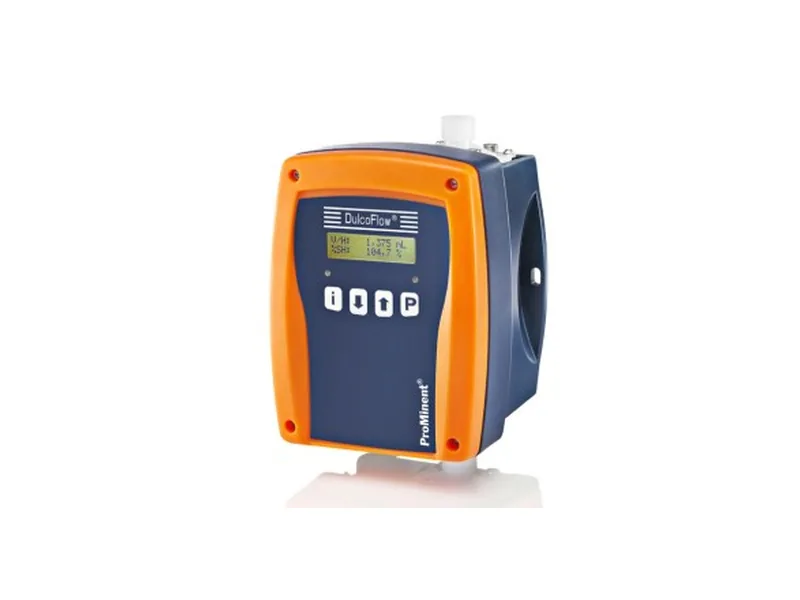
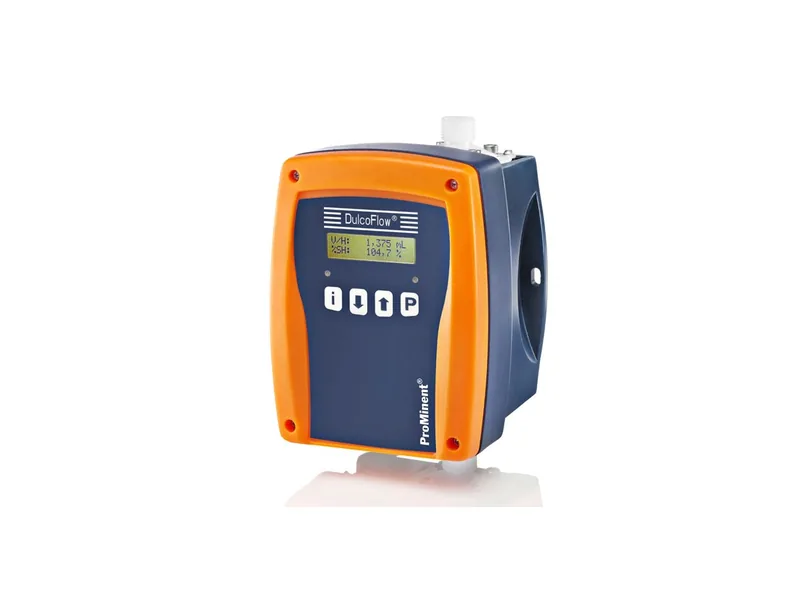
Figure 1: ProMinent DULCOFLOW for pulsating flow. Image source: ProMinent official website
- The liquid must be conductive, typically above 5 μS/cm. Solvents and some very dilute solutions may not read.
- Liner and electrodes must resist the chemical. PTFE or PFA liners are common, with Hastelloy, tantalum or platinum electrodes depending on the acid or caustic.
The weak point is pulsation. Each pump stroke takes velocity from zero to peak, so the reading jumps. A mag meter used as a dosing pump flow meter generally needs a pulsation damper upstream of it.
Rotameter: simple, but sensitive to pulsation
A rotameter reads flow from the height of a float in a tapered tube. It needs no power. Glass tubes are read directly and metal tubes can carry a transmitter. It works well on steady, continuous flows such as dilution water or chemical lines fed by a centrifugal pump.
On a metering pump discharge it struggles. The float bounces with every stroke, the reading becomes meaningless and the float can be damaged. It also has to be mounted vertically with upward flow, and the scale is set for water, so density and viscosity corrections apply.
Ultrasonic meters built for pulsating flow
For small, strongly pulsating flows, meters designed specifically for metering pumps fill this gap. The ProMinent DULCOFLOW, for example, measures per stroke over a range of about 0.03 to 10 ml per stroke, with wetted parts in PVDF and PTFE. Because it relies on the pulsation, it is installed around 30 cm downstream of the pump and ahead of any damper.
Dosing pump flow meter selection checklist
Work through these points in order:
- Chemical properties. Conductivity, viscosity, solids content and any tendency to gas off. Non-conductive liquids rule out a mag meter.
- Flow range. Real flow should sit around 30% to 80% of the meter range. Oversized meters read poorly at the low end.
- Flow pattern. Metering pump discharge is pulsating; centrifugal or gravity flow is continuous. The choice of dosing pump flow meter differs for each.
- Pressure and temperature. Pressure rating should exceed the relief valve setting on the pump discharge.
- Materials. Choose wetted parts in PVC, PVDF, PTFE or 316L to suit the chemical.
- Signals. For PLC integration, pick 4–20 mA or pulse output. A low-flow alarm contact saves extra wiring.
Where to install a dosing pump flow meter
A good dosing pump flow meter in the wrong place gives bad data. The calibration column goes on the suction side, between the tank outlet valve and the pump inlet, with a three-way valve. Vent the top to atmosphere and keep its level above the pump inlet if possible.
Magnetic and variable-area meters go on the discharge side, after the pulsation damper and back pressure valve, where flow is smoother. A mag meter typically needs about five pipe diameters of straight run upstream and two downstream. Keep the pipe full and, if vertical, run flow upward.
Ultrasonic pulsation meters are the opposite: close to the pump outlet and before the damper. For any online dosing pump flow meter, add a bypass and two isolation valves so you can remove it without stopping the whole system.
Common mistakes on site
- Oversized range. A meter picked at twice the maximum flow may run at 10% of scale, where readings are unreliable.
- Rotameter straight on the pump outlet. The float bounces, operators suspect the pump and strip it for nothing.
- Hypochlorite lines without venting, where gas bubbles on the electrodes make the reading drift. A vent valve at the high point usually helps.
- Leaving the calibration column valve open after a test, so the pump empties the column and runs dry.
Conclusion
No single dosing pump flow meter fits every job. Fit a calibration column on every pump for commissioning and routine checks. Use a magnetic flowmeter for conductive chemicals and larger flows, with a damper ahead of it. Keep rotameters for steady flows. For small pulsating flows, consider an ultrasonic meter built for metering pumps. Choose by chemical, flow range, flow pattern, pressure and signal, then place the meter to suit its working principle.
For calibration steps, see our metering pump calibration method. For damper basics, read how a pulsation damper works and dosing pump damper installation. Browse flow meters for dosing systems or the ProMinent product range, or contact our engineers with your process data.
FAQ
Does every dosing system need a dosing pump flow meter?
A calibration column is recommended on every pump. Whether you add an online meter depends on the process; where dose rate affects compliance or safety, a meter with an alarm output is worth it.
Can a magnetic flowmeter measure sodium hypochlorite?
Yes, since it is conductive. Pick a PTFE liner with tantalum or platinum electrodes and vent the line to avoid gas bubbles.
Can I fit a rotameter on a metering pump outlet?
It is generally not recommended. The float bounces with each stroke. If you must, install a damper ahead of it so flow is steady.
How big should a calibration column be?
Size it for about one minute of maximum pump output. A pump rated at 60 L/h delivers around 1 L per minute, so a 1000 ml column usually fits.
What meter suits very low dosing rates?
Below a few liters per hour, mag meters and rotameters often struggle. Use a calibration column for checks and an ultrasonic meter designed for pulsating flow for online monitoring.