
Transmitter Range Setting: Zero Suppression, Elevation, Turndown
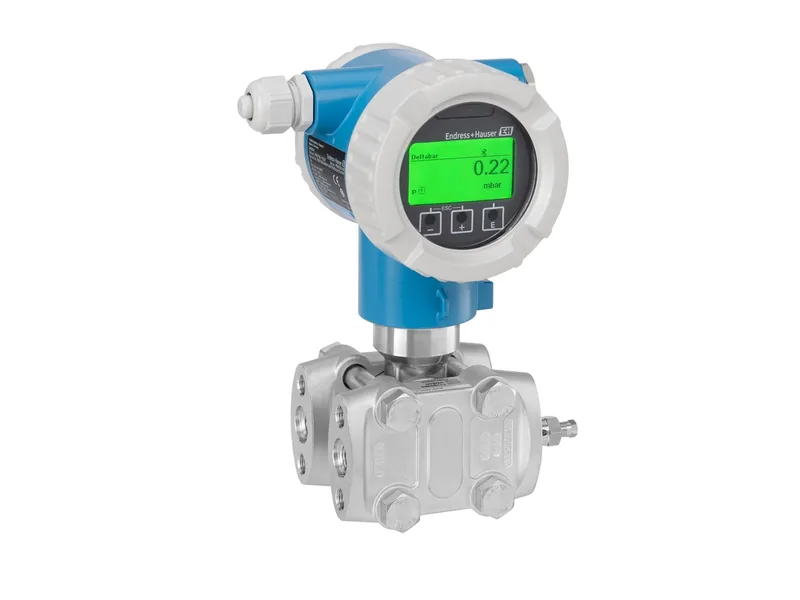
Transmitter range setting tells the instrument which pressure equals 4 mA and which equals 20 mA. Typing two numbers is easy. The hard part is that mounting position and impulse piping often move the true zero away from zero pressure, and that is where suppression and elevation come in. This article is for instrument technicians and design engineers working on level and differential pressure (DP) loops. It covers how to calculate the range, how turndown affects accuracy and how to verify the result. PLC scaling, density compensation and pump trips are left to other articles.
Terms you need before any transmitter range setting
Lower range value (LRV) and upper range value (URV): the pressures that correspond to 4 mA and 20 mA.
Span: URV minus LRV. With an LRV of 10 kPa and a URV of 40 kPa, the span is 30 kPa.
Zero suppression and elevation: shifting the LRV away from zero while keeping the span. Here, suppression means the LRV is a positive pressure and elevation means it is negative. Some companies use the words the other way round, so write the actual LRV and URV on the datasheet rather than relying on the label.
Turndown ratio: the sensor's maximum range divided by the span you actually set. A smaller span means a higher turndown.
Mix these up and the transmitter range setting goes wrong: the level display stops matching the tank. Someone then tweaks a factor in the control system to make the number look right, and the real error stays buried.
Transmitter range setting with zero suppression: transmitter below the tap
On an open tank, the transmitter is often mounted below the bottom tap with the impulse line full of liquid. With the tank empty, the transmitter still feels the liquid column in that line, so the zero sits at a positive pressure.
Worked example: water, transmitter 1 m below the tap, 0 to 3 m level wanted. Taking water at about 1000 kg/m³, 1 m of water is roughly 9.8 kPa:
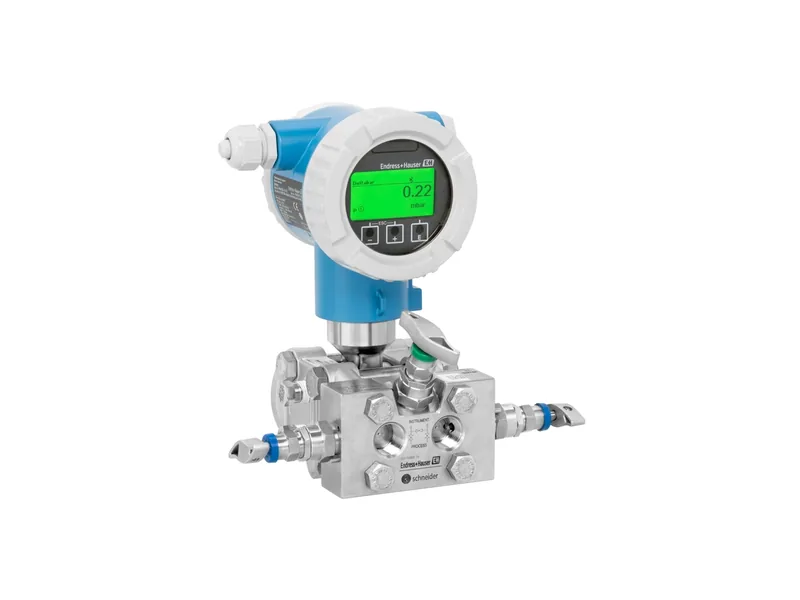
Figure 1: Endress+Hauser Deltabar PMD75B DP transmitter with valve manifold. Image source: Endress+Hauser official website
- LRV (0 m level) is about 9.8 kPa.
- URV (3 m level) is about 39.2 kPa.
- Span is about 29.4 kPa, with roughly 9.8 kPa of zero suppression.
If the transmitter range setting skips the suppression and uses 0 to 29.4 kPa, an empty tank still reads about 1 m. "The tank is empty but shows level" is the classic symptom.
When to use zero elevation: wet legs and remote seals
A closed, pressurized tank needs a DP transmitter: high side at the bottom, low side at the vapor space, so tank pressure cancels out.
If the low-side line is filled with liquid (a wet leg), or the transmitter uses capillary remote seals on both sides, the low side always carries a fixed liquid column. With the tank empty, DP is negative and the zero needs elevation. As level rises, DP moves from negative toward positive.
Two errors are common when doing a transmitter range setting on this layout. The fill fluid or seal liquid may not have the same density as the process, so each column must be calculated with its own density. And a wet leg that leaks or evaporates lets the zero drift slowly; check that the low-side leg stays full during rounds.
Where the vapor condenses easily, a dry leg slowly fills with condensate and the zero wanders. In that case it is often better to build a wet leg on purpose and apply elevation.
Transmitter turndown ratio and accuracy
It is tempting to buy one wide-range transmitter and turn it down hard during transmitter range setting in the field. It works, but accuracy pays the price.
Accuracy is normally stated as a percentage of span or of the sensor's upper limit, and the higher the turndown, the larger the real error relative to the span you set. Temperature effects grow with it. The manual usually states the turndown within which reference accuracy still applies.
A sound approach to transmitter range setting: calculate the span you actually need, including suppression or elevation, then choose the sensor range that just covers it without extreme turndown. A smaller sensor range beats a large one turned down to the limit.
Configuring and verifying after transmitter range setting
Smart transmitters can be set from local buttons, a handheld or software. The official page for the Endress+Hauser Deltabar PMD75B differential pressure transmitter notes remote operation through the SmartBlue App over Bluetooth, wizards that guide setup and verification, and Heartbeat Technology that can flag anomalies such as plugged impulse lines.
Whatever tool you use, verify every transmitter range setting:
- Zero check. Drain an open tank below the tap, or open the equalizing valve on a DP transmitter, and confirm the output matches 4 mA or the intended LRV.
- Span check. Apply the URV with a pressure calibrator if you have one; otherwise compare two or three points against a dipstick or magnetic level gauge.
- Midpoint check. Confirm a middle point sits within tolerance.
Record each transmitter range setting (suppression or elevation, span, process density and mounting height) in the instrument file so the next replacement or fluid change starts from facts.
Safety note: before removing a transmitter or operating a three-valve manifold on pressurized equipment, confirm isolation and bleed down to zero. Wear protection for toxic or corrosive fluids. Operating the manifold in the wrong order can overpressure one side of the sensor.
Conclusion
Good transmitter range setting starts with locating the true zero: suppression when the transmitter sits below the tap, elevation for wet legs and double remote seals. Keep turndown moderate by choosing the right sensor range, then verify zero, span and a midpoint and write the values down. Browse pressure transmitters and level transmitters, see how a pressure transmitter protects a dosing system, and compare options in dosing tank level gauge selection. Send tank type, mounting height, fluid density and required range and contact our engineers to calculate the offset.
FAQ
Does zero suppression and elevation reduce accuracy?
Shifting the zero leaves the span unchanged. With large offsets, though, the URV moves higher, so confirm the sensor range still covers it.
The empty tank shows level after transmitter range setting. How do I fix it?
Check whether the transmitter sits below the tap with a liquid-filled line. If so, apply suppression equal to that column instead of subtracting a constant in the control system.
Why is the LRV negative on my remote seal level transmitter?
Fill fluid in the low-side capillary creates a fixed column, so DP is negative with an empty tank. A negative LRV is normal zero elevation.
What transmitter turndown ratio is acceptable?
Stay inside the range where the manufacturer still guarantees reference accuracy, and avoid running near the maximum turndown. A smaller sensor range is the better fix.
Do I need a new transmitter range setting after changing the process fluid?
Yes. A different density changes the pressure for the same level, so recalculate the offset and span and verify again.