
Water Quality Data Logger: Getting Analyzer Data to the Platform
An online analyzer can be perfectly calibrated and still be useless if its numbers never reach the monitoring platform, or arrive and get marked invalid. The short answer: the link between the instruments and the platform is a water quality data logger with telemetry. It reads each analyzer's value and status, packages them in the protocol the platform expects, sends them over 4G or a wired network, stores data locally when the link drops, and back-fills once it returns. Most problems come from three places: signal mapping, status flags and back-fill. This article is for station operators and the integrators who commission monitoring shelters.
What a water quality data logger actually does
Think of it as translator and courier for the shelter. Each instrument speaks differently. One gives 4-20mA, another talks RS-485 Modbus, a third only has a dry fault contact. The water quality data logger takes all of these in, scales them to engineering units, adds a time stamp and a status flag, and sends the record in the format the receiving system requires.
Regulatory platforms often specify their own transmission standard; utility SCADA or cloud dashboards may want Modbus TCP, MQTT or a vendor protocol. Before buying hardware, ask the platform owner which protocol, which data items and which reporting interval they expect. Logger selection and configuration follow from that.
Collecting analog and digital signals
For 4-20mA inputs the water quality data logger converts current to concentration using the configured range. The range set in the logger must match the range set in the analyzer. Change the analyzer span without changing the logger and every value on the platform shifts. Wiring and isolation on the PLC side are covered in analyzer 4-20mA to PLC wiring, so we will not repeat them here.
Digital inputs carry status: running, maintenance, fault, reagent low. Many shelters wire the measured values but skip the status contacts, so readings taken during a calibration check go up as normal data. Wire every status signal into the water quality data logger; you will need them for validity flags.
Modbus settings to check on a water quality data logger
Many analyzers now offer RS-485 Modbus, and one cable can return the measured value, temperature, alarms and the instrument clock. Commissioning usually stalls on the same items:
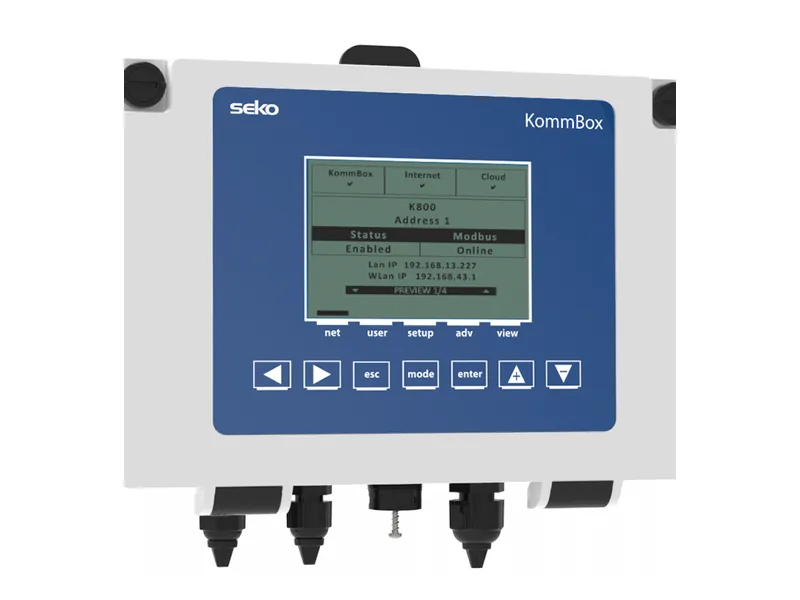
Figure 1: SEKO KommBox gateway, angled view. Image source: SEKO official website
- Slave address, baud rate, parity and stop bits must match the analyzer exactly
- Register numbering may start at 0 in one manual and 1 in the logger software, an offset of one
- Integer or floating point, and for floats the byte order, which you may need to try both ways before the value looks sane
- Polling interval: with several analyzers on one bus, polling too fast leads to timeouts
Once it works, compare the analyzer display with the platform value at several times of day to rule out offsets or scaling errors. If metering pumps share the bus, see 4-20mA, pulse and RS485 Modbus pump control compared for how to plan it.
4G or wired upload
If the shelter sits inside a plant or city where fiber or Ethernet is available, use it. It is steadier and has less delay. Remote river stations and outfall shelters often have only cellular coverage. Check the bands and carriers the water quality data logger supports, and run the antenna outside the steel cabinet, which can cut the signal badly.
Critical stations can run dual paths, wired as primary and 4G as backup, or send to two platforms at once. Also keep the clock of the water quality data logger synchronized. A drifting clock puts hourly and minute records in the wrong windows, and the platform will flag them.
Making back-fill after outages reliable
Network drops will happen; losing data should not. Reliable back-fill needs:
- Enough local storage in the water quality data logger to hold minute and hourly data for the expected outage
- Automatic re-sending after the link recovers, with the original time stamps, not the time of re-sending
- A platform that accepts and recognizes back-filled records instead of discarding them as duplicates
- A UPS or power-loss protection so storage is not corrupted when power fails
Test back-fill during acceptance. Pull the network for a while, restore it, and confirm the gap closes on the platform. Many stations discover back-fill was disabled only after an incident.
Flagging data validity
Platforms judge records by flag as well as value. Typical states are normal, maintenance, calibration, fault and over-range. The water quality data logger sets the flag from status inputs or the Modbus status word: while the analyzer runs a check standard, records are marked calibration; a reagent-low alarm marks them fault.
Get this right and the platform's data availability statistics make sense, and operators can see at a glance why a period looks odd. Confirm the flag logic with the platform owner, since requirements differ by region.
Gateway or data logger?
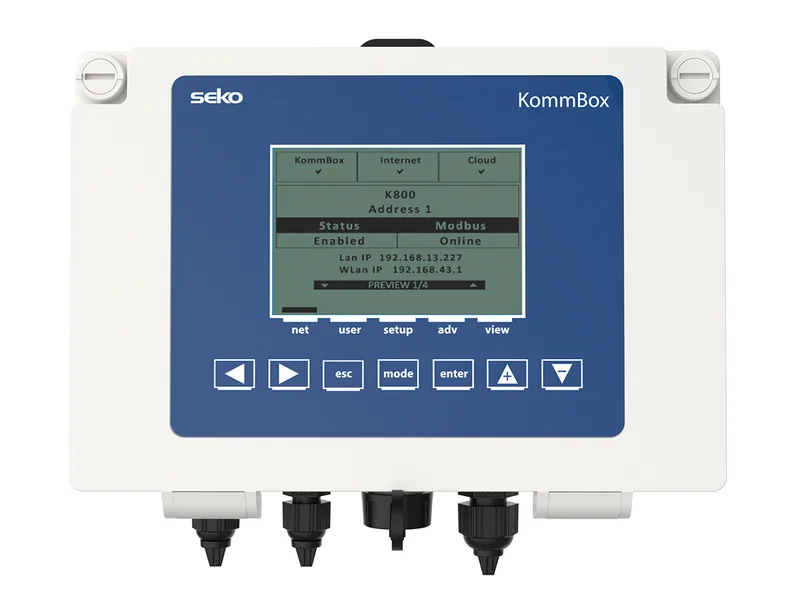
For connecting plant equipment to the cloud, for example to view a dosing skid remotely, an IoT gateway such as the SEKO KommBox Modbus gateway is the usual tool, focused on equipment status and remote viewing. A logger feeding a regulatory platform puts more weight on protocol compliance, flags and back-fill. Both read Modbus; pick by who will use the data.
Conclusion
Getting analyzer data onto a platform comes down to configuring the water quality data logger properly: matching ranges, correct Modbus mapping, every status signal wired, a stable uplink, back-fill tested in practice and validity flags agreed with the platform. Then the numbers on screen can be trusted. Related hardware is listed under gateways, and choosing the right dosing automation level helps when telemetry is part of a wider control upgrade. Send us your instrument list, the platform protocol and the network conditions at the shelter, and contact our engineers to review the data path.
FAQ
Can the PLC also act as the water quality data logger?
On small stations a PLC can collect the data. When you must report to a regulatory platform, a dedicated logger usually handles protocol, back-fill and flags with less custom work.
The analyzer reads fine but the platform shows zero. Where do I start?
Check that the water quality data logger channel actually receives a value, then the register address and data type, and finally whether that data item is enabled in the upload configuration.
The 4G signal keeps dropping. What can I do?
Move the antenna outside and higher, try a SIM from a carrier with better local coverage, and make sure back-fill is enabled so outage periods are recovered.
The platform rejects back-filled data. Why?
Check that back-filled records carry the original time stamps and follow the platform protocol, then ask the platform owner about any time window for late data.
Should data recorded during calibration be uploaded?
Usually yes, but with a calibration or maintenance flag so the platform separates it from normal readings. Follow your local platform rules.