
Solenoid Dosing Pump Lifespan: What Wears Out and When to Replace It
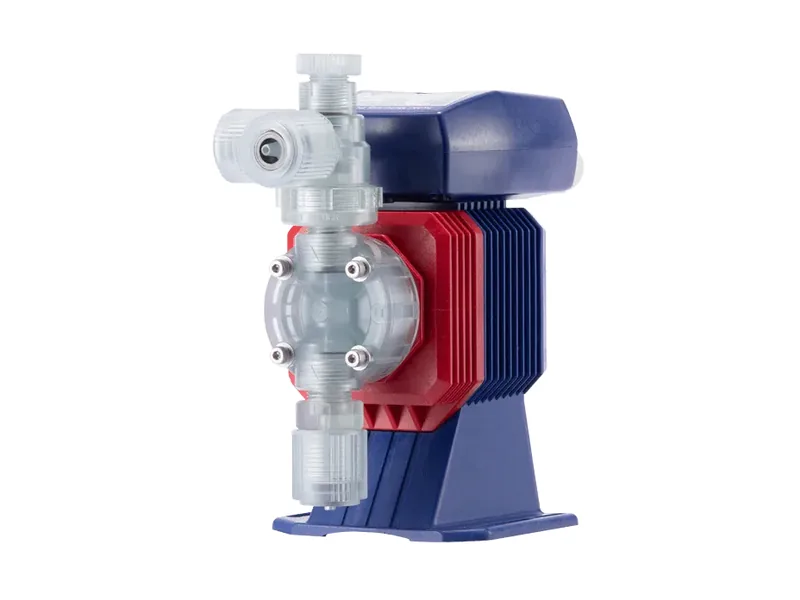
There is no fixed number of years for solenoid dosing pump lifespan, and any supplier who promises one is guessing. Two identical pumps can age at very different rates: one feeding a mild inhibitor into a cooling tower keeps going for years, while another feeding sodium hypochlorite from a tank that often runs dry starts failing much sooner. What sets the real solenoid dosing pump lifespan is how long the drive end survives, and whether the wear parts on the liquid end get replaced before they cause damage. We will use the NEWDOSE DFD and DP solenoid diaphragm pumps as the main example, because their manual is clear about what the operator can fix and what goes back to the factory, plus the IWAKI EHN for power and enclosure points.
Two Halves Decide Solenoid Dosing Pump Lifespan
A solenoid pump is simple. When the coil is energized, the armature pushes a PTFE diaphragm forward and drives liquid out through the discharge valve. When the power drops, a spring pulls it back and fresh liquid comes in through the suction valve. That gives you two halves to think about.
The drive end is the solenoid, the return spring, the control board and the keypad. This is the pump itself. The NEWDOSE manual says a damaged drive unit (the solenoid) goes back to the factory, while a failed circuit board can be swapped.
The liquid end is the pump head, diaphragm, suction and discharge valves, balls, seats and O-rings. These are consumables. They are cheap compared with the pump, and they are meant to be replaced. Many "dead" pumps are really a worn ball seat or a split diaphragm.
How Long Do Dosing Pumps Last? The Factors That Matter
Chemical compatibility
Chemical attack is the most common reason a pump dies early. The head material (PP, PVC, PVDF or 316 stainless) and the seal elastomer have to match the chemical. If the head itself cracks from attack, you are no longer talking about a seal kit, and the solenoid dosing pump lifespan is cut short regardless of how good the drive is.
Dry running and dead heading
According to the NEWDOSE manual, running dry will not instantly rupture the diaphragm or burn out the pump, but long or repeated dry running heats the unit and speeds up aging of the electronics and the solenoid. An empty tank with the pump still clicking is a daily sight in many chemical rooms. A low level switch that stops the pump is the cheapest way to protect solenoid dosing pump lifespan.
Starting against a closed discharge valve is worse. The manual forbids running with the discharge line fully closed because it can cause leaks or a burst line.
Stroke rate and duty
Every stroke flexes the diaphragm and seats the valve balls. A pump that runs near its maximum stroke rate all day uses up its wear parts much faster than one running in the middle of its range. Sizing with some spare capacity, so the pump does not live at full speed, is good for solenoid dosing pump lifespan.
Power and location
Unstable voltage, frequent outages and surges hit the control board first. The IWAKI EHN range uses a wide AC100-240V supply, and its drive and control units carry protection equivalent to IP66, yet the catalog still says the pump must not be installed outdoors. Direct sun, damp corners and acid fumes age the housing and the electronics. Both shorten solenoid dosing pump lifespan quietly. Keep the pump in a ventilated spot away from tanks that vent corrosive vapor.
Diaphragm Replacement Interval and Other Wear Signs
A fixed diaphragm replacement interval is hard to give. The NEWDOSE manual itself says that because liquids differ, it cannot state an exact cleaning interval for check valves and the foot filter; the user has to set it from experience on site. These signs say more about solenoid dosing pump lifespan than a calendar does:
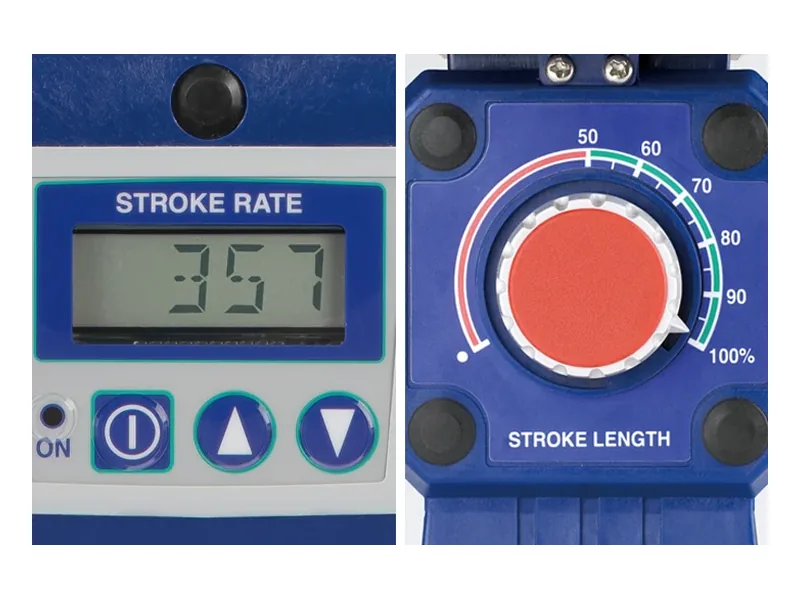
Figure 1: IWAKI EHN-R stroke rate display and stroke length knob. Image source: IWAKI official website
- Output drops or becomes unsteady after you have ruled out air lock and suction lift. Worn or crystallized ball seats are the usual cause.
- Liquid appears at the leak hole between the head and the drive. The diaphragm has probably failed, so stop the pump and replace it.
- The head weeps at the joints. Check the head bolts first, then look for chemically attacked seals.
- Lights on the panel behave oddly or the pump will not stroke. Check wiring, supply voltage and the fuse before blaming the board.
The manual recommends checking head bolt tightness and seal condition at least every six months, and more often on corrosive service. For a full routine, see our solenoid dosing pump maintenance schedule. For diaphragm timing in more depth, read how often to replace a metering pump diaphragm.
Repair or Replace: Extending Solenoid Dosing Pump Lifespan Sensibly
Start by finding which half failed. Liquid end problems are fixed with parts and do not end the solenoid dosing pump lifespan. Keep one set of diaphragm, valve balls, seats and O-rings on the shelf and downtime stays short.
If the drive end failed, weigh the pump age, whether the model is still in production, and how easy parts are to get. A coil that runs hot all the time, or a solenoid that keeps coming back after repair, is usually a sign to replace the pump rather than keep paying for repairs. Our guide to solenoid pump coil overheating explains the common causes.
Sometimes the process has changed and the old pump no longer has the flow or pressure it needs. Do not push it harder. Re-size for the new duty using our solenoid metering pump range or the series on the NEWDOSE brand page.
Conclusion
Solenoid dosing pump lifespan comes down to two things. The drive end suffers from dry running, poor power and hot or corrosive surroundings. The liquid end suffers from the wrong materials and from running flat out. Choose compatible materials, fit low level protection, check bolts and seals on schedule, and change the diaphragm and valves when the signs appear. If your duty is unusual, send the chemical, concentration, flow and pressure to contact our engineers and we will check the match.
FAQ
Does a broken solenoid pump have to be replaced completely?
Usually not. Most failures are the diaphragm, a valve ball or a seal, and a parts kit fixes them. Only drive failures such as a damaged solenoid need a factory repair or a new pump.
Is there a guaranteed solenoid dosing pump lifespan?
No. Manufacturers give a warranty, not a life guarantee. The NEWDOSE solenoid pump manual states a one-year warranty that excludes damage from improper operation. After that, wear parts are still available and the drive can be repaired.
Does stroke rate really affect how long dosing pumps last?
Yes. A higher stroke rate means more flex cycles on the diaphragm and more seating cycles on the valves, so wear comes sooner. Running mid-range is an easy way to stretch solenoid dosing pump lifespan.
What spare parts should I stock?
At least one diaphragm, suction and discharge valve balls and seats, and a set of O-rings. On aggressive chemicals, a spare pump head is worth having. Match the parts to your head material.
What should I do before restarting a pump that sat idle for months?
Flush the head with clean water before shutdown so chemicals do not crystallize. Before restart, check that the balls are not stuck and the seals have not hardened, bleed the air, then start dosing.