
Solar Cell Texturing Chemicals: Metering, Replenishment, Materials
Metering solar cell texturing chemicals comes down to two jobs. Put back exactly what each wafer batch consumes or drags out, and do it without adding metal ions or particles to the bath. Every batch through a texturing or cleaning tank uses up some chemistry and carries some away on the wafers. If replenishment lags, texture quality and cleaning results drift. This article covers replenishment for texturing and cleaning baths and the wetted materials that suit them, for process and equipment engineers at cell plants and the integrators who build wet benches.
Alkaline and acid texturing: what the bath needs
Monocrystalline wafers are usually textured in potassium or sodium hydroxide with a texturing additive that controls pyramid size and uniformity. Among solar cell texturing chemicals, the caustic is high volume and normally arrives from a central chemical supply. The additive is low volume but sensitive: a little too much or too little changes the surface. That makes additive feed the most precision-critical part of photovoltaic wet chemical dosing.
Multicrystalline wafers have traditionally used acid texturing with an HF and nitric acid mix. The reaction is exothermic and fuming, so replenishment has to be coordinated with bath cooling and exhaust.
Either way, the logic for replenishing solar cell texturing chemicals is similar. Add a fixed amount per wafer batch or per run time, then correct it from bath analysis. Small pumps that accept external pulses suit this well. The tool PLC sends pulses per batch, and the pump adds the matching volume.
Solar wafer cleaning chemical metering: HF, HCl, H₂O₂
After texturing, cleaning steps use hydrofluoric acid, hydrochloric acid, hydrogen peroxide and ammonia, alone or blended. Each behaves differently:
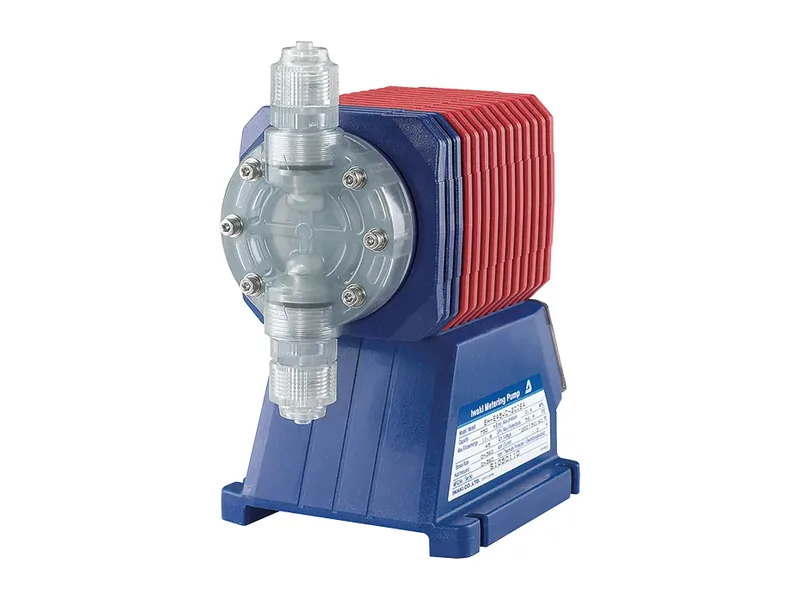
Figure 1: IWAKI EH-E series electromagnetic metering pump. Image source: IWAKI official website
- HF strips oxide, and its concentration sets the etch, so feed must be steady.
- HCl removes metal contamination; its fumes attack nearby metalwork, so seal fittings well.
- H₂O₂ decomposes into oxygen gas, which collects in the pump head and cuts output or stops it entirely.
For peroxide and other gassing liquids, choose a solenoid pump with an auto-degassing head. The trade-offs are explained in Iwaki EHN auto-degassing vs high-pressure heads.
Wetted materials for high-purity chemicals
Purity is what separates solar cell texturing chemicals from ordinary water treatment dosing. Keep wetted parts fluoropolymer and avoid metal. A stainless head that resists the acid can still leach trace metal ions that hurt carrier lifetime and cell efficiency.
A typical build for solar cell texturing chemicals and cleaning baths looks like this:
- PVDF or PTFE pump heads with ceramic or PTFE balls, checked against concentration and temperature.
- PFA tubing and fittings, welded or flared, with minimal thread sealant.
- Low-extractable filter cartridges between the pump outlet and the bath inlet.
- Ultrapure water flushing of new lines until resistivity or particle counts are in spec, before chemical goes in.
For matching materials to chemicals, see metering pump material compatibility.
Replenishment control: fixed, ratio or analyzer feedback
Plants replenish solar cell texturing chemicals and cleaning baths in three common ways:
- Fixed dose per batch: simple and reliable where consumption is stable.
- Ratio dosing tied to wafer count, output or the main chemical feed: useful for multi-component recipes.
- Analyzer feedback from an online concentration analyzer or conductivity signal: best for sensitive baths, at the cost of instrument upkeep.
Many lines use the first two for control and the analyzer for correction. Whatever you choose, guard against overdosing. Calibrate the volume per pulse, set a replenishment ceiling in the PLC, and stop and alarm when bath analysis looks wrong.
Choosing a pump for solar cell texturing chemicals
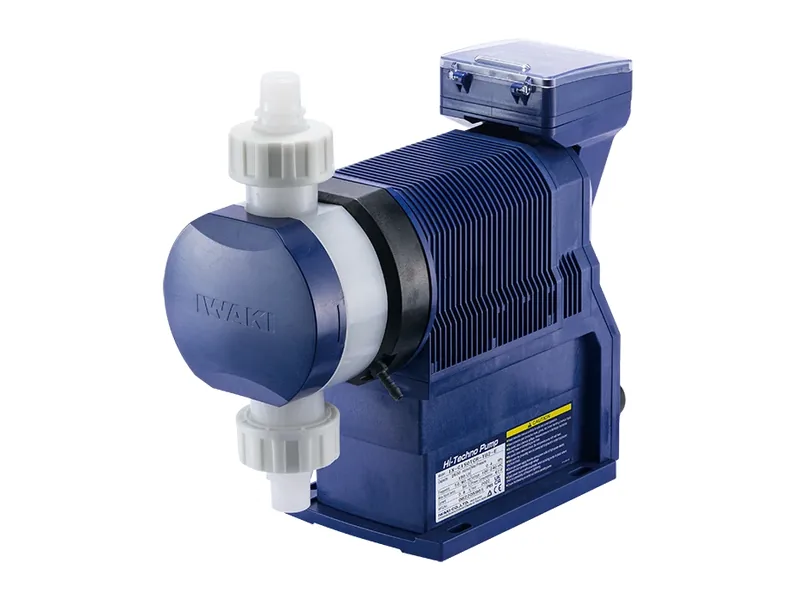
Tool-mounted replenishment pumps are usually small solenoid diaphragm pumps or stepper-driven diaphragm pumps. Repeatability, external control inputs and head material matter more than raw capacity. IWAKI's IX series is a direct-drive diaphragm metering pump and its EH-E series is an electromagnetic metering pump; confirm head material options against your chemical and flow. See solenoid metering pumps or the IWAKI IX series.
Anyone handling HF must wear an acid face shield, gloves and protective clothing, with calcium gluconate gel on hand. Stop the pump and relieve pressure before opening a head or line, and flush residual chemical out with ultrapure water.
Commissioning tips for solar cell texturing chemicals
Before the line ramps up, run each pump on ultrapure water and measure the real volume per pulse with a graduated cylinder, then repeat with the actual chemical, since viscosity and gassing change the result. Check that the PLC pulse width matches what the pump expects. Log replenishment volume against wafer count for the first weeks; a steady ratio means the dosing of solar cell texturing chemicals is under control, while drift points to gas, worn valves or a bath problem.
A note on wastewater
Fluoride and acid rinse water from texturing and cleaning should be collected separately and treated with calcium precipitation and neutralization; see fluoride wastewater treatment in semiconductor plants.
Conclusion
Metering solar cell texturing chemicals is about accurate volume and zero contamination. Feed texturing additive and HF, HCl and H₂O₂ cleaning baths with small, precisely controlled diaphragm pumps paced by wafer count or time, and correct from bath analysis. Build wetted parts from PVDF, PTFE and PFA, not metal. Use auto-degassing heads for peroxide and treat HF with full protection. Send us the chemicals, concentrations, replenishment volumes and control signals, and contact our engineers to specify pumps and tubing.
FAQ
Can the texturing additive be premixed with the caustic?
It can, but then the ratio is fixed. While the process is still being tuned, give the additive its own pump.
Can replenishment pumps use stainless steel heads?
Not recommended. Stainless can leach metal ions into the bath. Use PVDF or PTFE heads for high-purity duty.
Why does peroxide output keep dropping?
Usually gas in the pump head. Check for an auto-degassing head and any high point in the suction line, vent the pump and recalibrate.
What signal controls pumps for solar cell texturing chemicals?
Pulse input from the tool PLC, based on wafer count or time, is most common. A 4–20 mA signal from an online analyzer can trim the feed.
How long should new PFA lines be flushed?
There is no fixed time. Flush until outlet resistivity, particle count or metal ion results meet spec, then introduce chemical.