
Slaughterhouse Wastewater Treatment: DAF, Coagulant and Disinfection
Slaughterhouse wastewater is rich in blood, fat, protein, hair and small pieces of tissue, so the chemical program has to concentrate on the front end. Screens and grease traps take out the solids, coagulant and polymer ahead of dissolved air flotation (DAF) remove fat and blood protein, and only then can the biology and disinfection steps do their job. This article follows the water through a typical meat plant treatment system and explains what to dose, where, and which pumps fit.
Why slaughterhouse wastewater is demanding
The flow comes from lairage washdown, bleeding, scalding and dehairing, evisceration, cutting and floor cleaning. It is red to brown, smells strong and carries high COD, high suspended solids and plenty of fat. It is rarely toxic and it biodegrades well, but when fat and protein reach the aeration tank unchecked they cause foaming and floating sludge.
Flow is also uneven. In most slaughterhouse wastewater systems, kill and washdown often happen in concentrated shifts, so the plant sees heavy hydraulic peaks followed by long quiet periods. A well-sized equalization tank makes every chemical step easier.
Dosing points in slaughterhouse wastewater treatment
A typical layout has these chemical feed points:
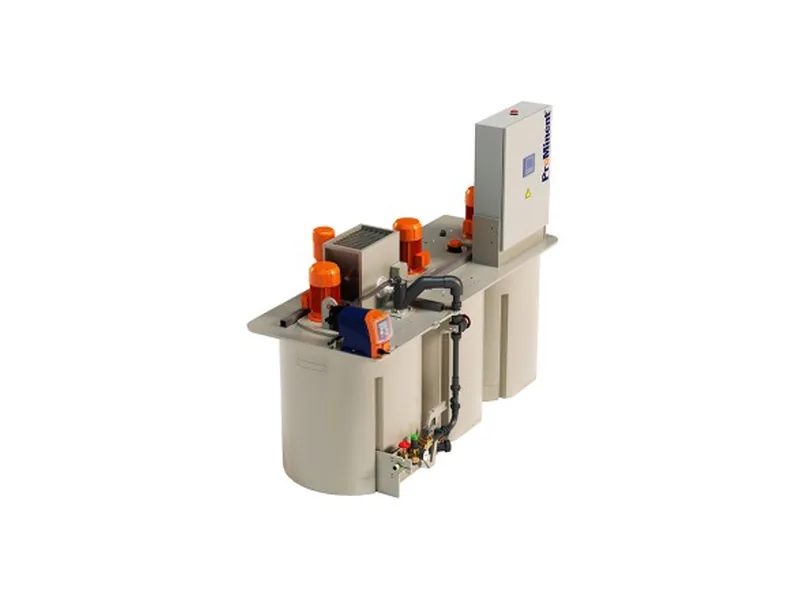
Figure 1: ProMinent Ultromat ULFa polymer preparation system. Image source: ProMinent official website
- Flash mix ahead of DAF: coagulant (PAC or an iron salt) followed by polymer. This is where most of the chemical goes.
- Equalization or pre-biology: acid or caustic if pH drifts, usually targeting about 6–9.
- Biological stage: alkalinity if nitrification consumes it; nutrients rarely, since most meat processing effluent already carries enough nitrogen and phosphorus.
- Tertiary step: a phosphorus removal chemical before filtration when the total phosphorus limit is tight.
- Disinfection: sodium hypochlorite or chlorine dioxide on the final effluent.
Screens and grease traps use no chemicals, but if they are neglected the dose everywhere else climbs. Hair and tissue in the DAF also jam scrapers and pipes.
Coagulant and polymer ahead of DAF
The coagulation step is the biggest chemical consumer in slaughterhouse wastewater treatment. Blood protein and emulsified fat stay dispersed unless a coagulant destabilizes them; polymer then binds the small floc into larger flocs that the microbubbles can lift. The order and spacing of the two chemicals matter, as covered in PAC and PAM dosing sequence. For the saturation and recycle side of the DAF, see DAF chemical dosing.
What works in practice:
- Add coagulant first and let it mix fully before polymer goes in. Reverse the order and the floc stays small and loose.
- Blood-heavy periods demand more coagulant. A fixed stroke setting leaves the effluent red at peak times, so flow-paced dosing is the better approach.
- DAF float is wet and goes on to dewatering. Select the DAF polymer and the dewatering polymer separately rather than forcing one grade to do both.
Disinfection and polishing
Most permits require disinfection of slaughterhouse wastewater. Sodium hypochlorite dosed in proportion to effluent flow is the common choice, and the pump head should handle gas release without air locking. Chlorine dioxide generators work too, with extra attention to precursor metering and safety. In both cases ammonia in the effluent drives demand: if nitrification is incomplete, the chlorine reacts with ammonia first and residual targets are hard to meet.
Compared with livestock farm effluent, abattoir wastewater carries more fat and solids and somewhat less ammonia. The approach in livestock wastewater dosing is a useful reference, but doses and chemical grades should be retested.
Pump selection for slaughterhouse wastewater
The chemicals in a slaughterhouse wastewater plant are PAC, polymer, acid, caustic, hypochlorite and phosphorus removal products, mostly with moderate corrosivity. Continuous PAC and polymer feeds at higher flows usually go to motor-driven diaphragm metering pumps. Polymer needs a low stroke rate, large valve balls and a short suction line. Hypochlorite needs a degassing head. Keep spare diaphragms and valve kits on site, because slaughterhouse wastewater plants often run around the clock and a pump waiting for parts means untreated effluent.
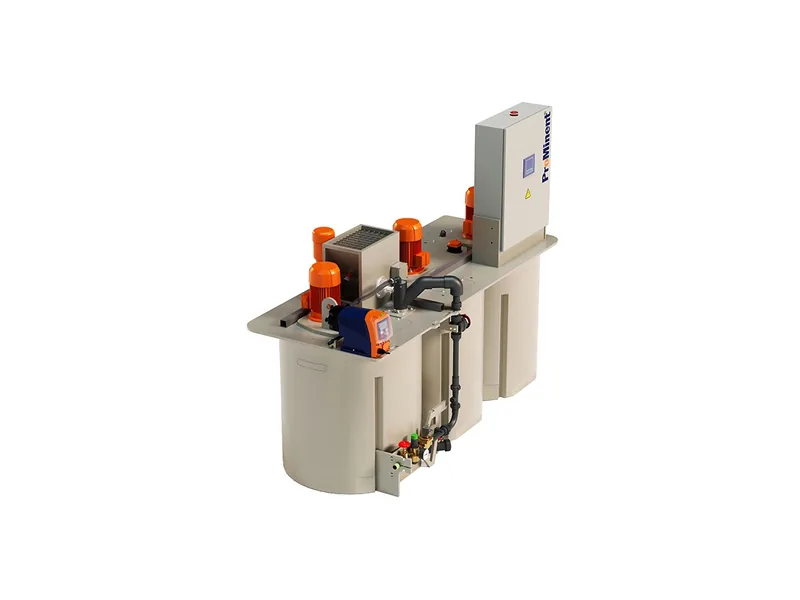
If the plant wants polymer make-down, aging and transfer in one unit, the ProMinent Ultromat ULFa polymer preparation system prepares solution at a steady concentration for the metering pumps to feed. Compare options on the ProMinent brand page and in the dosing skid category.
Common problems in slaughterhouse wastewater dosing
The issues operators report most often:
- Red DAF effluent: too little coagulant or too much polymer, giving loose floc that will not float. Confirm with a jar test.
- Blocked feed lines: polymer lumps from poor wetting, or hair getting past the screens into the mixing section. Improve screening and flush lines on a schedule.
- Low chlorine residual: usually unremoved ammonia; more hypochlorite will not fix the root cause.
- Winter fat build-up: grease coats pipes and the DAF tank edge, so consider insulation or heating.
Wear protection around hypochlorite, acid and caustic, and stop the pump and relieve pressure before opening a head.
Conclusion
Put the effort into the front end. Screens and grease traps remove hair and fat, coagulation and DAF strip blood protein and emulsified fat, and equalization absorbs washdown peaks so the biology runs steadily and disinfection meets its target. Pace coagulant and polymer to flow, confirm doses by jar test, and match polymer make-down with the right feed pumps. Send your daily flow, washdown schedule and discharge limits via the contact page and we will review the dosing points and pumps for your slaughterhouse wastewater plant.
FAQ
Can a slaughterhouse skip DAF?
It can, but results are usually worse. With fat and blood this heavy, coagulation plus DAF is the standard front end, and skipping it loads the biology much harder.
Which goes first, PAC or polymer?
PAC goes in ahead of polymer, with full mixing in between. Reversing them gives small, weak floc and poorer DAF removal.
Hypochlorite or chlorine dioxide for disinfection?
Both are common for slaughterhouse wastewater. Small plants tend to use hypochlorite for simplicity; larger plants concerned about by-products may choose chlorine dioxide.
What is the typical chemical dose for slaughterhouse wastewater?
There is no universal figure, because slaughterhouse wastewater varies with species, kill numbers and water use. Jar test the raw water and recheck whenever kill numbers or products change.
Why does the polymer pump keep losing prime?
Usually the solution is too thick, the suction line too long or the valves too small. Dilute the solution, shorten the suction and use a slow pump with large valves.