
DAF Chemical Dosing: Coagulant, Polymer and Air Saturation Setup
DAF chemical dosing follows a simple pattern: add coagulant such as PAC ahead of the static mixer so fast mixing destabilizes the colloids, then add polymer in the flocculation zone so the pin floc grows into dense flocs that hold onto micro bubbles. The recycle stream then floats those flocs to the surface. The quickest check is the float itself: firm and dense is good, loose with floc in the effluent is not. This guide is for wastewater operators and engineers who specify dosing packages for dissolved air flotation units. Emulsion breaking for oily water is a separate topic.
Why DAF chemical dosing happens in two steps
Dissolved air flotation relies on micro bubbles released from pressurized recycle water. The bubbles attach to flocs and lift them to the surface for skimming. Fine suspended particles and emulsified oil droplets are too small for bubbles to grip, so the water must be coagulated first and flocculated second.
PAC neutralizes surface charge so particles can come together as pin floc. Polymer is a long-chain flocculant that bridges pin floc into larger flocs. Reverse the order and the polymer coats particles before the coagulant can work, leaving weak, loose floc. See PAC and polymer dosing sequence for timing between the two.
Where to inject coagulant and polymer
Coagulant ahead of the mixer
Coagulant needs rapid, complete mixing. Inject it on the pipe between the feed pump discharge and the static mixer. Dosing after the mixer, or straight into the flocculation tank, leaves too little mixing time and creates local overdosing. Use an injection quill that reaches the pipe center rather than dripping along the wall.
Polymer in the flocculation zone
Polymer needs gentle mixing; high shear breaks the chains and the floc, which is the most common way DAF chemical dosing goes wrong at the polymer stage. Dose into the flocculation zone or the flocculation pipe just ahead of the contact zone. Keep the solution dilute, ideally with a post-dilution step inline, because concentrated polymer forms lumps and spreads unevenly.
Many DAF units include a pipe flocculator, a coiled section with separate injection points for coagulant and polymer. Leave enough reaction time between the two points, following the equipment designer's layout.
How the saturation system and DAF chemical dosing interact
The saturation system sets bubble size and quantity. DAF chemical dosing decides whether the flocs can hold those bubbles. Tune them together.
Problems we see often in the field:
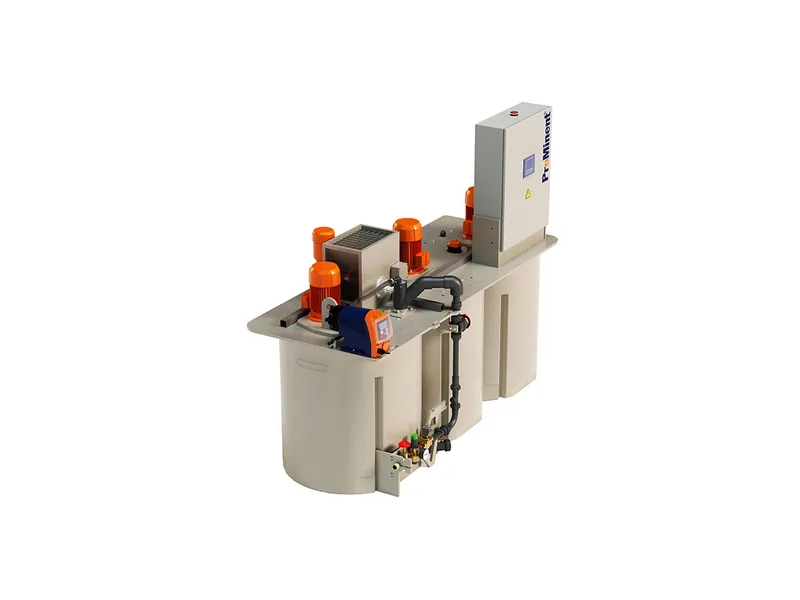
Figure 1: ProMinent DULCODOS ULFb polymer preparation system. Image source: ProMinent official website
- Low saturator pressure or blocked release valves give large, sparse bubbles. Even good floc will not float; the float is thin and sludge settles at the bottom.
- A low recycle ratio means too little air. At high load the effluent turns cloudy, and adding more chemical does nothing.
- Flocs that are large but fluffy shed bubbles and break up at the skimmer, usually from polymer overdose.
- Too much distance between the bubble release point and the floc contact zone lets bubbles coalesce.
Commission in that order: get the saturation system right before anything else and confirm a milky white cloud of fine bubbles. Only then adjust DAF chemical dosing.
Pacing DAF chemical dosing to the influent
Swings in influent flow and quality are the hardest part of DAF chemical dosing. A stable approach works on three levels:
- Flow pacing. An influent flow meter sends a 4–20 mA signal and both coagulant and polymer pumps follow it.
- Ratio correction by quality. When influent strength changes, run a jar test, find the new dose and update the ratio.
- Operator fine tuning. Check the float and effluent every shift and adjust when the float is loose or floc carries over.
An effluent turbidity meter is a useful reference. We do not recommend closing the polymer loop on turbidity alone because the lag is long and the loop tends to oscillate. For overdose symptoms, see signs of too much PAC or polymer.
Choosing pumps for coagulant and polymer dosing for DAF
In DAF chemical dosing, coagulant pumps are chosen for corrosion resistance; a diaphragm metering pump with a PVC or PVDF head is normally enough. Polymer solution is viscous, so use large suction lines and valves suited to high viscosity. At higher flows or concentrations a progressive cavity pump may be better; see diaphragm vs progressive cavity pumps for polymer.
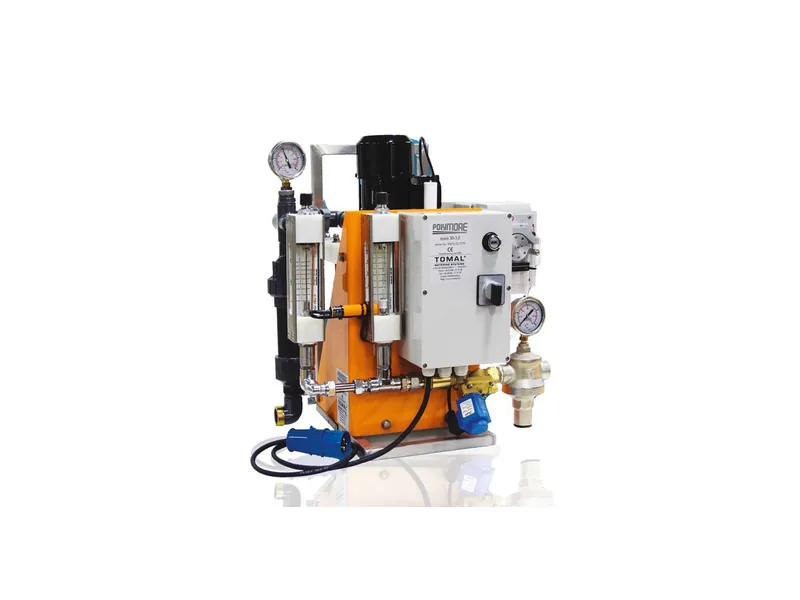
Polymer preparation matters as much as the pump. Powder needs proper wetting and maturing; emulsion polymer needs inline dilution and activation. ProMinent POLYMORE is an inline batching station for liquid polymer, while the DULCODOS ULFb three-chamber preparation system handles both powder and liquid polymer. Compare packaged options in our dosing skid range or on the ProMinent brand page.
Float troubleshooting
Thin float and cloudy effluent: check the saturation system before the coagulant dose. A float that slumps at the skimmer usually means too much polymer or poorly matured solution. Black, smelly float points to infrequent skimming, so the float turns septic on the surface. Fine floc in the effluent often means the polymer point is too far downstream or flocculation time is short; moving the injection point fixes DAF chemical dosing faster than adding more product.
Conclusion
Good DAF chemical dosing puts coagulant ahead of the mixer and polymer in the flocculation zone. Get the saturation system working before touching the chemistry, set doses by flow pacing and jar tests, and fine tune by watching the float and effluent. Choose pumps to suit each chemical and do not cut corners on polymer preparation. Send us your flow, water quality and DAF unit type, and contact our engineers to put together a dosing package.
FAQ
Can DAF chemical dosing use polymer only?
Some waters allow it, but in most wastewater polymer alone makes small, loose floc that bubbles cannot hold. Coagulant plus polymer is the norm.
Can coagulant and polymer share one pump?
No. Injection points, strength and viscosity all differ, and the two react when mixed. Use separate pumps.
The float is too wet. What can I do?
Let the float sit a little longer to drain and densify, and review polymer dose and skimmer frequency.
What saturator pressure is right?
Run at the DAF manufacturer's design value. Low pressure gives too little air, high pressure wastes energy; check release valves before adjusting.
Does high oil content change the dosing?
Yes. Emulsified oil needs emulsion breaking upstream; otherwise coagulant demand climbs and results stay unstable.