
Livestock Wastewater Treatment: Chemical Dosing Stage by Stage
Chemical dosing in livestock wastewater treatment works best when you split it by stage: coagulant and polymer around solids separation, a metal salt for phosphorus after the biological step, and disinfectant before discharge or reuse. Manure water from swine, dairy and poultry operations carries high suspended solids, high ammonia and high phosphorus, and its quality swings with the cleaning method and the season. One generic dosing package for the whole farm rarely copes with that.
This guide is written for farm environmental managers and for contractors who design and build livestock wastewater treatment plants. It covers where each chemical goes, what thick manure does to pumps and lines, and how to size metering pumps and polymer make-down units.
Why livestock wastewater treatment is different
Farm effluent is not a stronger version of municipal sewage. Even on scrape-clean swine farms, the water carries manure solids, feed waste and hair. Flush systems and deep-pit barns produce much thicker slurry, with suspended solids and COD far above domestic levels.
Ammonia is removed biologically, through nitrification and denitrification. Chemicals will not take it out. What chemicals can do is strip out particles, colloids and much of the phosphorus early, so the anaerobic and aerobic stages are not overloaded.
Flow is the other headache in livestock wastewater treatment. On washout days and after a batch of animals leaves, volume jumps; on normal days it drops. A dosing system set for average flow underdoses at peaks and wastes chemical in the quiet periods. Before you size anything, log a week of influent flow so you know the real peak-to-low ratio.
Dosing points in livestock wastewater treatment
Solids separation: coagulant and polymer for livestock wastewater treatment
After screening and the collection pit, most farms run a screw press or a separator. Many operators inject polymer into the feed line ahead of the separator so fine particles flocculate and the cake comes out drier. Where a clarifier or DAF follows, the usual sequence is coagulant first, then polymer, with enough mixing in between. Our article on coagulant and polymer dosing sequence explains the timing.
Coagulant needs rapid mixing at the injection point, either an inline static mixer or a stirred tank. Polymer needs gentle mixing afterward; hard agitation shears the floc apart again.
After biology: chemical phosphorus removal
In livestock wastewater treatment, effluent from anaerobic and aerobic stages often still exceeds total phosphorus limits. A ferric or aluminum salt, such as PAC or ferric sulfate, is dosed ahead of the secondary clarifier or in tertiary treatment. Set the dose with a jar test, then trim it against effluent phosphorus readings. See our guide to phosphorus removal dosing systems.
Before discharge or reuse: disinfection
Sodium hypochlorite is the common choice, with chlorine dioxide on some sites. Hypochlorite releases gas as it decomposes, so the pump head should vent easily and the tank should stay out of direct sun.
What thick manure does to the dosing system
In livestock wastewater treatment, most dosing failures come from the suction side and the injection point, not from the chemical. Polymer solution is viscous to begin with and gets thicker in cold weather. Fibers and hair in manure water wrap around injection valves and static mixers. Typical problems include:
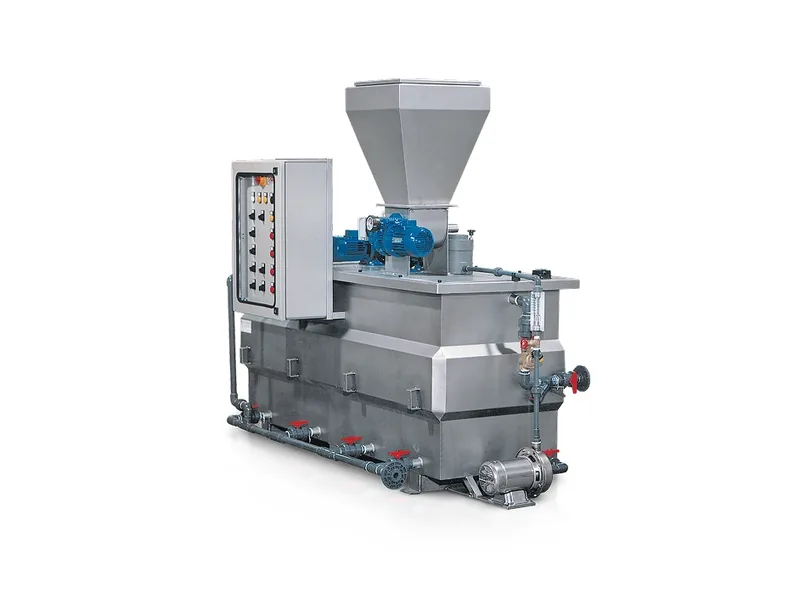
Figure 1: Doseuro Poly-unit polymer preparation plant. Image source: Doseuro official website
- a polymer suction line that is too narrow or too long, so the pump cannot fill even at full stroke;
- an injection quill pushed straight into the manure main with no flushing connection, which blocks after a few days of downtime;
- sludge settling in the chemical tank and jamming the check valves via the foot valve;
- outdoor lines with no insulation, where polymer viscosity rises sharply in winter.
The fixes are simple: use a short, oversized suction line for polymer, mount the pump close to and below the tank level, add a flush-water port at each injection point, and drain the tank bottom on a schedule. For viscosity troubleshooting, read why a polymer dosing pump stops pumping.
Choosing pumps and make-down units
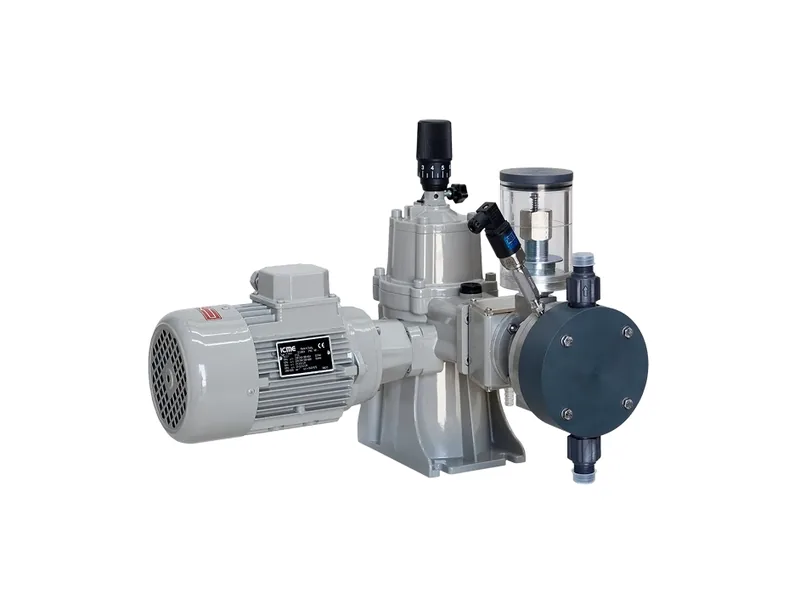
For livestock wastewater treatment, coagulant solutions are corrosive but clean, so a mechanical diaphragm metering pump with a PVC or PVDF head is a stable choice. Polymer is viscous, so pick a slow-running diaphragm pump with larger valve passages, or a progressive cavity pump.
Doseuro, the Italian brand made by FPZ, offers positive return mechanical diaphragm pumps with an oil-bath worm gear, designed for multi-head use, so one motor can drive both a coagulant head and a polymer head. Farms that use a lot of polymer are better off making it fresh from powder: the Doseuro Poly-unit is a compact automatic plant that prepares polyelectrolyte from powder or emulsion, with integrated maturation tanks. More on the brand at Doseuro metering pumps, and other options under mechanical diaphragm metering pumps.
Making the dose follow the flow
If flow varies a lot, install a magnetic flow meter on the influent and use its 4–20 mA signal to pace the pumps. Small farms without a meter should at least set two stroke positions, peak and normal, and switch between them at shift change.
Safety and routine maintenance in livestock wastewater treatment
Hypochlorite and coagulant are both corrosive. Wear goggles and chemical-resistant gloves when mixing. Before removing a pump head or injection valve, stop the pump, close the isolation valves and release line pressure. Spilled polymer is extremely slippery, so hose it down right away. Each shift, check tank levels, floc size and effluent color; once a week, clean the injection valves and foot valve strainers.
Conclusion
Good livestock wastewater treatment dosing is staged: coagulant and polymer around solids separation, a metal salt for phosphorus after biology, and disinfection before discharge. Each stage has its own chemical, injection point and pump type. Thick, fibrous manure water is what usually causes trouble, so design in large suction lines, flushing ports and tank drains from day one. Send us your herd size, cleaning method, daily wastewater volume and discharge limits, and contact our engineers to check pump selection and dose rates stage by stage.
FAQ
Can chemical dosing reduce ammonia in farm wastewater?
Not in any practical way. Ammonia removal in livestock wastewater treatment relies on biological nitrification and denitrification; coagulant and polymer mainly remove solids and phosphorus.
Cationic or anionic polymer for swine farm wastewater?
Run a jar test to decide. Cationic polymer usually works better for manure solids separation and sludge dewatering, while anionic grades sometimes suit the clarifier stage.
Can coagulant and polymer share one tank?
No. Mixed together they react early, form lumps and block pumps and lines. Keep separate tanks and separate pumps.
Does a small farm need an automatic polymer system?
Not always. In small-scale livestock wastewater treatment with low flow and staff on site, a tank plus a metering pump with manual batching is enough. Move to a make-down unit when polymer use and batching frequency go up.
Why does dosing work worse in winter?
Cold water slows flocculation and makes polymer thicker. Check solution temperature and viscosity first, allow more reaction time if possible, and insulate tanks and outdoor lines.