
Coagulant Dosing Point: Inline Static Mixer vs Flash Mix Tank
The right coagulant dosing point is wherever the water is most turbulent and the chemical can be dispersed through the whole flow within moments, followed directly by flocculation. In most water and wastewater plants that means the inlet of an inline static mixer or the impeller zone of a mechanical flash mix tank, with polymer added at a separate point further downstream. With the same PAC dose, a good dosing point gives large, firm floc; a poor one leaves you adding chemical while turbidity refuses to drop. This article is for process designers and the people who commission and run coagulation stages.
Why the coagulant dosing point depends on rapid mixing
Coagulants such as PAC, alum and ferric chloride hydrolyze extremely fast. To neutralize the charge on colloids they must reach all of the water almost immediately. If the chemical travels along the pipe wall before it spreads, the water that meets it first is overdosed and the rest is underdosed, and overall performance suffers. The real test of a coagulant dosing point is mixing intensity, not convenience.
Coagulant dosing point options: static mixer vs flash mix tank
Inline static mixer
A static mixer has fixed helical elements inside the pipe that repeatedly split and fold the flow using the water's own energy. No motor, small footprint, and a good fit for steady flow. The weakness is turndown: at low flow, velocity drops and mixing falls off, while at high flow head loss climbs.
Mechanical flash mix tank
A flash mix tank uses an agitator, so mixing energy is largely independent of throughput. It handles wide flow swings and the low night flows typical of small wastewater plants. The cost is a tank, power consumption and mixer maintenance.
A simple rule: steady flow and limited space favor an inline static mixer; wide flow variation or fast-changing raw water favors a flash mix tank. Upgraded plants often keep both, with the static mixer doing the main work and the tank as backup. In that case each unit needs its own coagulant dosing point, so operators can switch between them without re-piping.
How far the coagulant dosing point should be from flocculation
Dose at the mixer inlet or in the flash mix tank, then move the water into flocculation without delay. Keep the pipe run after mixing short and avoid big velocity changes. Too long or too fast and the young micro-floc shears apart; too slow and it settles in the pipe. The designer sets the exact distance from flow and pipe size. On site, floc visibly growing in the first part of the flocculation tank is a good sign. If floc only appears near the outlet, or the settled water looks hazy while the dose seems generous, check the coagulant dosing point before raising the dose.
A common fault in older plants is a coagulant dosing point far upstream of the mixer, so the chemical runs along a quiet straight pipe before it is mixed. For tie-in details, see chemical injection point design.
When to use multiple dosing points
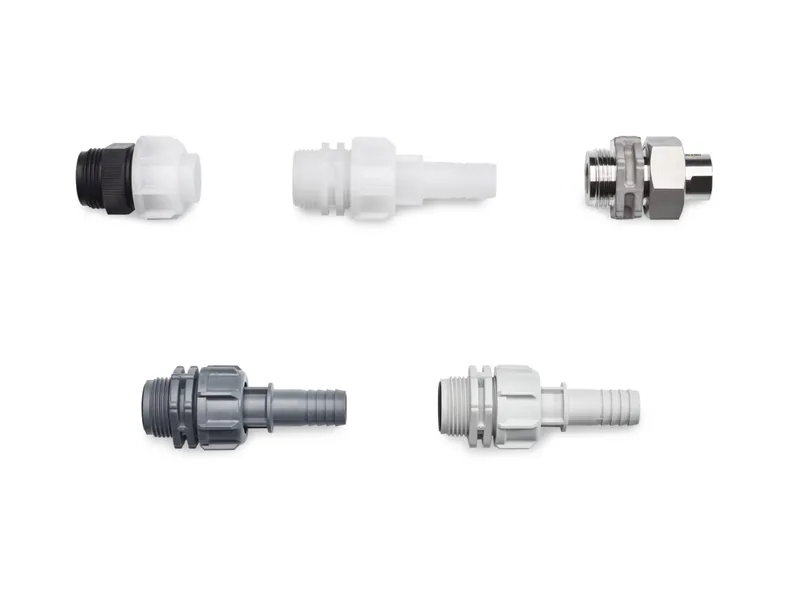
Figure 1: ProMinent injection valves. Image source: ProMinent official website
- Large pipes or open channels: one outlet cannot disperse the chemical, so use several outlets across the section or a diffuser.
- Parallel treatment trains: give each train its own pump and its own coagulant dosing point. Do not split one pump's output with tees; small differences in line resistance make the split uneven.
- Highly variable raw water: some plants pre-dose at the intake and trim at the mix tank. Confirm the benefit with jar tests.
Why PAC and polymer need separate points
PAC neutralizes charge and forms fine floc; polymer bridges that fine floc into large flocs. Dose both at one point and the polymer is consumed before the PAC has worked, and sticky gel can form on pipes and impellers. Put PAC at the rapid mix and polymer at the flocculation inlet or some distance downstream. Sequence and spacing are explained in PAC and PAM dosing sequence.
Injection valve, quill or diffuser
For pipes, the usual hardware is an injection valve, which also stops process water from flowing back into the dosing line; see what a dosing pump injection valve does. On larger pipes, an injection quill that carries the chemical to the pipe centerline disperses far better than a wall tapping. In channels and mix tanks, use a perforated diffuser pipe with holes spread across the section, and make it removable, because PAC scales the holes over time.
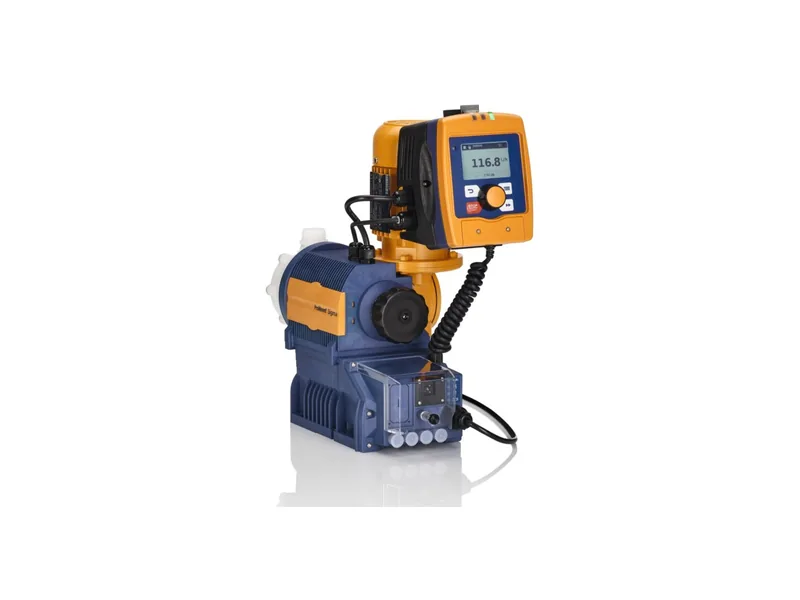
For pumps, plants often feed PAC with motor-driven diaphragm metering pumps such as the ProMinent Sigma/X series, fitted with an injection valve at each coagulant dosing point and paced by a raw water flow signal. Injection valves, back pressure valves and related parts are listed under dosing accessories.
Conclusion
Put the coagulant dosing point where mixing is strongest: an inline static mixer for steady flow, a flash mix tank when flow varies widely. Move mixed water into flocculation quickly, use several points and separate pumps for large pipes and parallel trains, and keep PAC and polymer apart. If turbidity is unstable, send us your flow, pipe size, mixing method and current dosing point, and contact our engineers to review the injection layout and pump setup.
FAQ
Can I dose coagulant into the suction of a lift pump?
Some small plants do, using the impeller as a mixer, and it works. The chemical can corrode or scale the impeller, though, so watch wear if you run it this way long term.
What happens if a static mixer is installed backwards?
Many static mixers are directional. Reversed, they mix worse and lose more head. Check the flow arrow on the housing.
Should PAC be diluted before the coagulant dosing point?
Dilution increases volume and helps dispersion, so many plants add carrier water after the pump. Set the ratio by testing.
Why does the dosing line keep scaling?
Diluted PAC sitting in a slow-moving line scales fastest. Flush the line after the pump stops and clean diffuser holes regularly.
Can several trains share one pump and one coagulant dosing point?
Not recommended. Tee splits depend on line resistance and are rarely even. Use one pump per train, or a multi-head pump with each head adjusted separately.