
Paper Mill Wastewater Treatment Chemicals: Coagulation, DAF, Sludge
Most paper mill wastewater treatment chemicals serve one goal: destabilize fine fibers, fillers and colloids with a coagulant (PAC or ferric sulfate), bind them into large floc with polymer, and separate them by dissolved air flotation or settling. Biology then needs nutrients, and the sludge needs polymer again before dewatering. Choosing the chemicals is rarely the hard part. Getting the feed points, dose control and pumps right, with fiber and sticky polymer in the mix, is where mills lose time. This guide is for mill effluent operators and engineers designing the chemical feed.
Know which stream you are treating
Pulp and paper effluent is not one water, and paper mill wastewater treatment chemicals are dosed differently for each stream.
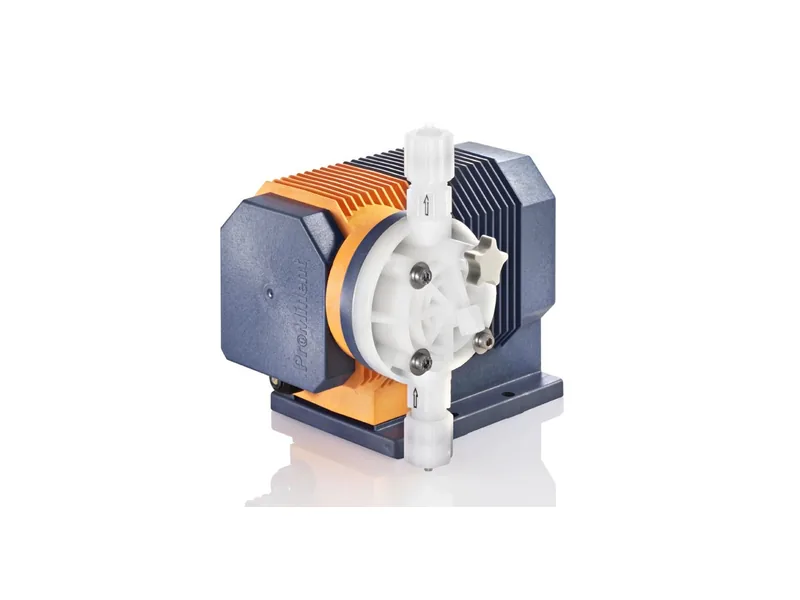
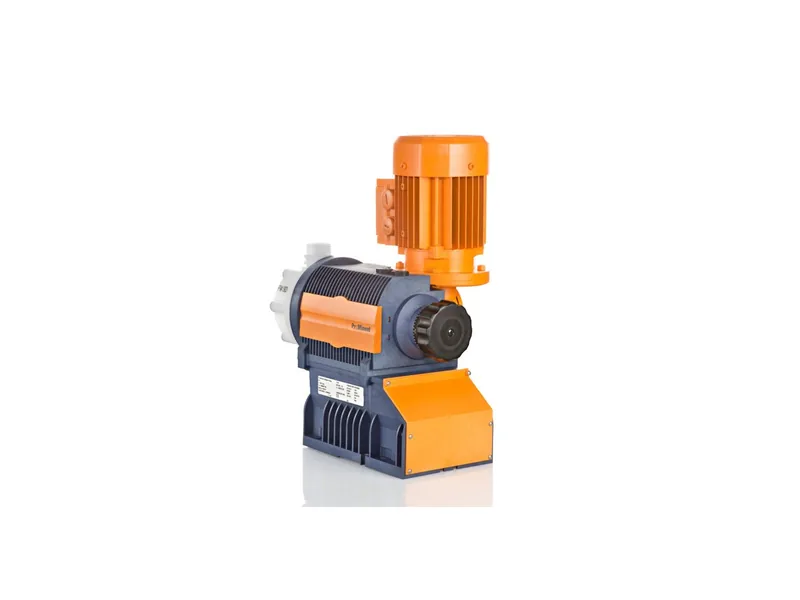
Figure 1: ProMinent alpha motor-driven metering pump. Image source: ProMinent official website
- White water from the paper machine wire carries fine fibers, fillers and some sizing and retention aid residue. Suspended solids are high, but the material is worth recovering.
- Pulping effluent from chemical pulping is high in organics and dark in color and usually goes to chemical recovery. Recycled fiber pulping adds ink, stickies and grit.
- Combined process effluent from washing, screening and bleaching has higher COD and color than white water. This is what the effluent plant mainly treats.
Recycled fiber mills often have high calcium, so pipes and chemical lines scale up. Keep that in mind when choosing pumps for paper mill wastewater treatment chemicals.
Pulp and paper effluent coagulation
The most common pair of paper mill wastewater treatment chemicals is PAC plus an anionic polymer. PAC neutralizes colloid charge so fines clump into pinfloc; the polymer bridges pinfloc into large, strong floc. Ferric sulfate is also used. It settles faster but lowers pH and can tint the effluent, so check what downstream stages can accept.
Picking the polymer grade
Pick paper mill wastewater treatment chemicals by jar test with real mill samples. Two anionic polymers with different molecular weight or charge density can give very different floc and DAF results. Repeat the tests when furnish or season changes, because effluent quality moves with them.
Keep the sequence right
Coagulant goes in before polymer, with enough mixing time between them. Add them too close together and the polymer is sheared before it meets destabilized particles. You burn chemical and still get small floc. Spacing and order are covered in PAC and PAM dosing sequence.
DAF chemical dosing for paper mills
Flotation is the standard solids separation step in paper mills, both for white water recovery and for primary treatment of process effluent. How the paper mill wastewater treatment chemicals are fed ahead of the DAF decides whether the floc will ride up on the microbubbles.
PAC usually goes into the DAF feed line through a static mixer or flash mix tank. Polymer goes in at the DAF reaction zone inlet with gentle mixing so the floc is not torn apart. In white water recovery the aim is to get fiber and filler back to the machine, so err toward lower polymer doses; too much polymer carries over into the recovered stock. For process effluent, dose to the clarified SS and COD you need. Saturator and air release details are in DAF chemical dosing.
A frequent problem: the polymer injection point uses a small nozzle or a deep quill, fiber strings onto it, and it plugs within days. In fiber-laden water, size injection points generously and make them removable for cleaning.
Biological and tertiary treatment
After primary treatment, process effluent typically goes through anaerobic and aerobic biology, and the paper mill wastewater treatment chemicals change from coagulants to nutrients. Paper mill effluent is short on nitrogen and phosphorus, so mills usually feed urea and a phosphate product, adjusted to influent COD and effluent ammonia and phosphorus. Overfeed and effluent phosphorus goes out of limit. If influent pH runs high, an acid feed is added; route that line away from walkways.
When color or COD is still high after biology, paper mill wastewater treatment chemicals come back in a second coagulation step or Fenton oxidation. Fenton involves sulfuric acid, hydrogen peroxide and ferrous salt, then caustic to raise pH again. Check pump head materials for each chemical separately and wear a face shield and gloves when handling them.
Sludge dewatering
Paper mill sludge is fiber-rich and generally dewaters more easily than municipal sludge. These paper mill wastewater treatment chemicals are mostly cationic polymer, fed to belt presses or screw presses. Inject into the sludge feed line close to the press but with a mixing length before it. Polymer solution is viscous, so pump valves and line sizes must suit it. Matching pump capacity to polymer demand is covered in sizing a polymer dosing pump for sludge dewatering.
Pumps for paper mill wastewater treatment chemicals
Effluent plants in paper mills run many feed points around the clock. PAC and nutrients are usually fed by motor-driven mechanical diaphragm metering pumps. Polymer needs large-valve diaphragm pumps or progressing cavity pumps chosen for viscosity. ProMinent Sigma/1 and alpha motor-driven diaphragm metering pumps are examples of the first type, sized to the flow and pressure of each point.
Before selecting, pin down:
- Minimum and maximum dose at each point, so the turndown covers both.
- Viscosity, especially of aged polymer, which sets valve and suction line size.
- Whether dosing is flow-paced, and whether the signal is 4–20 mA or pulse.
- Scaling and crystallization risk, so flushing connections get designed in.
More motor-driven models are listed under mechanical metering pumps.
Conclusion
Start by separating white water, pulping effluent and combined process effluent. White water recovery relies on DAF with PAC and polymer, dosed conservatively. Process effluent runs through coagulation and DAF, biology with nitrogen and phosphorus feed, and tertiary coagulation or Fenton when needed. Sludge dewatering uses cationic polymer. Across all of these paper mill wastewater treatment chemicals, design injection points against fiber plugging and size pumps for viscosity and scaling. Send us flow, water quality, the process train and the chemicals you plan to use, and contact our engineers to review the dosing design and pump selection.
FAQ
Which coagulant works better for paper mill effluent, PAC or ferric?
Both are common. PAC is more forgiving across water types; ferric settles faster but affects pH and color.
Does white water recovery need polymer?
Usually a small dose, yes. Without it the fine fiber floc is too small to float, but too much ends up in the recovered stock.
Cloudy DAF effluent: are paper mill wastewater treatment chemicals underdosed?
Not necessarily. Look at floc size and the float layer first. Small floc can mean polymer is being sheared, or that coagulant is short.
Why add nitrogen and phosphorus?
Paper mill effluent is rich in carbon but low in nutrients, which weakens biological treatment. Urea and phosphate feed keeps the aerobic stage stable.
The polymer injection point keeps plugging. What helps?
Use a larger injection opening, move the point onto a mixing section of pipe, and add a flushing water connection. Small nozzles rarely survive in fiber-laden water.