
Metering Pump Discharge Pressure vs Head: How to Size the Rating
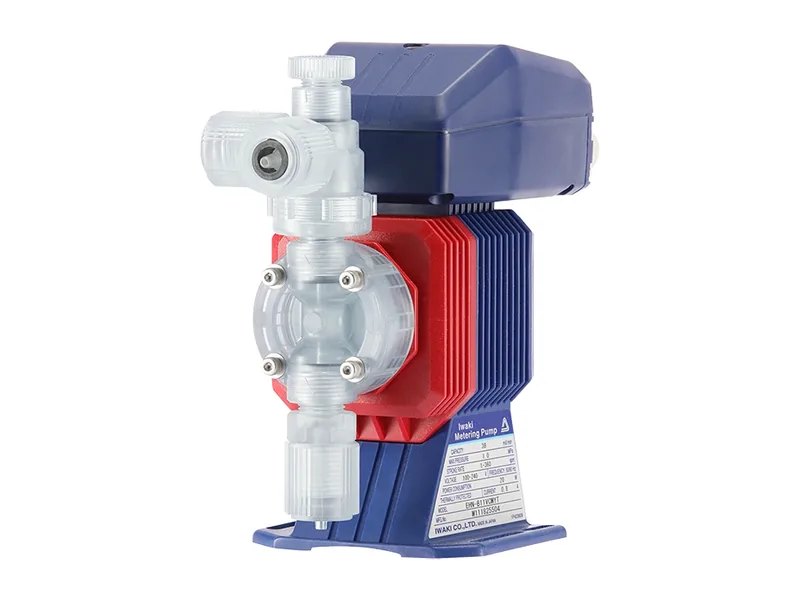
Metering pump discharge pressure is the number that matters when you size a dosing pump, even though many enquiries still ask for "head". Catalogues rarely list head at all; they state maximum discharge pressure in MPa or bar, because a metering pump is a positive displacement pump.
A centrifugal pump trades flow against head, so flow falls as head rises. A metering pump pushes a fixed volume every stroke, and as long as pressure stays below the rating, flow barely changes with outlet pressure. The useful question is how much pressure it can work against, not how high it can lift water.
Converting Metering Pump Head to Discharge Pressure
Head and pressure are linked by H = P / (ρ × g). For water, ρ is about 1000 kg/m³ and g is 9.81 m/s², so 1 MPa is roughly 102 m of water column and 1 bar is about 10.2 m.
Correct for density when the chemical is heavier. At a density of 1.2, 1 MPa corresponds to only about 85 m of liquid. When a customer asks for 50 m of head, we usually convert it to around 0.5 MPa of metering pump discharge pressure and compare that with the pump rating.
Typical Pressure Ratings for Diaphragm Metering Pumps
Ratings vary widely with drive type and size:
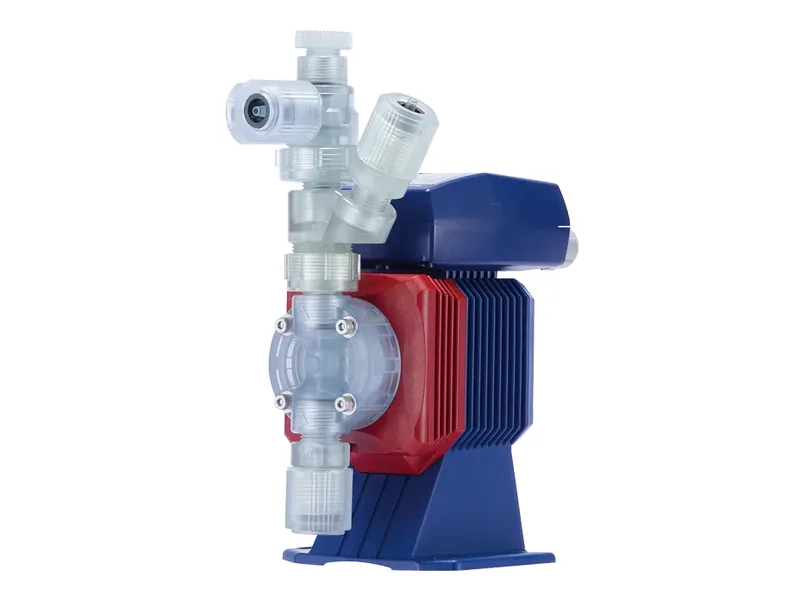
Figure 1: IWAKI EHN-BN11 auto degassing solenoid pump. Image source: IWAKI official website
- Solenoid diaphragm pumps: small models are generally rated 0.2 to 1.0 MPa, roughly 20 to 100 m of water. In the IWAKI EHN series, the BN11 size reaches 1.0 MPa at 38 mL/min, the BN31 size is 0.20 MPa at 230 mL/min, and the high-pressure EHN-H goes up to 1.5 MPa
- Mechanical diaphragm pumps: commonly around 1 MPa, with some models reaching several MPa
- Hydraulic diaphragm and plunger pumps: from over 10 MPa up to tens of MPa, used for boiler chemicals and oilfield injection
The EHN figures show a pattern. Within one series, larger flow sizes allow lower metering pump discharge pressure, because a bigger diaphragm sees more force while the drive force is limited. So the answer to "what pressure can a diaphragm pump reach" depends on flow.
Why Metering Pumps Are Sized by Discharge Pressure
Metering pump head is just pressure in different units; what has to match is the system. If the outlet of a positive displacement pump is blocked, pressure keeps rising until the pump, a pipe or a fitting fails. That is why a relief valve belongs on the discharge.
Undersize the metering pump discharge pressure rating and the pump runs near its limit, diaphragms and check valves wear faster, and output reads low. Oversize it and you pay for a larger, more expensive pump plus higher-rated valves and fittings. Calculate the system pressure first, then set the metering pump discharge pressure rating with a margin, usually around 10 to 20%.
Estimating System Pressure Step by Step
Metering pump discharge pressure is set by everything downstream. Add up these parts:
- Pressure at the injection point, for example a 0.3 MPa main
- Elevation from pump to injection point, about 0.1 MPa per 10 m
- Friction losses in the line, which need a separate check for small bore, long runs or viscous fluids
- Acceleration pressure from the reciprocating stroke on long discharge lines
- Opening pressure of injection valves and back pressure valves
Example: a 0.3 MPa main, an injection point 15 m above the pump, about 0.05 MPa line loss and a 0.05 MPa injection valve give roughly 0.55 MPa. With 10% margin, a pump rated around 0.7 MPa is a sensible choice. Confirm the real metering pump discharge pressure during commissioning using our guide to reading a metering pump pressure gauge.
Low Metering Pump Discharge Pressure Needs Attention Too
Low back pressure is not automatically easy duty. IWAKI literature states that when discharge pressure is 0.12 MPa or less, a check valve or back pressure valve is needed to prevent overfeeding. With too little resistance, momentum can push the check valves open after the stroke ends, or the line can siphon, so actual dose exceeds the setting.
Dosing into an open basin or a low-pressure line, where metering pump discharge pressure is close to zero, therefore still needs an artificial back pressure. At the other end of the scale, once system pressure exceeds a rating, a different pump type is needed; see high-pressure metering pump selection and maximum pressure of diaphragm metering pumps.
Data to Send the Supplier
Rather than quoting head alone, send maximum and normal flow, injection point pressure, elevation and line length, chemical name, concentration and density, temperature, and duty cycle. With complete data the supplier can specify the metering pump discharge pressure rating and liquid end size directly. For small flows, browse our solenoid metering pumps or the IWAKI brand page.
Conclusion
Metering pump head is simply discharge pressure expressed as liquid height, and for water 1 MPa equals about 102 m. Diaphragm pump ratings depend on drive and flow: solenoid models typically cover 20 to 100 m of water, mechanical models around 100 m, and hydraulic diaphragm or plunger pumps much more. Add injection pressure, elevation, line losses and valve opening pressure, then keep 10 to 20% margin when choosing metering pump discharge pressure, and fit a back pressure valve below 0.12 MPa. Share your duty data and contact our engineers to check the sizing.
FAQ
Can a metering pump be specified by head?
You can convert, but catalogues usually do not. Use about 102 m of water per 1 MPa and correct for density.
Is a higher pressure rating always better?
No. A rating that covers system pressure plus margin is enough; going higher adds cost and size to the pump and fittings.
What happens above the rated discharge pressure?
Flow drops and diaphragms and valves are overloaded, and the relief valve may lift; depressurize before any service work.
How much pressure is needed to dose 30 m uphill?
About 0.1 MPa per 10 m, plus injection pressure and losses. For 30 m into an open outlet, plan for roughly 0.35 MPa or more.
Can maximum flow and maximum pressure be reached together?
Generally not. Larger flow sizes in a series allow lower pressure, so choose by the exact flow and pressure pair.