
Metering Pump Discharge Valve Throttling: Why It Fails and What Works
Metering pump discharge valve throttling does not work as a flow control method. A metering pump is a positive displacement pump, so every stroke pushes out a fixed volume set by the pump head and the stroke length. Close the discharge valve partway and the pump still delivers almost the same volume; only the discharge pressure climbs. To change flow, you adjust stroke length, stroke frequency or motor speed. This guide is written for operators and maintenance crews running solenoid, mechanical diaphragm and plunger dosing pumps in water treatment and process plants.
Why metering pump discharge valve throttling does not change flow
Most people learn pumps on centrifugal units. On a centrifugal pump, closing the discharge valve adds resistance and the operating point slides back along the curve, so throttling really does cut flow. That habit carries over to metering pump discharge valve throttling, and it causes trouble.
A diaphragm or plunger pump works differently. Each stroke draws one chamber of liquid through the suction check valve and pushes it out through the discharge check valve. The delivered volume depends on geometry and stroke count, not on downstream resistance. With metering pump discharge valve throttling, the pump keeps pushing the same volume, just against a higher pressure. Fully closed, the liquid has nowhere to go and pressure spikes within a few strokes.
Some operators insist metering pump discharge valve throttling did drop the flow a little. That small drop usually comes from lower volumetric efficiency at higher back pressure, plus slip at the check valves. It shifts with temperature, viscosity and wear, so relying on it makes the dose drift. Our article on volumetric efficiency and back pressure explains the effect in more detail.
What metering pump discharge valve throttling does to the pump
Here is what crews typically find after a pump has run for a while under metering pump discharge valve throttling:
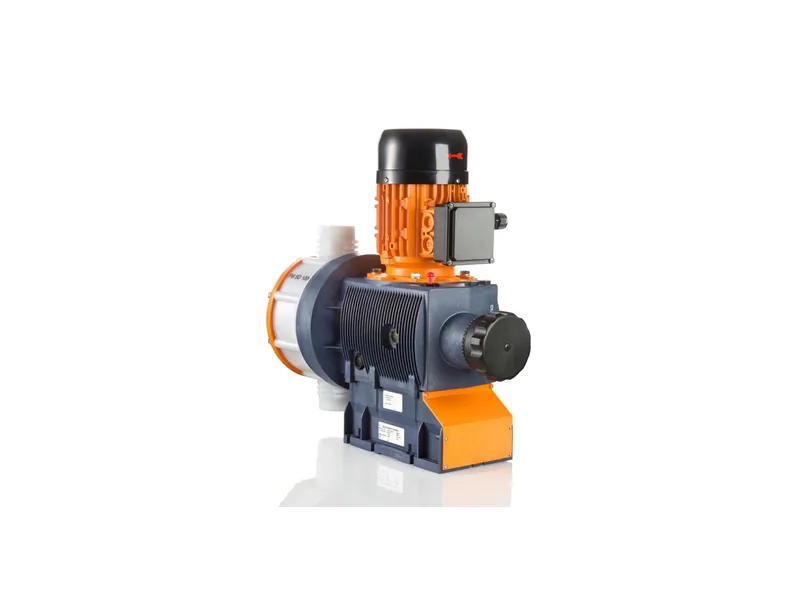
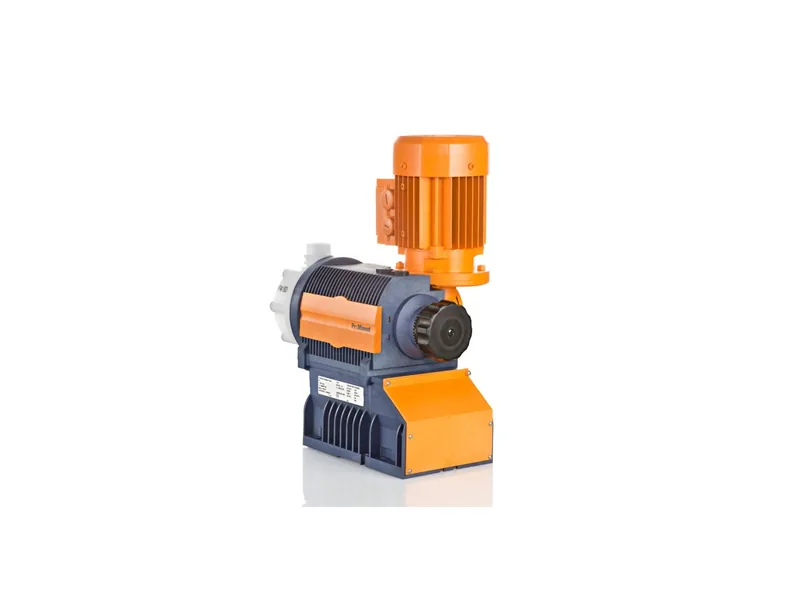
Figure 1: 普罗名特ProMinent Sigma/2 motor-driven diaphragm metering pump. Image source: 普罗名特ProMinent official website
- The diaphragm flexes under higher pressure on every stroke and tends to crack early. On plunger pumps, packing leaks faster.
- Motor current rises and the gearbox, connecting rod and worm gear carry more load.
- Velocity through the partly open valve seat is high, so crystallizing chemicals such as sodium hypochlorite or lime slurry build up and erode the seat.
- If there is no relief valve, or it is set too high, an accidental full closure can burst fittings, gauges or the pump head itself.
Item 4 is the most serious. Damage modes and protection are covered in dead heading a plunger pump. The short rule: keep the discharge isolation valve fully open whenever the pump runs.
What the discharge valve is actually for
The discharge valve is an isolation valve. You close it during maintenance so the line does not drain back when you remove the pump head or swap check valves. That is why a full-bore ball valve is the usual choice. A needle valve on the main discharge line is a bad idea because its small port acts as a permanent restriction.
Pressure control belongs to two other valves. A back pressure valve holds a steady discharge pressure and stops siphoning when the injection point is near atmospheric. A pressure relief valve opens and returns liquid to the tank if pressure rises abnormally. See back pressure valve vs relief valve for where each one goes. Metering pump discharge valve throttling is not a substitute for either.
How to control dosing pump flow correctly
Stroke length
Stroke length is how far the diaphragm or plunger travels per stroke, shown as a percentage. On a motor-driven pump such as the ProMinent Sigma/1, a stroke adjustment knob on the side of the drive housing sets the displacement per stroke. Adjust it while the pump is running; forcing the knob at standstill can damage the mechanism. Accuracy generally drops when stroke length sits very low for long periods, so reduce frequency first if flow is too high.
Stroke frequency and motor speed
Solenoid pumps let you change strokes per minute on the control panel or follow a 4-20 mA or pulse signal from a PLC, DCS or SCADA system. Motor-driven pumps use a VFD to change motor speed, and flow falls roughly in proportion. For long runs at low speed, check that the motor has adequate cooling.
Combining the two
A common practice is to set stroke length in the upper range during commissioning, then trim daily flow with frequency or the VFD. Bigger demand changes justify a new stroke setting. The guide on stroke length and frequency together walks through the pairing.
Verify the flow after any change instead of metering pump discharge valve throttling
The dial and the display only show a set point. Real flow depends on back pressure, suction lift and viscosity, so measure it with a calibration column or by weighing. Keep the discharge valve fully open and the back pressure valve at its normal setting during the test, or the number will not reflect actual service.
One trap with metering pump discharge valve throttling we see often: two pumps share a common discharge header, and someone partly closes one discharge valve to "balance" them. That pump runs hot, loses its diaphragm first, and its flow barely changes. Set each pump with its own stroke and speed and leave both valves open.
If required flow is only a small fraction of rated capacity, that is a sizing problem. Metering pump discharge valve throttling cannot fix it; a smaller pump can. Our range of mechanical diaphragm metering pumps and ProMinent pumps covers a wide spread of capacities.
Safety note: stop the pump and relieve line pressure before working on any discharge valve, and wear gloves and a face shield around acids, caustic or hypochlorite.
Conclusion
Metering pump discharge valve throttling is a misuse, not a control method. A positive displacement pump delivers a volume fixed by stroke length and stroke rate, so a half-closed valve only raises pressure and wears out diaphragms, check valves and drive parts. Run with the discharge valve fully open, set flow with stroke, frequency or a VFD, and confirm with a calibration column. If your pump still cannot reach the dose you need, send us the chemical, flow range and back pressure, and contact our engineers for a sizing check.
FAQ
Is a slight metering pump discharge valve throttling acceptable?
No. Flow barely changes while pressure rises, and the valve position is hard to repeat, so the dose becomes unpredictable.
Discharge pressure is too low. Can I close the valve to build pressure?
No. Install or adjust a back pressure valve instead. It holds a stable set pressure, which a manual valve cannot do.
Does the same rule apply to solenoid dosing pumps?
Yes. They are positive displacement pumps too, and excess pressure stresses the diaphragm and can cause leaks at the pump head.
Can I throttle the suction valve instead?
That is worse. Suction throttling lowers inlet pressure, the liquid can gas off, and the pump loses prime or delivers erratic flow.
What is the simplest way to adjust dosing pump flow day to day?
Change stroke frequency on the panel, or let a 4-20 mA signal from the control system do it. Stroke length is usually set once during commissioning.