
Online Corrosion Monitoring in Dosing Systems: Probes and Control
Online corrosion monitoring turns the corrosion rate of carbon steel or copper in a cooling circuit into a live number that a controller or PLC can log. A coupon takes a month to give a result; an online corrosion rate instrument shows a change within minutes when the inhibitor runs low, the pH drops or a biocide shock overshoots. The reading, however, depends heavily on water chemistry and probe condition. It works best as a check and alarm for inhibitor dosing, and it is usually unstable as the only input to a closed loop. This article is for engineers who design and run cooling water dosing systems.
What online corrosion monitoring actually measures
Most online corrosion monitoring uses linear polarization resistance, or LPR. The probe carries two or three metal electrodes made of the same alloy as the system piping, typically carbon steel or copper. The instrument applies a small potential shift, measures the polarization resistance and converts it into a corrosion rate in mm/y or mpy.
Two practical limits matter more than the theory. First, LPR reads the instantaneous rate of general corrosion and is not sensitive to pitting or under-deposit attack. Second, it relies on water conductivity, so systems fed with very soft, low-conductivity makeup water show larger errors.
Online corrosion monitoring versus coupons
A coupon gives the average weight loss over the exposure period. The number is reliable but late. Online corrosion monitoring gives the rate right now. It reacts fast but can drift. The two are partners rather than alternatives: coupon results calibrate the instrument, and the instrument trend flags problems before the next coupon is pulled.
If the instrument keeps reading low while coupons show excessive corrosion, the electrodes are probably fouled or passivated. The system is not necessarily fine.
Where to install the probe
Probe location decides whether the reading means anything:
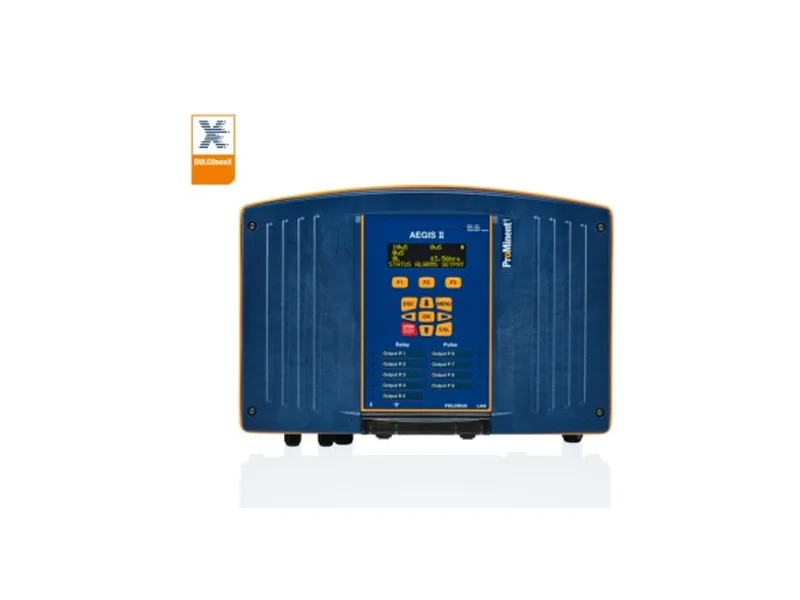
Figure 1: ProMinent AEGIS II cooling water controller. Image source: ProMinent official website
- Install on the return line, where water is warmest and flow is steady, which best reflects the heat exchanger risk.
- Stay well downstream of any injection point. Freshly injected inhibitor or acid that has not mixed will distort the reading.
- Keep the velocity close to the main line, generally 0.3 to 1.5 m/s. Slow water lets deposits build on the electrodes.
- Mount the probe in a bypass rack with isolation valves so it can be pulled for cleaning without a shutdown.
For the related question of where the chemicals themselves should go, see cooling water dosing point selection.
Wiring online corrosion monitoring into the dosing system
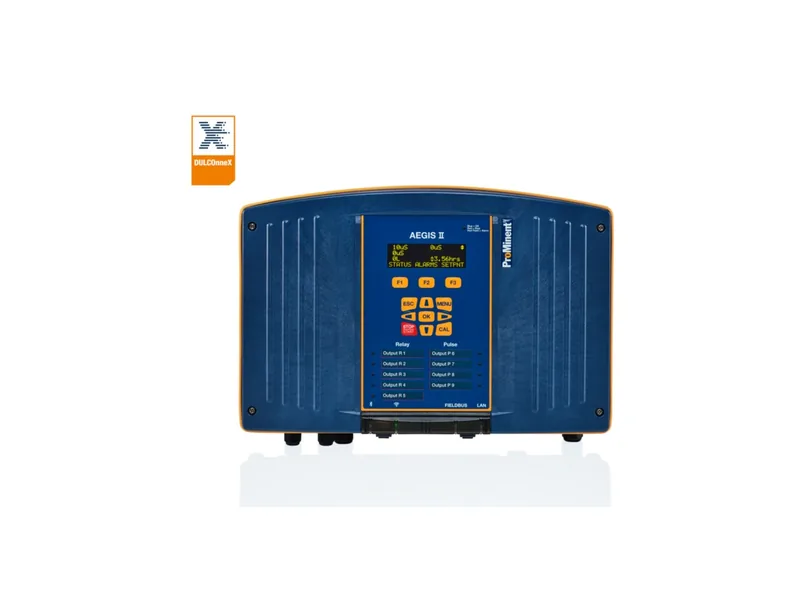
A corrosion rate transmitter normally provides a 4-20 mA output scaled to a corrosion rate range, plus one or two alarm relays. The usual approach is to feed the signal to the cooling water controller or PLC, where it is displayed and logged next to conductivity, pH and ORP. The ProMinent AEGIS II cooling water controller is one example: it offers corrosion measurement to judge whether enough inhibitor is being metered, alongside conductivity-based bleed control and volume-proportional dosing.
For the bleed side of the system, read conductivity monitoring for cooling water cycles.
Linking online corrosion monitoring to inhibitor dosing
The obvious idea is to add more inhibitor whenever the corrosion rate climbs. As a direct closed loop, that tends to fail:
- Inhibitor films take time to form. After a dose change, the rate typically falls over hours or even a day or two, so a tight loop oscillates.
- A higher corrosion rate does not always mean too little inhibitor. Low pH, excess chlorine or microbial activity can be the cause, and more inhibitor will not fix them.
- When the probe drifts, the pump follows it, and chemical use and discharge limits both go off track.
A layered scheme is more dependable:
- Keep the base inhibitor feed proportional to makeup or bleed volume.
- Use online corrosion monitoring for trends and alarms. A high reading first prompts operators to check pH, residual chlorine and product concentration.
- If automatic correction is wanted, apply only a small, slow trim to the base feed, for example a limited percentage up or down with hard minimum and maximum limits.
The roles of inhibitors, antiscalants and biocides are covered in how cooling water treatment chemicals work.
Probe maintenance and calibration
Electrodes are consumables. Scale, biofilm or passivation pulls the reading low. Plan to pull and clean the probe every one to three months, and replace electrodes once they have lost enough metal. New electrodes need a settling period, so do not judge the first day or two of data.
Each time coupon results arrive, compare them with the online corrosion monitoring trend for the same period and inspect the probe if the gap is large. Alarm limits should also change with water quality and season. The right values depend on system metallurgy and the treatment program, so avoid copying them from another site.
Safety note: close the rack valves and release pressure before pulling the probe, and wear gloves and eye protection, because the water may contain biocide and acid.
Conclusion
Online corrosion monitoring changes corrosion control from a monthly report into a live signal. In a dosing system its real value is early warning and verification of inhibitor feed, not replacing proportional dosing with a standalone loop. Put the probe in a return-line bypass with suitable velocity, clean it on schedule and check it against coupons. If you need online corrosion monitoring, controllers and metering pumps as one package, browse our controller products and ProMinent solutions, or contact us with your system metallurgy, circulation rate and current dosing method.
FAQ
Can online corrosion monitoring replace coupons?
Not entirely. The instrument is fast but drifts, while coupons are slow but trustworthy. Use both, and calibrate the instrument with coupon data.
Why did the corrosion rate reading suddenly drop to zero?
Common causes are electrodes covered by scale or biofilm, a loose connection, or a probe left dry after flow stopped. Check the rack flow first, then pull the probe.
Does LPR work in low-conductivity water?
It works, but with larger error. In very soft water, choose an instrument with solution resistance compensation or rely more on coupon results.
The corrosion rate is high. What should be checked first?
Check pH, residual chlorine and inhibitor concentration, then confirm the metering pump is actually delivering. Rule out the probe before raising the dose.
Which electrode material should the probe use?
Match the metal you most need to protect. Copper tube exchangers call for copper electrodes, and carbon steel piping calls for carbon steel electrodes.