
Inductive Conductivity Sensor Selection: Strong Acid, Caustic, Scale
In strong acid, strong caustic, high-salt brines and wastewater that coats a probe, a contacting cell is often eaten or isolated by a film, and the reading walks. An inductive conductivity sensor uses toroidal coils, so the process does not have to touch a metal electrode. Corrosion resistance and tolerance of a uniform coating are typically better. There are limits: low-conductivity pure water is usually a poor fit, the loop inside the ring must stay full, and nearby metal walls can disturb the path. This note is for instrument and process technicians on where an inductive conductivity sensor belongs. Selection background is in online conductivity meter selection. Cooling-water context is in conductivity monitoring for cooling water cycles.
How an inductive conductivity sensor measures, and how it differs from a contacting cell
An inductive conductivity sensor is also called a toroidal or electrodeless cell. A drive coil and a receive coil sit in the probe. The liquid completes a loop through the ring, and the received signal relates to conductivity. The ring is usually sheathed in PEEK, PP or a similar engineering plastic, so many acids, caustics and high-chloride waters are friendlier than they are to metal electrodes, except where the plastic itself fails, as with some HF duties. A uniform coating on the ring often affects the reading less than it would on a two- or four-electrode cell, but thick scale still has to be cleaned.
The working range of an inductive conductivity sensor leans toward mid and high conductivity. Low-end sensitivity is poorer than that of a small-constant contacting cell. Do not use it for precise pure or ultrapure monitoring. The ring must run full; bubbles or a partly filled pipe make the value jump. Leave the clearance the maker asks for. A probe tight against a large metal wall or a stirrer is like putting a second path in parallel with the measuring loop.
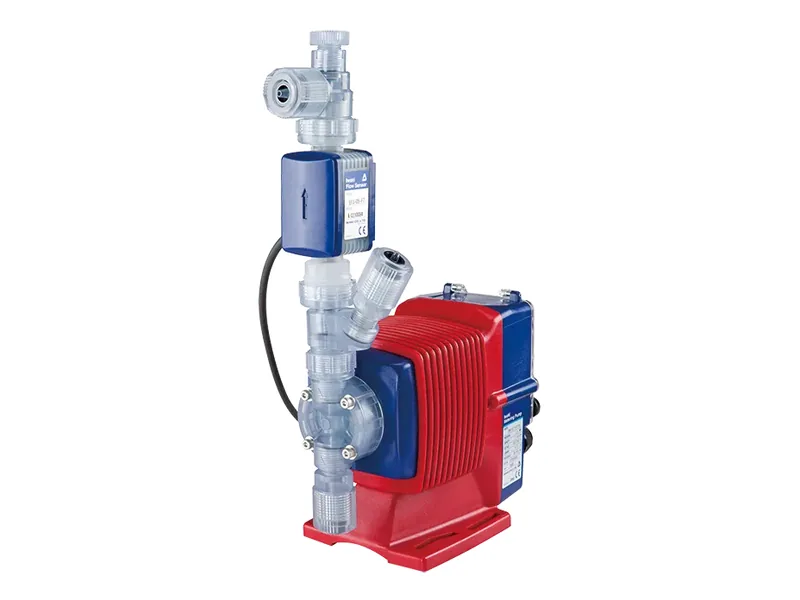
ProMinent process conductivity products include both contacting and inductive types. Put the conductivity range and the corrosivity on the order. Do not land an inductive conductivity sensor on two-electrode terminals. Temperature compensation is still required. The probe usually carries a temperature element, and the coefficient must be set for a concentrated solution. Strong acid or caustic can be fed by an IWAKI EWN-Y solenoid pump. When it works with an inductive conductivity sensor on a concentration or make-up loop, choose the liquid-end material for the medium.
Which media fit an inductive conductivity sensor, and which do not
CIP acid and caustic recovery, high-salt plating rinses, chlor-alkali, some slurries and highly concentrated cooling-tower blowdown are typical duties, provided conductivity is high enough. When the job is a concentration trend, make-up, blowdown or a batch end-point, stability usually matters more than a laboratory last digit. Low-conductivity demineralized and pure water should stay on a contacting cell in a sealed flow cell. Media with a lot of conductive magnetic particles, or crystals that grow a hard shell in the ring, need a separate review, with a flush or a change of orientation if required.
Pipe mounting versus immersion depends on how easily the ring stays full and can be removed for cleaning. A sidestream cell must keep flowing and must not become a dead leg. If the signal drives a metering pump or a blowdown valve, add some damping so a bubble does not stroke the valve. On a strongly pulsing pump discharge, keep the point off the immediate pipe run. Mounting habits from magnetic flow meters for chemical dosing can help with velocity and straight runs, but the two instruments are not the same, and you should not copy the size calculation.
A mounting, cleaning and calibration list for an inductive conductivity sensor
Use these checks in the field:
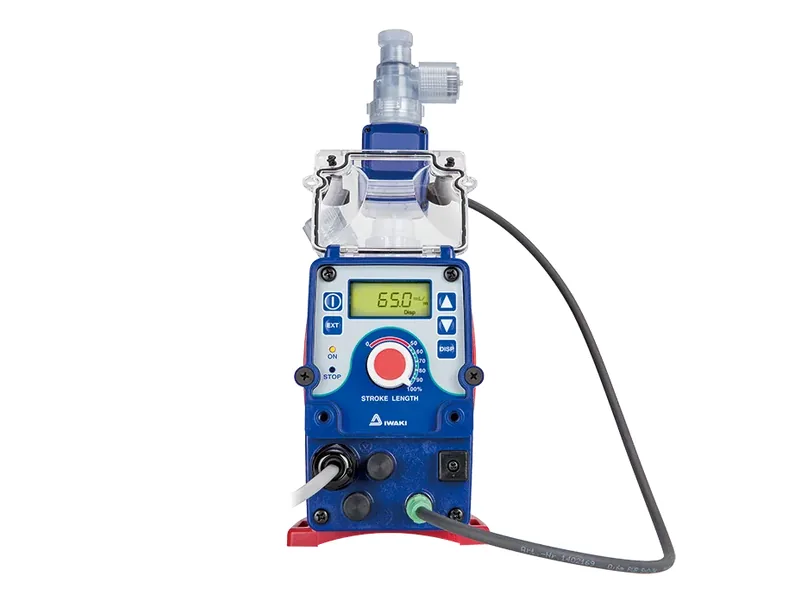
Figure 1: IWAKI EWN-Y-A-EFS. Image source: IWAKI official website
- Does the conductivity range sit in the useful band of this inductive conductivity sensor, not at a pure-water low end?
- Does the ring stay full, and are the vent and the orientation correct?
- Do nearby metal and agitators meet the maker’s clearance?
- Is the temperature coefficient set for a concentrated medium?
- Will the cleaning method damage the sheath, and is the calibration standard close to the working concentration?
Check or calibrate with a stronger standard or a site laboratory comparison. Do not span a high-range inductive conductivity sensor with one weak KCl bottle. Clean with a soft tool and an allowed chemical; do not gouge the plastic ring. Brand pages are on ProMinent.
A new probe should be compared in a known solution before it goes into the process. After a long idle period, clean it and store it as the manual says. Do not leave a crust of dry caustic or salt in the ring. Treat the cable shield as the manual says, especially near variable-frequency drives and large motors.
In winter a concentrated solution may thicken; in summer it may crystallize. Both change the state inside the ring. When you troubleshoot, write down temperature, level and whether the pipe was only half full. Do not change the range the moment the number moves.
Keep the last verification, the standard lot and the process concentration in one log. If someone wipes the ring and then edits the zero to “make it look right,” the next laboratory comparison will be blamed on the process. An inductive conductivity sensor should be adjusted only after the ring is full and clean.
If the reading is unstable, check a full pipe and scale first
The most common false fault on an inductive conductivity sensor is gas in the ring, a level below the probe, or a heavy scale layer. Restore a full liquid line and clean, then compare with laboratory conductivity. Do not edit zero and slope first to match a number. A cracked sheath or a wet cable means replacement, not a software patch.
Conclusion
An inductive conductivity sensor suits mid to high conductivity, corrosive service and coating media, because the measuring ring does not put a metal electrode in the process. Pure water and precise low-conductivity work still need a contacting cell. Mount the ring full, leave the required clearance, and calibrate with a solution close to the duty. Send the medium, the conductivity range and the mounting point, and contact us so we can say whether an inductive or a contacting cell is the better fit.
FAQ
Can an inductive conductivity sensor measure pure water?
Usually no. Low-end resolution is not enough. Pure water should use a contacting cell and a sealed flow cell.
If a thin film sits on the ring, do I still have to clean it?
A thin, even film may have a smaller effect, but thick scale or a local bridge will still bias the reading. Inspect on the maker’s interval. Do not assume an inductive cell can run without cleaning.
Can I mount it tight against a stainless pipe wall?
Only inside the clearance in the manual. Too close, and the metal disturbs the loop of the inductive conductivity sensor.
How do I calibrate an inductive probe?
Use a standard close to the working concentration, or a laboratory comparison, as the manual says. Do not span the high end with a solution far below the range.
Can I use an inductive conductivity sensor in hydrofluoric acid?
It depends on the sheath material. Many engineering plastics also fail in HF. Confirm it from the data sheet; do not assume it is acceptable only because there is no metal electrode in the liquid.