
Online Conductivity Meter Selection: Cell Constant and Range
Online conductivity meter selection starts with matching the measuring range to the cell constant (K), not with a brand name. The cell constant is a geometric factor. A low K suits low conductivity, such as demineralized water or condensate; a higher K suits cooling water or wastewater. If the range and K do not match, the reading is wrong or the resolution is poor. This article is for engineers picking an online conductivity meter for cooling water or process water. How conductivity is used to control cycles of concentration is in conductivity monitoring and cooling-water concentration and controlling cycles of concentration; those dosing set points stay off this page.
Match K and range first in online conductivity meter selection
An online conductivity meter is usually discussed in two numbers: the cell constant K and the measuring range. Choose K from the water. Pure water and condensate need a smaller K; cooling water and ordinary process water sit in a mid range; very saline wastewater may need a larger K or an inductive (toroidal) sensor. Use the manufacturer's ranges. Do not put a pure-water cell into strong brine.
The range must cover the normal value and the highs you will actually see, with margin. If you size only on the average, a blowdown or a leak can drive the meter over range. If the range is far too wide, the low end looks coarse. For online conductivity meter selection, ask for the normal, maximum and minimum values, not one typical figure.
Probe care and calibration in general are in online analyzer calibration and electrode maintenance.
Two-electrode, four-electrode and inductive cells
Among contacting cells, a two-electrode design is simple and fits reasonably clean water that is not extremely conductive; fouling and polarization add error. A four-electrode cell is less sensitive to coating and lead resistance, and is common on cooling water. An inductive, or toroidal, sensor is a better fit for aggressive, coating or very high-conductivity liquids.
Online conductivity meter selection can follow how dirty and how aggressive the water is:
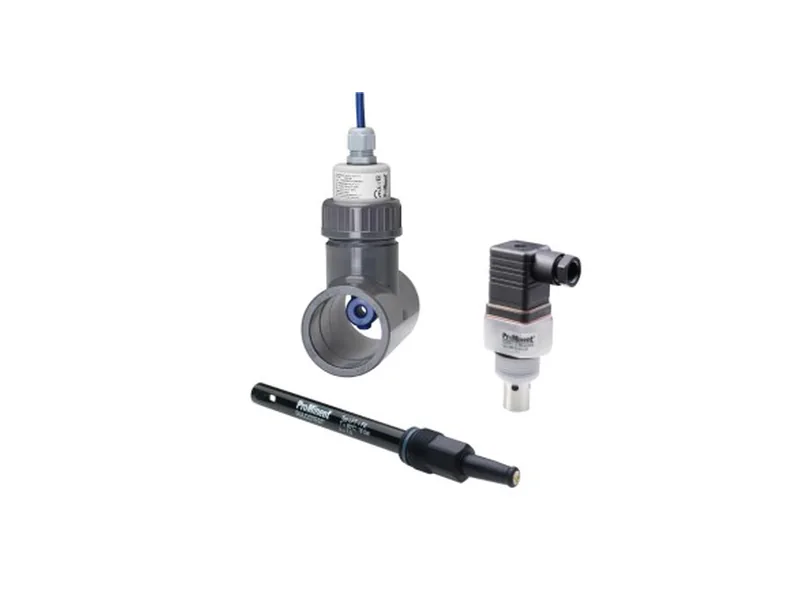
Figure 1: ProMinent conductivity sensor. Image source: ProMinent official website
- Clean, low-to-moderate conductivity: two- or four-electrode cells are both used; K and the installation size come first.
- Cooling water that scales: a four-electrode cell is the usual preference, plus a plan for cleaning and mounting.
- High salinity, strong corrosion or heavy coating: look seriously at an inductive sensor.
Temperature compensation is almost always required. How to set it is a separate article. At selection time, at least specify automatic compensation and a temperature sensor that can sit where it sees the sample temperature.
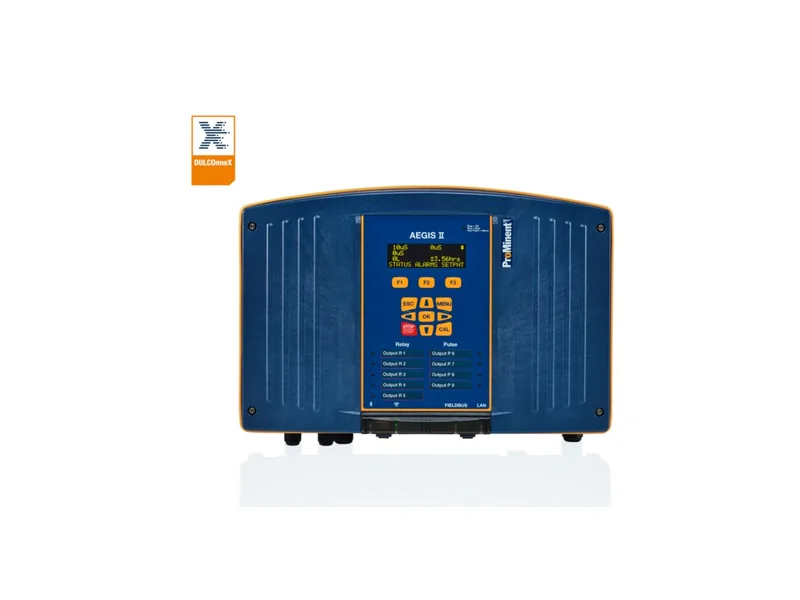
Mounting decides what the reading represents. A bypass should stay flooded, with few bubbles and a sensible velocity. A probe in an open trough that draws air will jump. The usual output is 4-20 mA and must match the controller or DCS scale. ProMinent lists conductivity sensors and also controllers such as AEGIS II, which is often used on cooling-water packages. Treat the probe and the transmitter or controller as one online conductivity meter package. Do not buy a bare cell and hope.
Questions still worth asking
Will the sample ever run dry and leave the probe in air? Is there room to withdraw it for cleaning? How long is the cable, and how noisy is the area? Pure-water systems also need a flow direction that does not trap bubbles. Those answers are cheaper now than a later pipe change.
If you handle biocides or acid cleaners on a cooling system, isolate and depressurize the sample before you pull the cell, and wear protection.
Some specifications ask one probe to cover a very wide span, from fresh make-up to highly concentrated blowdown. In online conductivity meter selection that is often unrealistic. It is better to split low and high ranges, or to confirm that the manufacturer really has a linear wide-range cell. Forcing a mismatched cell makes every later calibration painful. Write the three operating values into the data sheet you send out, so the vendor cannot quote a cell that only fits the average.
On one cooling circuit, make-up and blowdown can sit far apart on the conductivity scale. Do not expect a single cell to be equally sharp at both ends. Online conductivity meter selection can treat make-up, circulating water and blowdown as separate points, and the bid should state a range for each. If space is tight, still avoid a dead pocket, where the reading lags and looks like a fault.
During commissioning, check once with a standard or a known water, and confirm that the transmitter range, the K value and the temperature sensor were entered correctly. If the K in the menu does not match the stamp on the cell, every later reading will be off. Write those checks down. It is clearer than arguing later that the online conductivity meter is "inaccurate."
Conclusion
Online conductivity meter selection is a match of range and cell constant, then a choice among two-electrode, four-electrode and inductive cells, plus temperature compensation, mounting and the output signal. Specify the probe and the controller together. See the controllers and analyzers page and the ProMinent page. Send us the conductivity range, the mounting and the signal, and contact our engineers to check the K value and the cell type.
FAQ
What happens if the cell constant is too high or too low?
The meter becomes dull at the low end or over-ranges at the high end, and the reading is less stable. Reselect from the manufacturer's steps; do not only change the display range.
Does cooling water always need a four-electrode cell?
Not always. It is often the easier choice, but a two-electrode cell can work on clean water with good maintenance. Online conductivity meter selection still depends on fouling and on how the probe will be cleaned.
Is an inductive sensor always better?
It shines on high-salinity or corrosive duty, but clean water does not always need it. Cost, size and calibration methods differ. Choose from the medium.
If temperature compensation is set badly, did we select the wrong meter?
Compensation is a setting, but if you bought a meter with no temperature input, you cannot add it later. Specify an online conductivity meter with automatic compensation.
Must the controller and the probe be the same brand?
A matched pair is simpler: signal type, compensation and menus agree. A mix can work if the input type and the compensation method are confirmed.