
Heavy Metal Wastewater Treatment: pH, Precipitants and Chemical Dosing
Heavy metal wastewater treatment comes down to one job: turn dissolved metal ions into insoluble solids, then flocculate and settle them out. The workhorse is hydroxide precipitation with an alkali, and whether it works depends on how well you control pH. When the discharge limit is tighter, sulfide or a chelating precipitant polishes the effluent. Hexavalent chromium has to be reduced first under acidic conditions, with the reducing agent controlled by ORP. This guide is for wastewater operators at plating, PCB and metal finishing plants, and for contractors who build heavy metal wastewater treatment systems.
Hydroxide precipitation: pH control for metal removal
Each metal has its own best pH
Copper, nickel, zinc and trivalent chromium all form hydroxide precipitates in alkaline water, but each has a different pH window of minimum solubility. Amphoteric metals such as zinc, lead and trivalent chromium redissolve if pH goes too high, so the effluent fails again.
So in heavy metal wastewater treatment, more caustic is not always cleaner. For a single-metal stream, control to that metal's window. For mixed metals, pick a compromise pH or precipitate in stages at different pH values. Set the actual targets from bench tests and lab analysis.
Two-stage pH control is steadier
The pH response is highly nonlinear. Near neutral, a drop of caustic can make pH jump. A common layout is:
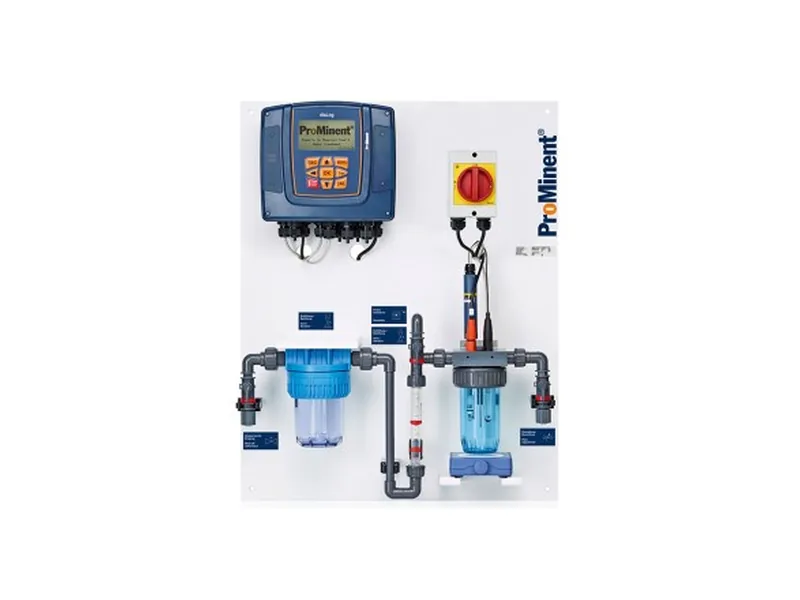
Figure 1: ProMinent DULCOTROL wastewater control panel. Image source: ProMinent official website
- Stage one, coarse adjustment, with a larger pump bringing pH close to target quickly.
- Stage two, fine adjustment, with a small pump trimming precisely.
- The pH probe sits in the well-mixed reaction tank, not in a pipe just downstream of the injection point, where readings bounce.
Caustic soda reacts fast and meters easily. Lime gives denser sludge but needs a dedicated slurry system. Probe placement and loop lag are covered in our guide to pH dosing system control.
Sulfide and chelating precipitants in heavy metal wastewater treatment
Hydroxide precipitation has a floor. At low concentrations, or with small amounts of complexed metal, it is hard to push effluent lower, and heavy metal wastewater treatment needs a polishing step.
Sodium sulfide forms metal sulfides with even lower solubility. The downsides are real: excess sulfide is itself a pollutant, and at low pH it releases toxic, foul hydrogen sulfide. Control the excess, and remove leftover sulfide with a ferrous salt if needed.
Chelating precipitants, commonly dithiocarbamate types, bind many metals into stable precipitates and handle some complexed metals too. They work well after hydroxide precipitation. Watch these points:
- Underdose and you fail the limit; overdose and you waste chemical and raise effluent COD.
- Dose tracks incoming metal load, so pace by flow and correct from lab results.
- Give enough reaction time and flocculation after injection, or fine particles escape.
Set the dose by jar testing. In heavy metal wastewater treatment, never copy another plant's number.
Complexed metals in heavy metal wastewater treatment
Electroless nickel and copper baths and some cleaners bring in EDTA, citrate or ammonia. These complexing agents hold metal in solution no matter how you adjust pH. Typical options are oxidation (Fenton or hypochlorite), displacement with calcium or ferrous salts, or direct capture with a chelating precipitant. Collect complexed streams separately. Mix them with ordinary rinse water and the whole flow becomes hard to treat.
Hexavalent chromium reduction in heavy metal wastewater treatment
Hexavalent chromium will not precipitate as is. It must be reduced to trivalent chromium first. The usual sequence is to acidify, add sodium bisulfite, sodium metabisulfite or ferrous sulfate, then raise pH to precipitate trivalent chromium.
The reducing agent is controlled by ORP. High hexavalent chromium means high ORP; as reductant goes in, ORP falls, and the pump stops at setpoint. Three cautions:
- ORP depends strongly on pH. Stabilize pH first, then trust ORP.
- Calibrate the ORP setpoint from on-site titration and lab results. It varies a lot between plants.
- Bisulfite releases sulfur dioxide under acidic conditions, so cover and ventilate the tank.
Setpoints and electrode placement are detailed in ORP controlled dosing. For a stage-by-stage pump layout, see electroplating wastewater treatment dosing.
Instruments and pumps for heavy metal wastewater treatment
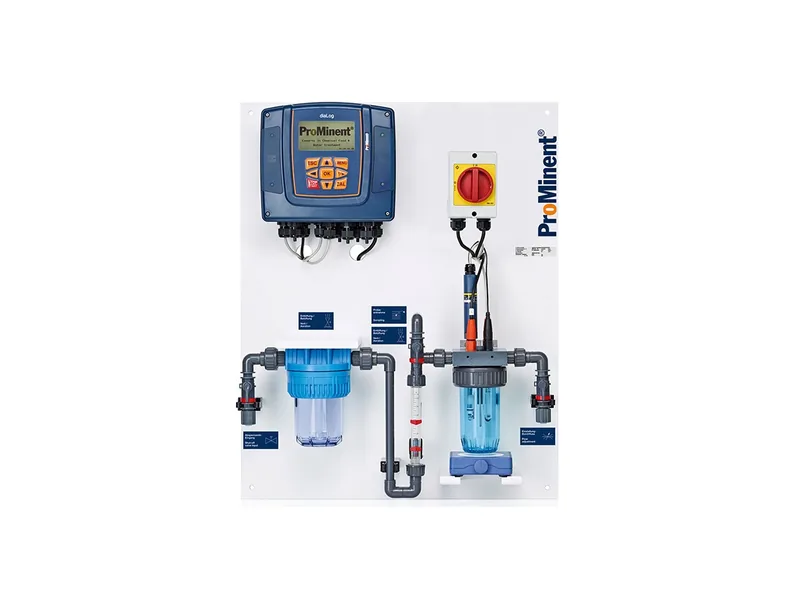
Almost every heavy metal wastewater treatment line is instrument-led: pH and ORP signals go to a controller, which drives the metering pumps. One example is the ProMinent DULCOTROL measuring and control system for wastewater. ProMinent describes it as having all components except the sensors mounted on a polypropylene plate, with one or two measured variables, a DACb controller, and applications including pH neutralisation and detoxification. See our pH and ORP instruments and ProMinent brand page for combinations.
For heavy metal wastewater treatment, match pump materials to chemicals: PVC or PVDF heads for caustic and bisulfite, PVDF for sulfuric acid, and check precipitant compatibility with the supplier's data. Keep sulfide and acid lines and drains apart. Before opening a pump, stop it, relieve pressure, flush it, and wear a face shield and gloves.
Conclusion
Effective heavy metal wastewater treatment rests on a few habits. Hydroxide precipitation is a pH problem, so set windows per metal and use two stages. Polish with sulfide or a chelating precipitant, paced by flow and corrected by lab results, without overdosing. Segregate complexed streams and break them first. For chromium, acidify, then let ORP control the reductant. Send us your wastewater types, metals, flow and discharge limits, and contact our engineers to match instruments and metering pumps.
FAQ
What pH should heavy metal wastewater be adjusted to?
There is no single value. Each metal has its own window, and amphoteric metals fail at high pH. Set it from bench tests.
What happens if I overdose chelating precipitant?
You waste chemical and raise effluent COD. Pace it by flow and adjust from lab results.
Sodium sulfide or a chelating precipitant?
Sulfide is cheaper but brings hydrogen sulfide risk and excess sulfide. Chelating precipitants are safer to handle and work on some complexed metals. Many plants keep both.
Why adjust pH before chromium reduction?
Reduction is fast and complete in acid, and ORP readings shift with pH. Unstable pH means unreliable ORP control.
Can electroless nickel wastewater be mixed with other streams?
Better not. Its complexing agents make the combined flow hard to precipitate. Collect it separately and break the complex first.