
electroplating-wastewater-dosing-system
title: Electroplating Wastewater Treatment Dosing: Pumps for Each Stage description: How to set up electroplating wastewater treatment dosing for cyanide destruction, chrome reduction and neutralization, with pump counts, materials and pH/ORP control. date: 2026-10-29 category: Applications keywords: [electroplating wastewater treatment dosing, cyanide destruction dosing pump, chrome reduction dosing, plating wastewater chemical feed]
Electroplating wastewater treatment dosing works best when cyanide, chrome and general rinse water are treated in separate stages, each with its own pumps and its own pH or ORP loop. Get the segregation wrong and no pump can fix the result.
This guide is for plant engineers and contractors upgrading a plating line's effluent system. It covers what each stage needs, how many metering pumps to plan for, and the mistakes we see most often on site.
Start electroplating wastewater treatment dosing with segregation
A typical plating shop produces three streams. Cyanide water comes from cyanide copper, zinc and silver baths. Chrome water comes from chrome plating and passivation. Everything else, including acid and alkaline rinses and nickel or copper rinse water, goes to the combined stream.
Cyanide water must not meet acidic water. Under acidic conditions cyanide releases hydrogen cyanide gas. Keep the cyanide and chrome tanks physically apart, keep their chemical tanks apart, and vent them separately.
Once the streams are split, electroplating wastewater treatment dosing follows three stages:
- Cyanide destruction under alkaline conditions with sodium hypochlorite.
- Hexavalent chrome reduction under acidic conditions with sodium bisulfite or metabisulfite.
- Neutralization and precipitation of the combined flow, followed by PAC and polymer.
Stage 1: cyanide destruction in electroplating wastewater treatment dosing
Cyanide destruction is usually done in two reactors. The first runs at high pH and oxidizes cyanide to cyanate. The second runs at a slightly lower pH and finishes the oxidation to carbon dioxide and nitrogen. The exact setpoints and retention times depend on your permit and process design, so we will not invent numbers here.
Each reactor needs at least two pumps: caustic and hypochlorite. Hypochlorite tends to off-gas, and a gas-locked pump head keeps stroking while delivering far less than its setting. For electroplating wastewater treatment dosing of hypochlorite, choose solenoid pumps with a bleed valve or a degassing head, PVC or PVDF liquid ends, and ceramic or PTFE balls.
Manual control rarely holds up in electroplating wastewater treatment dosing, because influent cyanide swings from shift to shift. Put a pH probe and an ORP probe in each reactor. pH drives the caustic pump, ORP drives the hypochlorite pump, and the controller's 4-20 mA output sets pump speed. If you are unsure whether to control on ORP or free chlorine, see ORP vs chlorine.
Stage 2: hexavalent chrome reduction
Chrome reduction is the mirror image. Acid lowers the pH, and bisulfite is then added until ORP drops below the setpoint, which indicates the reduction is essentially complete. For this part of electroplating wastewater treatment dosing, plan at least one acid pump and one reductant pump, typically with PVDF heads. With concentrated sulfuric acid, check seats and seals against a chemical resistance chart.
A common trap: bisulfite solution oxidizes in air and loses strength. Cover the tank and mix fresh batches per shift. Otherwise ORP refuses to fall and everyone blames the pump.
Stage 3: neutralization and precipitation
Treated cyanide and chrome water joins the combined tank. Caustic brings pH back near neutral so metals precipitate as hydroxides, then PAC and polymer help them settle. This stage has the highest flow in the whole electroplating wastewater treatment dosing system, so caustic and PAC are often fed by mechanical diaphragm pumps. Polymer is viscous; use larger tubing and set the back pressure valve carefully.
The pH loop here is much like any other effluent neutralization. Our online pH control dosing guide covers probe placement and delay settings.
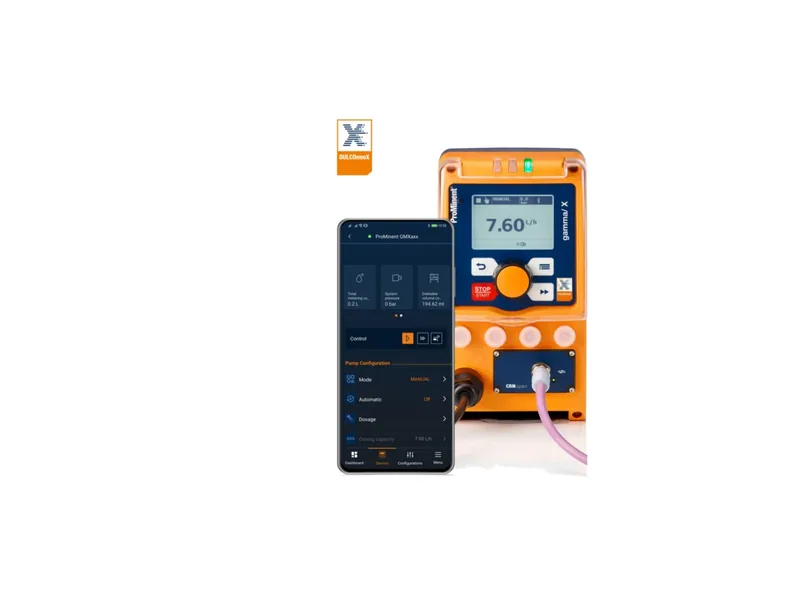
Figure 1: ProMinent gamma/X solenoid metering pump. Image source: ProMinent official website
How many pumps, and what about standby
Plating lines rarely stop, so each critical chemical should have duty and standby pumps. A rough count: four pumps for two-stage cyanide destruction, two for chrome reduction, three or four for neutralization and coagulation, plus standby units. More than ten pumps for one electroplating wastewater treatment dosing system is normal.
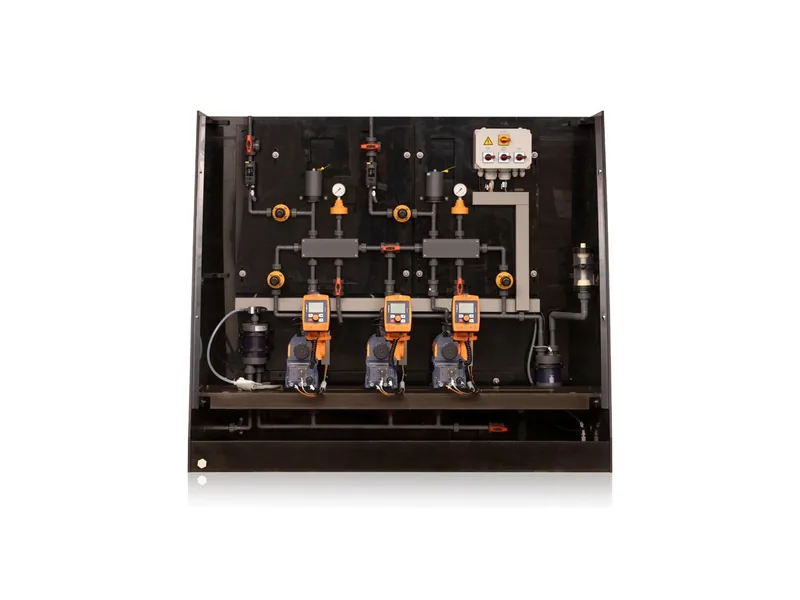
Pre-built panels save a lot of field work. On ProMinent's official site, the DULCODOS panel DSWc mounts up to three pumps on one plate (one on standby), lists electroplating among its applications, and covers 0.01 to 1,000 l/h depending on the pump chosen. For low-flow oxidant or reductant feed, a solenoid pump like the gamma/X is rated from 1 ml/h to 45 l/h and has integrated pressure measurement, so a blocked line can raise an alarm. Browse more packaged units under dosing skids.
Three things that go wrong on site
- No low-level alarm on chemical tanks. Hypochlorite runs dry, ORP never reaches setpoint, and cyanide breaks through. Fit every tank with a low-level switch interlocked to the pump; see low level alarm setup.
- Neglected probes. pH and ORP sensors foul quickly in plating effluent and generally need cleaning and calibration every one to two weeks.
- Crossed lines. Acid and caustic lines, or hypochlorite and bisulfite lines, look identical after maintenance. Label every line and use different fitting sizes. A five-minute check of every line after maintenance is cheaper than an upset in your electroplating wastewater treatment dosing train.
Conclusion
Good electroplating wastewater treatment dosing comes down to three decisions. Segregate cyanide water from acid water completely. Run cyanide destruction, chrome reduction and neutralization as separate pH and ORP loops, with pump materials matched to each chemical. Give critical chemicals duty and standby pumps, and interlock every tank on low level. The pumps themselves are the easy part of electroplating wastewater treatment dosing. Send us your flow rate and chemical list through contact and we will help size the pumps and panels.
FAQ
Can one set of pumps serve all three electroplating wastewater streams?
No. The chemicals and pH ranges are opposite, and cyanide water releases toxic gas if it meets acid, so each stream needs its own pumps and lines.
Why use ORP to control hypochlorite in cyanide destruction?
ORP shows directly whether oxidant is in excess. A fixed feed rate will underdose or waste chemical whenever influent concentration changes.
Why won't ORP drop during chrome reduction?
Usually the reductant has lost strength or the pH is not low enough. Check bisulfite age first, then confirm the acid pump is delivering.
What pump materials suit electroplating wastewater treatment dosing?
PVC or PVDF heads with ceramic or PTFE balls handle most acids, caustic and hypochlorite. Check concentrated sulfuric acid or fluoride chemicals separately.
Why does the polymer line keep clogging?
Polymer is viscous. Use a larger line with fewer elbows, set back pressure correctly, and dilute the solution if the make-up concentration is too high.