
Lithium Battery Dosing Pump: Electrolyte Metering and Wastewater
A lithium battery dosing pump does two very different jobs in a cell or materials plant. On the production side it meters and transfers electrolyte and additives, where the rules are a sealed system, no moisture, and material compatibility. In the wastewater plant it feeds acid, caustic, precipitants and coagulants to treat fluoride and nickel, cobalt and manganese. The first job fears humidity and contamination; the second fights corrosive chemicals. This article covers selection principles only. Your process documents set the actual parameters. It is written for equipment, process and environmental engineers at battery and new energy plants.
Why electrolyte is hard on a lithium battery dosing pump
Lithium-ion electrolyte is generally a lithium salt dissolved in organic carbonate solvents. The common salt, lithium hexafluorophosphate, breaks down with traces of water and forms hydrofluoric acid. That degrades the electrolyte and attacks equipment. Keeping air and moisture out from tank to injection point is the number one requirement.
For the pump and piping, that translates into a few principles:
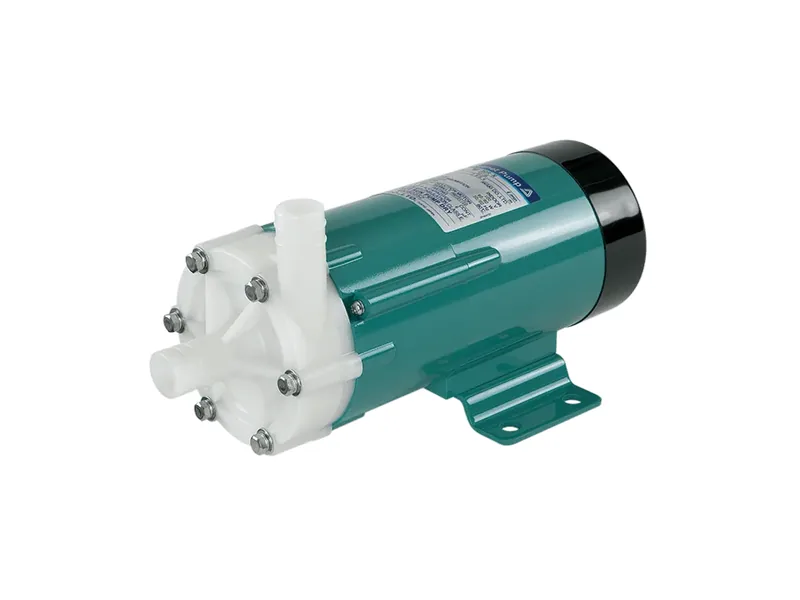
Figure 1: IWAKI MD magnetic drive pump. Image source: IWAKI official website
- A closed system, with tanks and lines blanketed in dry nitrogen or argon and no air leaks on the suction side.
- Sealless or diaphragm designs, because every dynamic seal is a path for moisture to get in.
- Wetted materials compatible with both solvents and salt. Stainless steel and PTFE-type materials are common; check every elastomer, as some swell in carbonates.
- Thorough drying before startup, with a dry gas purge after pressure testing.
Cell filling accuracy drives cell consistency, and that step usually belongs to dedicated filling machines. A lithium battery dosing pump is more often found in electrolyte blending, additive top-up and tank farm transfer. Electrolyte is toxic and corrosive, so drain and purge before opening anything and wear proper protection.
Sizing a lithium battery dosing pump for additives
Additives are dosed in small amounts relative to the electrolyte batch, so the pump often runs near the bottom of its range. Pick a lithium battery dosing pump whose normal duty sits in the middle of its capacity rather than at the very low end, where repeatability drops. Calibrate against a weigh scale or a calibration column filled with the actual fluid, not water, because solvent viscosity and density differ. Keep the suction lift small, since volatile solvents flash more easily under vacuum.
Slurry transfer
Electrode slurry mixes active material, conductive additive, binder and solvent into a thick, high-solids suspension that may be thixotropic. Standard diaphragm metering pumps struggle because particles hold the check valves open. Progressive cavity and gear pumps are the usual choice. Look at viscosity, solids content and shear sensitivity, and keep metal wear debris out of the slurry.
Battery plant wastewater: fluoride and nickel, cobalt, manganese
Wastewater in a battery plant comes from cathode material and cell lines, electrolyte-related fluoride streams, electrode and equipment washing, and RO reject from the pure water plant. Compared with other industries, the signature is fluoride plus nickel, cobalt and manganese, sometimes with traces of organic solvent.
The broad treatment approach, and where each lithium battery dosing pump fits:
- Fluoride: calcium salts precipitate calcium fluoride, followed by PAC and polymer coagulation.
- Nickel, cobalt, manganese: raise pH to precipitate hydroxides, with a heavy metal precipitant where needed.
- pH adjustment: sulfuric or hydrochloric acid and caustic or lime, dosed on pH feedback.
The actual process must follow water analysis and discharge permits. Almost every chemical here is corrosive; see our pump head and valve ball material guide for combinations.
Configuring the lithium battery dosing pump in the wastewater plant
In the effluent plant, the lithium battery dosing pump lineup looks much like any chemical wastewater plant: solenoid metering pumps plus pH controllers.
- Low-flow pH trim and precipitant dosing can run on solenoid pumps driven by a pH or ORP controller.
- Lime slurry carries solids and is better handled by a progressive cavity pump or a recirculation loop.
- Caustic can crystallize in winter, so insulate tanks and lines and flush pumps after shutdown.
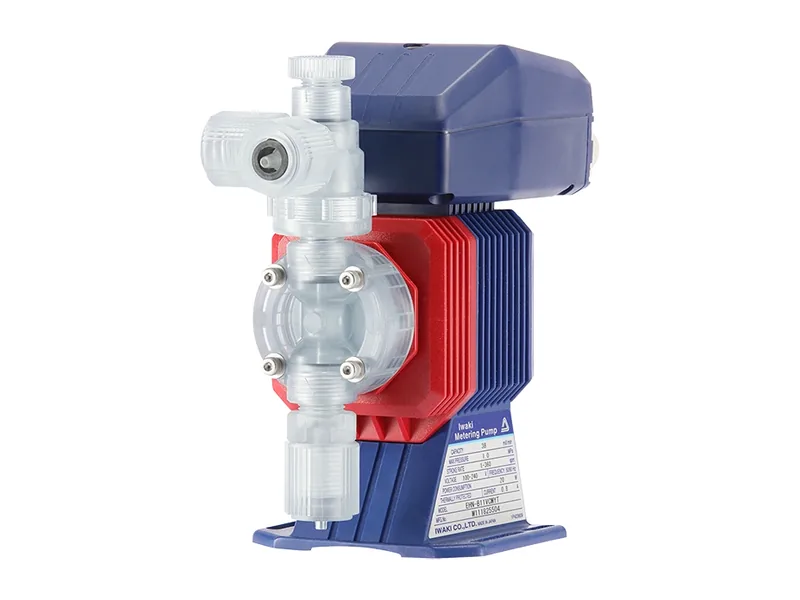
IWAKI EHN solenoid metering pumps, including the EHN-YN series, are a common choice for this kind of low-flow wastewater dosing. Where the production side needs sealless transfer, IWAKI MD magnetic drive pumps are worth a look, but confirm material compatibility with the manufacturer. Read more about the IWAKI EHN solenoid pump, or browse our solenoid dosing pump range and the IWAKI brand page.
Common mistakes
Using a wastewater pump on the production line. A standard solenoid pump head is not designed to keep moisture out, so leaks and contamination risk are high with electrolyte. A lithium battery dosing pump for electrolyte needs a different design brief.
Checking the head material but not the seals. On any lithium battery dosing pump, the right head with the wrong O-ring or diaphragm backing still fails.
No second line of defense. Electrolyte and hydrofluoric acid are hazardous. Where leaks are critical, consider a double diaphragm design with rupture detection; see how double diaphragm leak detection works.
Conclusion
Start by asking where the lithium battery dosing pump will work. On the production line, electrolyte and additive metering need a sealed, moisture-free system and compatible materials, while slurry needs a pump built for thick, high-solids media. In the wastewater plant, treat fluoride and heavy metals with corrosion-resistant metering pumps and pH control. Gather the fluid, flow, pressure and hazardous area details, then contact our engineers to check each point.
FAQ
Can a standard solenoid pump work as a lithium battery dosing pump for electrolyte?
We do not recommend it. Its seals and head are not designed to exclude moisture, and wet electrolyte forms hydrofluoric acid.
What pump moves electrode slurry?
Usually progressive cavity or gear pumps suited to thick, high-solids fluids. Diaphragm metering pump check valves tend to clog.
Which chemicals does battery plant wastewater need?
Typically acid and caustic for pH, calcium salts for fluoride, PAC and polymer for coagulation, and a precipitant for heavy metals, based on analysis.
What material handles fluoride wastewater?
PVDF and PTFE are common. Glass and ceramic parts are attacked by hydrofluoric acid, so check balls and seals as well.
Do battery plant pumps need explosion protection?
Solvent areas are usually classified hazardous zones, so motors and electrics must match the zone. The plant's area classification decides.