
ORP Controlled Dosing: Setpoints, Applications and Sensor Location
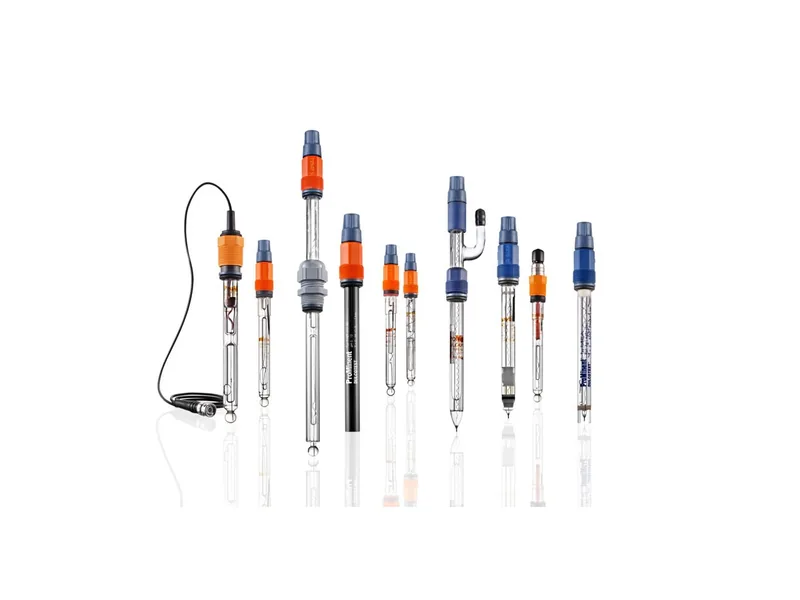
ORP controlled dosing uses the oxidation reduction potential of the water, measured in mV, as the signal that adjusts a metering pump. It works well in chlorination, dechlorination and cyanide destruction, because the chemicals in those processes are oxidants or reductants and ORP tracks how far the reaction has gone.
This article covers how to use ORP in a dosing loop: setpoints, typical applications, control modes and where to put the electrode. The difference between ORP and free chlorine measurement is covered in a separate article.
What an ORP controller does in a dosing system
ORP measures the overall oxidizing or reducing strength of a solution. Add oxidant and the reading rises; add reductant and it falls. It does not tell you which substance is present or its concentration, but it does tell you whether you have dosed enough.
In ORP controlled dosing the instrument usually does three jobs. It provides the control signal, as 4–20 mA or pulses, to drive the metering pump. It raises high and low alarms when the dose drifts. It also confirms the process end point, for example whether cyanide oxidation is complete. A typical sensor measures from about -1500 mV to +1500 mV, which covers most water treatment cases.
Typical applications of ORP controlled dosing
Setpoints vary widely between processes. The figures below are common reference ranges; final values should come from jar tests and commissioning.
Chlorination
For swimming pools, cooling water and some potable water systems dosed with sodium hypochlorite, ORP is usually held around 650–750 mV. Below setpoint the pump speeds up; above it the pump slows or stops.
Dechlorination and reduction
Ahead of reverse osmosis, sodium bisulfite is dosed to remove residual chlorine, and ORP is typically pulled below about 200 mV, depending on the membrane supplier. In plating wastewater, hexavalent chromium reduction generally runs at pH 2–3, with an ORP end point of roughly 250–300 mV.
Cyanide destruction
Alkaline chlorination runs in two stages. Stage one holds pH above 10 with ORP around 300–350 mV. Stage two lowers pH to about 8 and raises ORP to roughly 600–650 mV. ORP controlled dosing in both stages saves chlorine and avoids high residual chlorine in the effluent.
How to set the redox setpoint
ORP is a relative value. The same chlorine level reads differently at different pH, temperature and electrode condition, so copying a number from another plant is risky. A reliable method:
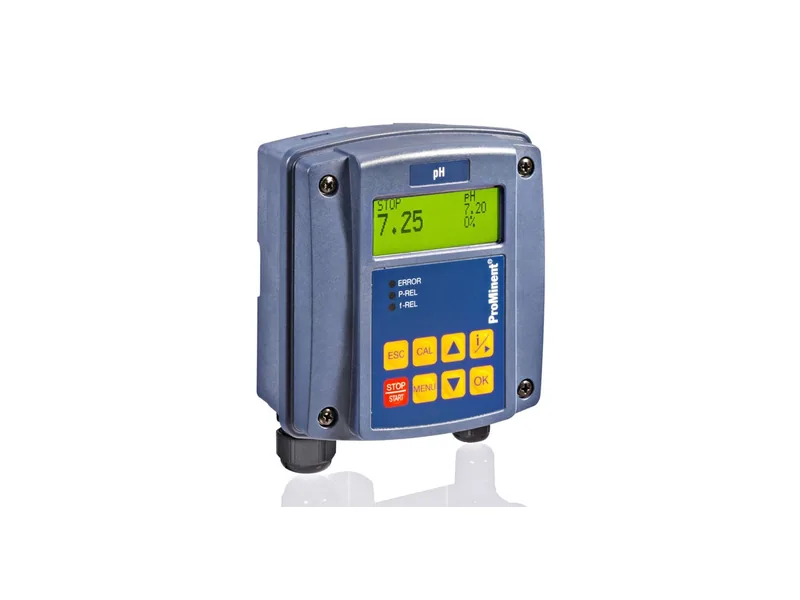
Figure 1: ProMinent DULCOMETER Compact controller. Image source: ProMinent official website
- Stabilize pH first. ORP controlled dosing is only dependable once pH is steady.
- Take samples and confirm treatment results with a chlorine test kit or lab analysis.
- Note the ORP reading at that point and add a margin of about 20–30 mV for the setpoint.
- Review after some weeks of operation and recheck whenever water quality changes.
On/off or PID for ORP controlled dosing
Simple ORP controlled dosing systems can use on/off control: start the pump below the low limit, stop it above the high limit, with a hysteresis band to avoid rapid cycling. The downside is that the reading swings between the two limits.
Where stability matters, use PID control. The controller outputs a pulse frequency in proportion to the deviation, and the pump stroke rate follows. The ProMinent DULCOMETER Compact is one example of an ORP controller for this job. It is a single-channel PID controller for pH, ORP, chlorine or conductivity, with one pulse frequency output for a metering pump, one relay for alarm or limit duty, and a digital input for a sample water flow switch.
When tuning ORP controlled dosing, allow for dead time. It can take tens of seconds to a few minutes for chemical to mix and reach the electrode, and a short integral time will make the pump overshoot.
Where to install the ORP sensor for ORP controlled dosing
Electrode location makes or breaks the loop:
- Place it after the chemical is fully mixed, not right next to the injection point, or the reading will jump.
- Do not place it too far away either. Long dead time slows the loop, so look for a point near the end of the mixing zone or reactor outlet.
- In a bypass flow cell, keep velocity moderate. ProMinent DULCOTEST ORP sensors call for less than 0.8 m/s and an insertion angle more than 15° from horizontal.
- For cable runs over 10 m, use a 4–20 mA transducer at the sensor to reduce interference.
- Choose the electrode for the duty: platinum for general use, gold where electrolysis or ozone is involved.
Interlocks, alarms and maintenance
ORP controlled dosing needs a few safeguards. A high alarm protects against overdosing, and a low alarm flags an empty tank or pump fault. Control should stop when sample flow is lost. A maximum continuous dosing time, with alarm and pump stop, prevents a failed electrode from leaving the pump at full stroke.
Electrode surfaces collect scale and oil over time, and response slows. Check the sensor every one to two weeks with an ORP reference solution, and clean or replace it if the deviation is large.
Conclusion
ORP controlled dosing suits chlorination, reduction and cyanide destruction, where the redox reaction is well defined. Control pH first, set the redox setpoint from sampling on site, choose on/off or PID control by the accuracy you need, and mount the electrode after mixing with moderate dead time. Back it up with high and low alarms and a flow interlock.
For pH loops, see online pH control dosing and analyzer-driven dosing pump control. For plating, read about hexavalent chromium reduction. Browse pH and ORP instruments and dosing controllers, or contact our engineers about your project.
FAQ
Can ORP controlled dosing replace chlorine testing?
Not fully. ORP reflects overall oxidizing strength and shifts with pH and temperature, so regular chlorine checks are still needed to confirm the setpoint.
Why does my ORP reading keep drifting?
Common causes are a fouled electrode, an aged reference, unstable sample flow or grounding noise. Clean and verify the sensor first, then check flow and cable shielding.
Can I copy another plant's setpoint for ORP controlled dosing?
It is not recommended. Different water, pH and electrodes can shift the reading by tens of mV for the same result, so confirm on site.
How often should an ORP electrode be replaced?
It depends on the water. In clean water it typically lasts about a year; in wastewater it may need replacing within months. Replace it when response becomes slow.
Can one controller handle both pH and ORP?
A single-channel unit controls one variable. For pH and ORP together, use a dual-channel controller or two single-channel units.