
Hydroponic Nutrient Dosing for Greenhouse Stock Tanks
Hydroponic nutrient dosing is not the same job as dumping dry fertilizer into a pond and stirring. In a greenhouse, whether you run rockwool, NFT, or deep-water culture, the roots get almost every ion from the irrigation water. If calcium nitrate shares a concentrated stock tank with sulfates or phosphates, the tank throws a precipitate and the recipe on paper is no longer what the crop drinks. If acid shares a pump with fertilizer, a stroke change moves pH and the nutrient ratio at the same time. This article is for greenhouse growers and irrigation technicians who run hydroponic nutrient dosing inside the house, not field drip acid injection.
Why hydroponic nutrient dosing splits A and B stocks
A practical hydroponic nutrient dosing setup uses two stock tanks. Tank A holds calcium nitrate and part of the potassium nitrate. Tank B holds magnesium sulfate, phosphates, and micronutrients. The split exists because calcium and sulfate or phosphate form sparingly soluble salts in a concentrated stock. Once the sludge sits on the bottom, no pump can deliver the ion ratio you calculated. Acid, usually nitric or phosphoric depending on the recipe, should be a third line. Do not tee it into the A or B pump head.
Stock strength is commonly one hundred to two hundred times the target irrigation strength. Go much richer, and a winter drop in water temperature can crash solubility; crystals show up in the tank first, then in the suction line. Go much weaker, and you refill constantly while small batch errors get amplified. After mixing, measure EC against the calculated value and write it on the tank so the next shift does not top up by eye.
A recirculating house adds another twist. Return water already carries unused ions. If hydroponic nutrient dosing still follows the fresh-water recipe at full strength, EC creeps up over days. Treat return EC as part of the calculation.
Pace the pumps to irrigation, not to a fixed stroke
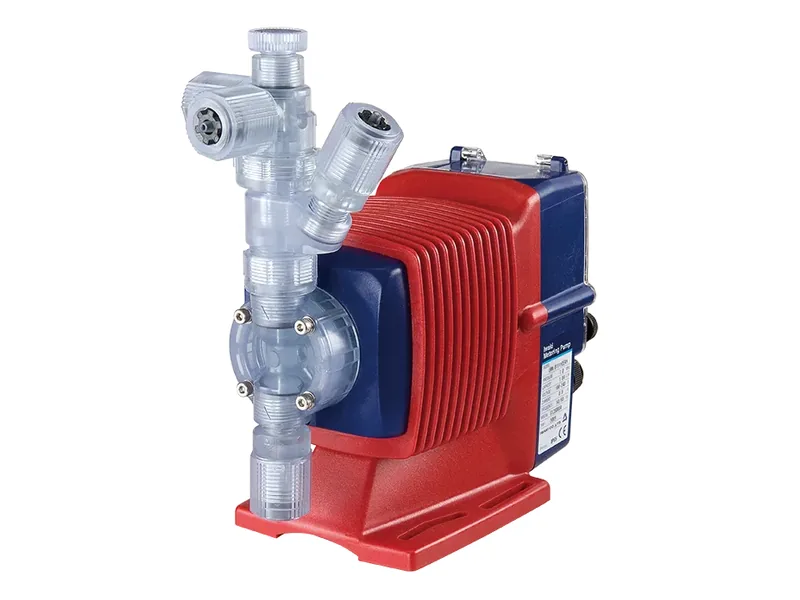
All three pumps in a hydroponic nutrient dosing line should follow the instantaneous flow in the irrigation main. Start the pumps when irrigation starts, and stop them when it stops. That interlock comes first. Where flow swings a lot, a water-meter pulse is more stable than a fixed stroke; see dosing control methods. Small greenhouse flows often fit a solenoid metering pump. IWAKI EWN-A and IX units are typical in this range; compare them on the IWAKI brand page and the metering pump category.
Size the pump so peak stock demand sits around the middle of the stroke range, with about thirty percent headroom. Discharge pressure must exceed the pressure at the injection point, and the injection valve must check so irrigation water cannot run back into the stock line. Keep suction lines short and free of high loops, and put a level switch on each tank so you do not suck the pump dry.
Field fertigation often uses a venturi or a water-powered injector, which can be enough when flow is high and the recipe tolerance is loose. Hydroponic nutrient dosing needs A, B, and acid to be adjusted independently, and a venturi gets unstable at low greenhouse flows. For a pump-type comparison see fertigation injection pumps. Do not copy a field skid into a greenhouse.
Precipitation, leftover mix, and EC spikes people skip
Splitting the tanks does not automatically clean the piping. If the A and B lines meet in a shared mixing tee upstream of the injection valves, leftover solution sits in that dead volume after irrigation stops and keeps reacting. The first minutes of the next cycle can show a jump in EC and turbidity. Give each line its own injection valve and let the streams mix in the irrigation main, with some pipe run before the first crop row. In hydroponic nutrient dosing, that piping detail often fails before the pump accuracy does.
These are the field problems that product pages rarely spell out:
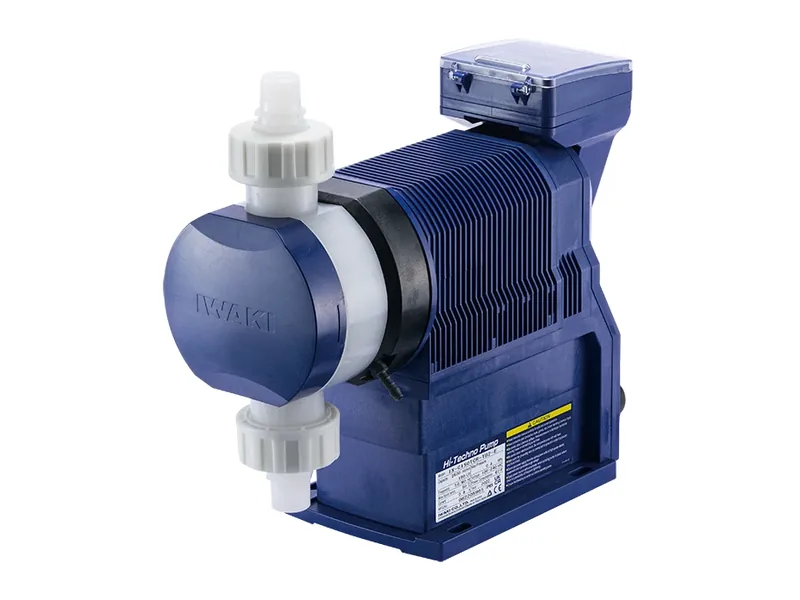
Figure 1: IWAKI IX series metering pump. Image source: IWAKI official website
- A stock tank with no mixer, or with a mixer that runs in long gaps, stratifies. The same stroke delivers a rich slug in the morning and a weak one in the afternoon.
- Irrigation flow drops while the pumps stay on the old stroke, and EC spikes. Young plants show it first.
- Acid and fertilizer share a back-pressure valve or a common drain, so the two liquids cross during service.
- The injection point sits upstream of a filter, so precipitate and undissolved fines load the cartridge and differential pressure climbs.
- Cold source water in winter raises stock viscosity. The pump starves on suction and actual feed falls below the set point.
Flush the heads, injection valves, and tubing before a recipe change. Residual phosphate meeting a fresh calcium feed will glaze the valve ball; the pump looks as if it has lost prime, but the valve is simply not seating. If the head needs frequent venting, see IWAKI EHN auto-degassing heads. Take EC and pH samples downstream of a mixing length, not at the injection valve. If EC stays high during hydroponic nutrient dosing, check irrigation flow and pulse loss before you chase the stroke.
When a solenoid pump is enough, and when you need a recipe controller
A house with few zones, a stable recipe, and one valve group can run hydroponic nutrient dosing with two or three solenoid pumps from a water-meter pulse. A house with many zones, several recipes in the same day, or automatic correction from return EC needs a multi-channel controller that stores recipes. The pumps still meter each line on their own; the controller only issues the signals and the interlocks.
Do not put acid and fertilizer on a single dual-head pump just to save space. A shared motor forces both lines to change in a fixed mechanical ratio, and acid demand does not move in step with nutrient demand. When you trim pH, you will also move the fertilizer ratio. Three separate pumps take more room and are easier to tune. Nitric and phosphoric acids can burn and corrode; depressurize and isolate power before you open a head, and wear eye and chemical protection.
Conclusion
Hydroponic nutrient dosing stays repeatable when A, B, and acid are mixed and injected as separate lines, and when pump flow follows irrigation rather than a habit stroke. A venturi is fine for coarse field injection. In a greenhouse, low flow and multiple recipes favor metering pumps. Have your stock strength, irrigation flow, and target EC ready, then contact us for a pump check against that duty.
FAQ
Can I put calcium and sulfate salts in one stock tank?
Not at concentrate strength. Calcium with sulfate or phosphate will precipitate, and the sludge at the bottom means the recipe you wrote is not the ion mix the crop sees. The two-tank split keeps that reaction out of hydroponic nutrient dosing stock, not later on a filter.
How do I back-calculate pump flow for hydroponic nutrient dosing?
Multiply irrigation flow by the stock dilution ratio to get the volumetric rate on each line, then add headroom for peak demand. After you size the pump for hydroponic nutrient dosing, verify it with a calibration cylinder. Do not trust the nameplate alone.
Why does EC climb in a recirculating greenhouse?
Return water already holds unused nutrients. If hydroponic nutrient dosing still uses the fresh-water recipe at full rate, ions accumulate. Bring return EC into the calculation, cut stock feed, or increase fresh-water exchange.
Can acid and nutrient share one pump and one tube?
No. pH trims and nutrient-ratio trims happen on different schedules, so one pump ties them together. Residual acid in the line will also scale near the injection valve when it meets a calcium feed. In hydroponic nutrient dosing, give acid its own pump and injection point.
Do I need a closed loop on online EC?
If the recipe is stable and irrigation flow is under control, pulse-paced hydroponic nutrient dosing plus periodic grab samples is enough. If flow swings hard or several recipes run in one day, an EC and pH loop helps. It does not replace calibration. A dirty or overdue probe will drive the pumps off a bad signal.