
Fertigation Injection Pump: Venturi, Water-Powered or Metering Pump?
Choosing a fertigation injection pump comes down to three questions: is there power at the site, how steady is the irrigation main, and do you need automatic nutrient control? A venturi injector is fine for small, forgiving systems. A water-powered proportional injector suits large fields with no electricity. An electric metering pump is the right fertigation injection pump for greenhouses, nurseries and any system that doses against EC or pH. This guide is for irrigation managers, drip system contractors and buyers sizing equipment for farm projects.
How each fertigation injection pump works
Venturi injectors create suction as irrigation water passes through a constriction and draw fertilizer solution into the line. There are no moving parts and they are cheap and easy to fit. The trade-off is a pressure loss across the injector, and the suction rate changes whenever line pressure or flow changes, so concentration drifts with the main.
Water-powered proportional injectors sit in the main line and use the irrigation flow to drive an internal piston. More water means faster strokes and more fertilizer, so they dose in proportion to flow without electricity. Pistons and seals wear in contact with fertilizer, sand in the water speeds that wear, and the ratio setting slowly loses accuracy.
Electric metering pumps move a diaphragm with a motor or solenoid at an adjustable stroke and frequency. They accept pulse signals from a water meter or analog signals from an EC or pH controller, and their output does not depend on main line pressure. As a fertigation injection pump they are the most precise option, provided reliable power is available.
Fertilizer injector vs metering pump: a decision order
Work through these checks in order:
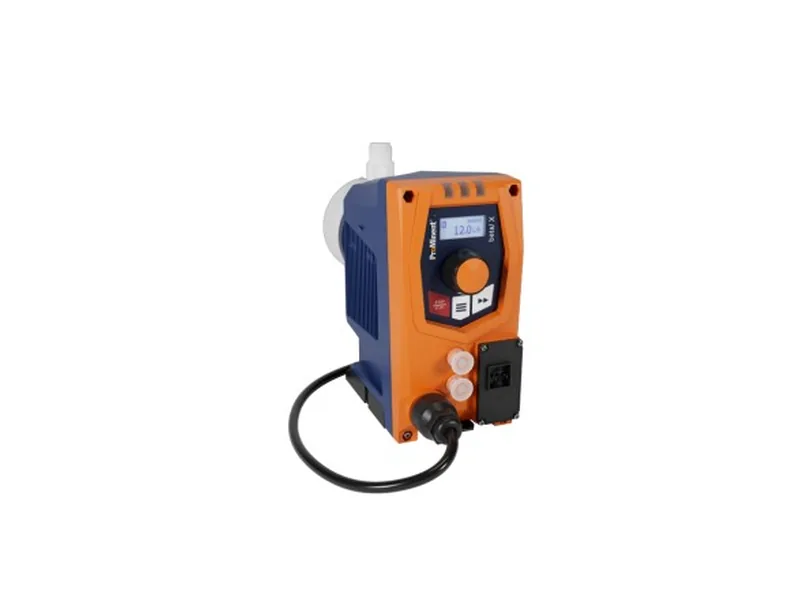
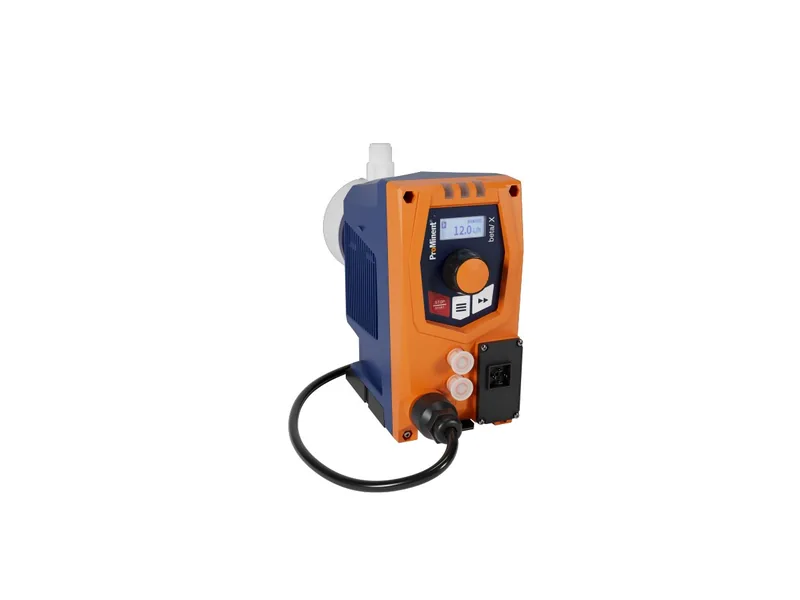
Figure 1: ProMinent beta/X solenoid diaphragm metering pump. Image source: ProMinent official website
- Power. With no supply in the field, the choice is between venturi and proportional injectors.
- Line stability. A VFD-controlled source with steady pressure can run a venturi; large pressure swings call for a proportional injector or metering pump.
- Automatic nutrient control. Closed-loop EC or pH dosing, or separate stock tanks at fixed ratios, practically requires an electric fertigation injection pump with a controller.
- Zone sizes. In rotational irrigation, flows vary between zones, so the fertigation injection pump must cover both the smallest and largest zone.
A pattern we see often: a farm starts on venturi injectors, then finds each irrigation zone gets a different concentration. The cause is usually different pipe resistance per zone changing the suction. Switching to flow-paced dosing is easier than endlessly adjusting valves; our article on flow-paced and closed-loop dosing control explains the options.
Drip irrigation dosing with an electric pump
There are two common ways to pace an electric fertigation injection pump. A pulse-output water meter on the main sends one pulse per set volume, and the pump makes one stroke per pulse, so dosing follows flow. Alternatively an EC or pH controller sends a 4-20 mA signal and the pump adjusts output to the error, which is typical for greenhouse nutrient solutions and propagation benches.
Solenoid diaphragm metering pumps such as the ProMinent beta/X accept external pulse or analog signals and suit greenhouse and small to mid-sized drip irrigation dosing. For large field zones, size the fertigation injection pump to the largest zone's fertilizer demand, and use several pumps in parallel for different stock solutions.
Fertilizer corrosion: liquid end and tubing materials
Fertilizer solution is not clean water. Phosphoric and nitric acid used for pH control are strongly corrosive, calcium nitrate and potassium sulfate attack carbon steel, and chloride-bearing fertilizers are hard on stainless steel. PVC or PVDF liquid ends with FKM or PTFE seals and ceramic or PTFE valve balls are the usual choice. Wear goggles and acid-resistant gloves when mixing acid, and always add acid to water, never the reverse.
A pitfall that is easy to miss: some fertilizers react when mixed in one tank. Calcium with phosphate or sulfate forms a white precipitate that sticks check valves and blocks emitters. Give calcium fertilizer its own tank and its own fertigation injection pump.
Filtration around the injection point
Drip systems clog easily. The injection point normally sits upstream of the main filter so undissolved particles are caught before the laterals. Fit a strainer on the pump suction too; undissolved granules lodged in a valve ball cause erratic output. Our guide to Y strainer mesh selection and cleaning covers sizing.
Protect the water source as well. If the irrigation pump stops while the fertigation injection pump keeps running, or the main drains back, fertilizer can flow toward the well or the municipal connection. Fit a backflow preventer or check valve on the main upstream of the injection point and interlock the dosing pump with the irrigation pump so it only runs when water is flowing.
In cold regions, concentrated stock solutions can crystallize at low temperature. Keep tanks indoors or insulated, and flush the liquid end and tubing with clean water before long shutdowns.
Conclusion
No fertigation injection pump is best everywhere. Venturi injectors suit small, low-precision systems, proportional injectors suit unpowered fields, and electric metering pumps suit greenhouses and EC or pH controlled systems. Browse our solenoid metering pump range and the ProMinent brand page, then send us your irrigation flow, fertilizer types and zone layout and contact our engineers to check pump sizing.
FAQ
Is a proportional injector or a metering pump more accurate?
A metering pump, generally. Its output is set by stroke and frequency and does not follow line pressure. A proportional injector is accurate when new but drifts as seals wear.
Why does my venturi injector not draw fertilizer?
Usually the pressure differential across it is too small. Low inlet pressure or too little downstream resistance kills the suction; a bypass or booster pump usually fixes it.
Can one pump inject several fertilizers at once?
We advise against mixing stock solutions that can react. Separate pumps make each ratio adjustable on its own.
Can an electric fertigation pump run on solar power?
Yes, if the battery is sized for the pump's power draw and irrigation hours. Unstable voltage affects solenoid pumps, so confirm the setup with the supplier.
How long should I flush drip lines after fertigation?
Run clean water at the end of each fertigation cycle until the lines are clear of solution, so nothing dries at the emitters or feeds algae.