
Fertilizer Plant Dosing for Process Water and Cooling Water
Fertilizer plant dosing is not a standard cooling-tower program with a new name. In a urea, phosphate, compound-fertilizer or ammonia plant, process water needs pH trim and scale control, and the cooling-water circuit has to live with the risk of ammonia, urea or phosphate leaking into the loop. The chemicals, the injection points and the pumps on those two sides should stay separate. This piece is for utilities and cooling-water operators who handle fertilizer plant dosing. It covers process-water and circulating-water chemical feed only. It does not walk through boiler internal treatment, and it does not invent a formula for a named unit.
Why fertilizer plant dosing cannot copy a generic cooling program
Fertilizer production puts ammonia, urea, phosphoric acid or slurry into a hot, high-salinity environment. A small leak on a cooler or a scrubber can move pH, conductivity and nutrients away from the set point in a short time. Ammonia or urea in the cooling water speeds up microbial growth and may push pH up. Phosphate in the loop confuses the scale-control reading. If fertilizer plant dosing still runs a fixed stroke based only on makeup hardness, corrosion, scale and slime can show up together after a leak.
Process water in fertilizer plant dosing is a different job. It may serve scrubbers, dissolving, makeup and heat exchange. The target is the process, not a concentration cycle. Acid, caustic and antiscalant should be injected close to the user. Do not tee them into the cooling-tower basin because that tee is handy. If fertilizer plant dosing puts process acid into the tower, the corrosion-inhibitor balance in the cooling water will be upset at once.
Where fertilizer plant dosing belongs on the process-water side
Typical fertilizer plant dosing points on this side are the scrubber circulation tank, a process-makeup header, and the inlet of a heat exchanger that needs a stable pH. After a scrubber liquor has absorbed tail gas it may run acidic or alkaline, so a dedicated acid or caustic pump should bring pH back into the process band. If dissolving water or makeup still has a scaling tendency, feed antiscalant ahead of the exchanger, in proportion to makeup, rather than at a fixed stroke.
Keep process materials off the cooling-water chemical line in fertilizer plant dosing. Phosphoric acid or urea solution must not share a dosing pipe, and they must not share a day tank, with cooling-water treatment chemicals. Choose the liquid end for the chemical: an acid-resistant head for acid, and a flushable line for a fluid that crystallizes. Flush the head with clean water before a long stop so crystals do not seize a check valve. Stop the pump and relieve pressure before you open a head, and wear protection.
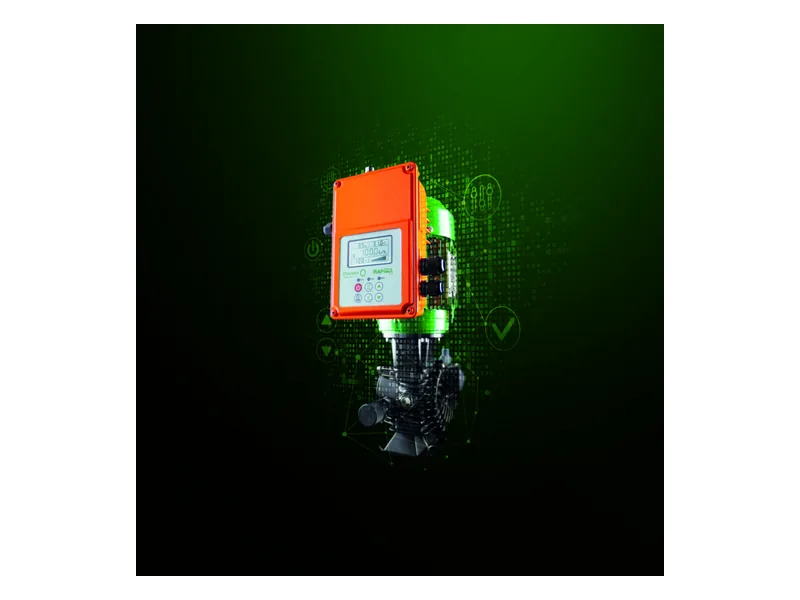
Process-water flow is often larger than cooling-water makeup, or the pressure is higher. A solenoid pump that cannot make the flow or the pressure should give way to a motor-driven mechanical diaphragm pump. Doseuro mechanical-diaphragm units are often used on this kind of continuous industrial duty. You can compare them on the Doseuro brand page and in the metering pump category.
Adjust fertilizer plant dosing on cooling water when a process leak appears
Cooling water is still a scale, corrosion and biocide program, but the order of questions is not the same as in a steel mill or a comfort-cooling loop. The idea of keeping dirty and clean circuits apart, described in steel mill cooling water treatment, is useful here: sample the cooling side of any exchanger that can leak, and do not judge the whole plant from one basin test. If pH is falling, consider whether a cooling-water sulfuric acid dose is still the right correction, and also check whether acidic process liquor has entered the loop. Biocide practice can follow sodium hypochlorite in cooling water, but chlorine demand rises fast after an ammonia or urea leak. Do not only raise the stroke. Look for the leak.
On the cooling-water side, fertilizer plant dosing is more stable when you do the following:
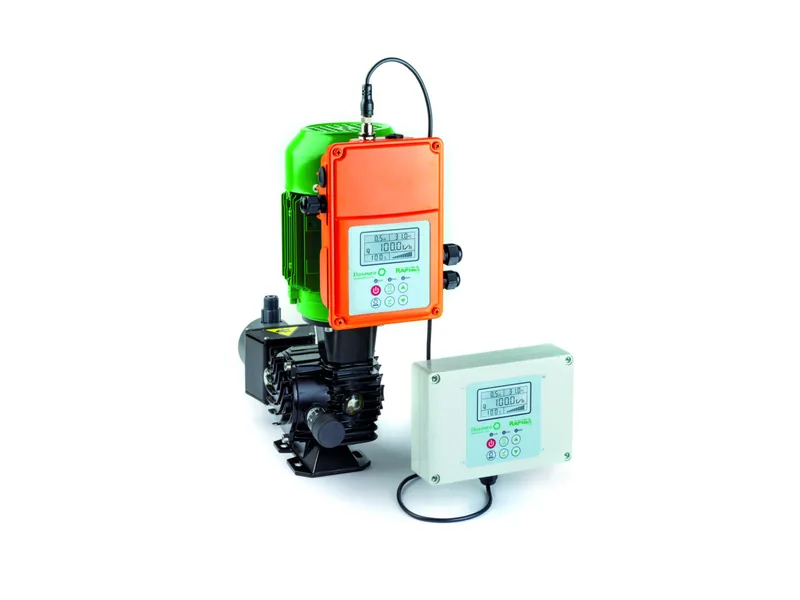
Figure 1: Doseuro RAPIDA 2.0 pump head detail. Image source: Doseuro official website
- Give acid, inhibitor and biocide their own pumps and injection points. Do not premix them in a small manifold.
- Keep makeup, blowdown and chemical feed in step. When the cycles of concentration change, the dose has to change with them.
- If conductivity, pH or residual chlorine jumps, inspect process exchangers for a leak before you change the pump stroke.
- If an evaporative condenser is a separate system, do not share chemicals with an open tower. Injection points are covered in evaporative condenser water treatment.
If fertilizer plant dosing is in place and the cooling water suddenly turns slimy, smells of ammonia, or shows a jump in phosphate, isolate the suspect exchanger first. Raising the biocide and waiting is a poor substitute for stopping the leak. Sample at more than one point: the main basin, the return from the suspect exchanger, and the makeup. That is how you tell a change in incoming water from a process leak on one circuit.
Conclusion
Fertilizer plant dosing should be designed as two jobs: process water and cooling water. On the process side, feed acid, caustic and antiscalant to the scrubber, makeup and heat-exchange targets. On the cooling side, keep the usual scale, corrosion and biocide program, and change the diagnosis when ammonia, urea or phosphate appears. Send the process fluid, the flow, the pressure, the chemicals already in use and any leak history through the contact page, and we will check the separate-pump layout and the injection points with you.
FAQ
Can one set of pumps handle fertilizer plant dosing for both process water and cooling water?
No. The water-quality targets, the chemicals and the leak risks are different. Keep the pumps, day tanks and injection lines separate so the two sides cannot contaminate each other.
If chlorine demand in the cooling water jumps, should we just increase the biocide?
Check the process side for an ammonia or urea leak first. A leak will raise chlorine demand. Raising the stroke does not remove the cause, and it can scramble the residual.
Process scrubber pH swings a lot. How should the metering pump follow it?
Use a pH signal to drive the acid or caustic pump, rather than a fixed stroke. Place the sensor downstream of the mix, and calibrate it on a short cycle so the pump does not overshoot or undershoot.
Why do fertilizer plant dosing lines block so often?
Urea, phosphate salts and some antiscalants crystallize after a shutdown. Keep the suction line short, provide a flush or drain on the discharge, and clear the head and the pipe before the pump sits idle.
Can a solenoid pump handle a small fertilizer plant dosing duty on cooling-water makeup?
Yes. When makeup is modest and the dose should follow flow, a solenoid metering pump is often enough. When flow or pressure rises, move to a mechanical diaphragm pump.