
Sulfuric Acid Dosing for Cooling Towers: Pumps, pH Interlocks, Safety
Sulfuric acid dosing for cooling towers means feeding concentrated acid into the basin or the circulating pump suction to neutralize part of the bicarbonate alkalinity that makeup water brings in. Lower alkalinity means less calcium carbonate scale, so the system can run at higher cycles of concentration with less blowdown and less makeup. Power plants, steel mills and chemical plants with open recirculating systems use it widely.
This guide to sulfuric acid dosing for cooling towers is for plant chemists and for engineers who build acid feed systems. It focuses on equipment, interlocks and safety. How to set cycles of concentration is a separate topic and is only touched on here.
Why sulfuric acid dosing for cooling towers works
Makeup water alkalinity is mostly bicarbonate. As water evaporates in the tower, alkalinity and calcium both concentrate, and at heat transfer surfaces calcium carbonate drops out in condenser tubes and exchangers. A scale inhibitor can hold it for a while, but push cycles higher and inhibitor alone is often not enough.
Sulfuric acid reacts with bicarbonate to form carbon dioxide and sulfate. The CO₂ strips out in the tower, and alkalinity falls. The trade-off is higher sulfate, which can attack concrete basins over time, so acid feed should stay within the design range. More acid is not better.
Storage tanks and piping for concentrated sulfuric acid
For sulfuric acid dosing for cooling towers, most plants feed concentrated sulfuric acid, around 98%, directly. One point surprises people: concentrated sulfuric acid is only mildly corrosive to carbon steel, while diluted acid is aggressively corrosive. That is why bulk tanks are often carbon steel, protected by a thin iron sulfate film. Once water or humid air gets in and the concentration drops, the steel starts to corrode.
Keep moisture out
Concentrated acid absorbs water from the air. Fit a desiccant breather on the tank vent and make sure rain cannot enter the roof. A lot of tank wall damage near the liquid line comes from years of moisture pickup.
Do not dilute casually
Diluting sulfuric acid releases a lot of heat and can boil and spatter locally. If dilution is needed, always add acid slowly to water, never water to acid. To avoid this risk, most plants skip dilution and feed concentrated acid with a small metering pump.
Choosing the acid feed pump for sulfuric acid dosing for cooling towers
Concentrated sulfuric acid is dense and slightly viscous, so wetted materials must match. Typical choices are a PVDF or 316L stainless steel head, ceramic or PTFE balls and PTFE seals. Our metering pump wetted material guide and the sulfuric acid metering pump selection article cover the details.
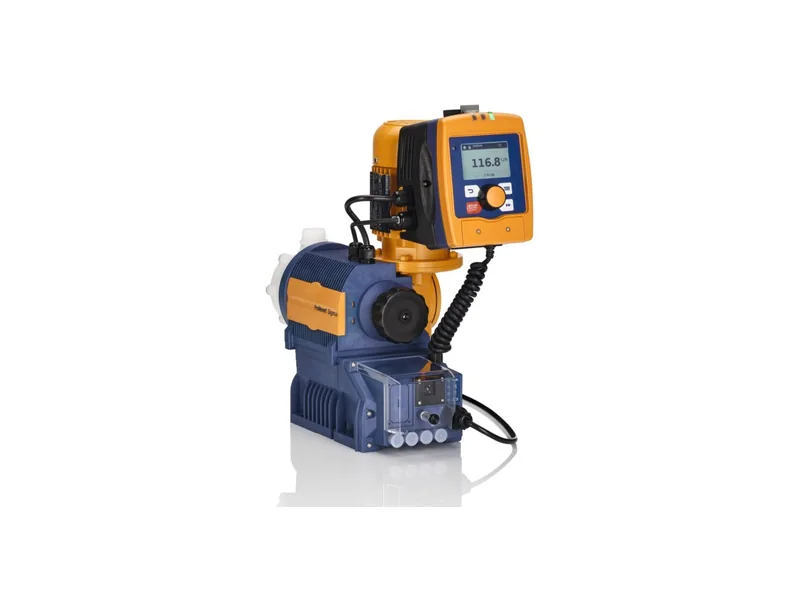
Flow is usually modest but continuous, so a motor-driven diaphragm metering pump is a steady choice. The ProMinent Sigma/X control type, for example, accepts a 0/4–20 mA signal for pH control and uses a multi-layer safety diaphragm with rupture signalling, so chemical does not escape to the outside if a diaphragm fails. That matters with concentrated acid. See the ProMinent brand page.
A few details people skip:
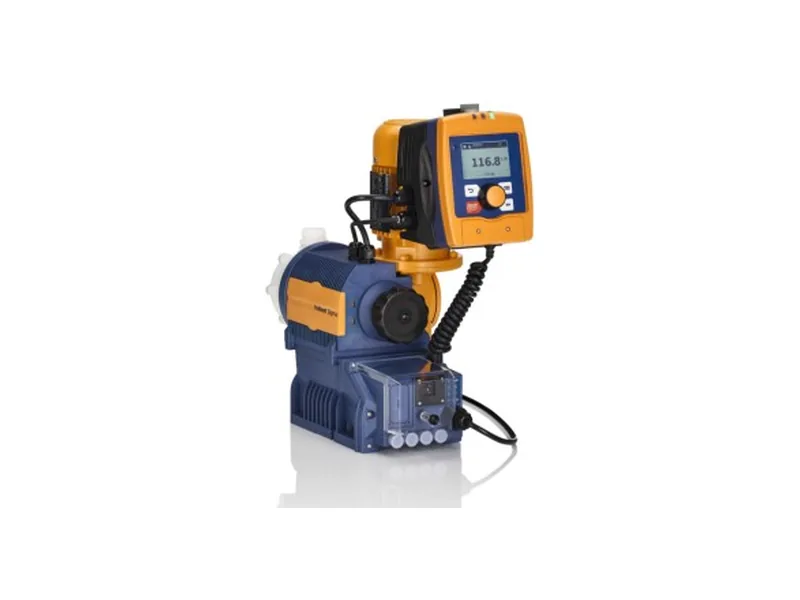
Figure 1: ProMinent Sigma/X control type diaphragm metering pump. Image source: ProMinent official website
- keep the suction line short and not too narrow; dense acid gives less suction lift than water;
- install a back pressure valve and a relief valve on the discharge to stop siphoning and protect against dead-heading;
- use PTFE-lined pipe or stainless tubing with PTFE gaskets, never ordinary rubber.
Where to inject the acid
In sulfuric acid dosing for cooling towers, choose a point with strong flow and good mixing, usually the circulating pump suction pit or the basin inlet channel. Acid dripped into a dead zone creates a local low-pH pocket that eats concrete and nearby steel. The injection quill should reach into the main flow, be made of PTFE or an acid-resistant alloy, and sit well away from walls and structural steel.
pH interlocks for sulfuric acid dosing for cooling towers
The real danger in sulfuric acid dosing for cooling towers is not underdosing but runaway overdosing. If pH drops into the acidic range, condenser copper alloys, carbon steel piping and concrete all corrode quickly, and the damage is far worse than scale. Cooling tower pH control therefore needs several layers of protection:
- closed-loop pH control with a low-pH alarm that stops the pump;
- two pH probes on critical systems, compared continuously, with an alarm on deviation so a drifting probe cannot drive the acid feed;
- a pump sized for the actual requirement, not oversized, so even a failed signal cannot crash pH quickly;
- a software limit on maximum acid feed per hour.
Clean and calibrate pH probes regularly. A fouled or aged probe often reads high, the controller thinks it needs more acid, and the feed creeps up. For instruments, see our pH and ORP controllers.
Safety around the acid system
Safety rules for sulfuric acid dosing for cooling towers are simple but strict. Concentrated sulfuric acid causes severe burns. Provide an eyewash and emergency shower at the acid area, and wear a face shield, acid-resistant gloves and an acid suit when handling it. Bund the tank area to hold the full tank volume. Before opening a pump head or line, stop the pump, isolate it and relieve pressure, and flush residue with plenty of water while guarding against splashes. Supervise every tanker unloading.
Conclusion
Sulfuric acid dosing for cooling towers lowers alkalinity and controls calcium carbonate scale so the system can run at higher cycles. Feed concentrated acid directly, keep the tank dry, avoid casual dilution, use PVDF or stainless pump heads, and inject where mixing is strong. The part that deserves the most attention is the pH interlock: low-pH shutdown, dual probes and a pump that is not oversized. Send us your circulating flow, makeup alkalinity, target pH and acid concentration, and contact our engineers to size or review an acid feed system.
FAQ
Will acid feed corrode the condenser?
Not if pH stays within the design range during sulfuric acid dosing for cooling towers. The risk comes from overdosing, so the low-pH interlock and probe calibration must be reliable.
Can hydrochloric acid replace sulfuric acid?
It can, but it is used less often. It adds chloride, which is hard on stainless steel, and it fumes, so most power plants stay with sulfuric acid.
Is scale inhibitor still needed after acid dosing?
Usually yes. Sulfuric acid dosing for cooling towers only reduces alkalinity; the inhibitor handles other scale-forming species, and the two work better together.
Why are concentrated sulfuric acid tanks made of carbon steel?
Concentrated acid passivates carbon steel, so corrosion is slow. The tank must be kept dry, because diluted acid corrodes steel quickly.
How often should pH probes be calibrated?
Typically weekly to monthly, depending on water quality and probe condition. Recalibrate early whenever readings start to drift.