
Evaporative Condenser Water Treatment: Scale, Biocide and Bleed-Off
An evaporative condenser combines a cooling tower and a condenser in one box. Spray water runs over a hot refrigerant coil and part of it evaporates, carrying the heat away. That makes the unit efficient, but it also means the coil surface runs hot and the sump holds only a small volume of water, so scale and microbiological problems develop faster than in an ordinary open tower. A sound treatment program for an evaporative condenser does three things: keeps the coil free of scale, keeps bacteria and algae under control, and bleeds off concentrated water automatically. This guide is for engineers at cold stores, ammonia refrigeration plants and process facilities.
What makes evaporative condenser water different
Refrigerant condenses inside the coil while spray water wets the outside, a fan pulls air through, and evaporation removes the heat. Compared with an open cooling tower, an evaporative condenser has some particular traits:
Figure 1: ProMinent AEGIS II cooling water controller. Image source: ProMinent official website
- Hot coil surfaces: calcium carbonate and other scales deposit quickly on hot metal. Even a thin layer raises condensing pressure and compressor power.
- Small sump volume: chemical concentration and water quality change quickly, and every makeup or bleed event has a direct effect.
- Galvanized or stainless coils: galvanized coating can develop white rust under the wrong water chemistry.
- Spray and drift: aerosols make bacterial control, Legionella in particular, a priority.
For these reasons evaporative condenser water treatment cannot rely on periodic manual cleaning alone. It needs continuous dosing and bleed control.
Chemicals used
Treatment usually involves two groups of products:
- Scale and corrosion inhibitor: prevents coil scaling and protects galvanizing and steel, fed continuously in proportion to makeup or bleed.
- Biocides: an oxidizing biocide such as sodium hypochlorite at a low continuous or timed dose, plus a non-oxidizing biocide as periodic shock doses. Alternating the two helps prevent resistant populations.
Chemistry has to suit the coil material. New galvanized coils should be passivated before full operation, pH and alkalinity should not run too high, and the inhibitor should be zinc-friendly. Hypochlorite as a cooling water biocide is covered in sodium hypochlorite cooling water biocide.
Conductivity bleed-off
Water evaporates continuously, so dissolved salts keep concentrating. The usual way to hold cycles of concentration is conductivity-controlled bleed: when conductivity reaches the setpoint a bleed solenoid valve opens, and it closes when conductivity drops back. How to choose cycles and setpoints is explained in conductivity and cycles of concentration.
Tie dosing to bleed. A common approach feeds inhibitor in proportion to makeup volume or bleed time, so more bleed means more inhibitor and the concentration in the sump stays steady. Some controllers handle bleed, inhibitor pump and biocide pumps together, so one device runs the whole evaporative condenser program.
Spotting scale early
Early scale is hard to see, but these signs give it away:
- Condensing pressure is higher than before at the same load, and compressor current rises.
- At shutdown, the coil shows white or grey hard deposits, often heaviest near the spray nozzles.
- Sludge in the sump increases and conductivity stays high, suggesting insufficient bleed.
Once scale is significant the unit needs a chemical clean, and the acid type and strength must account for galvanizing or the coating will be stripped. Good daily dosing and bleed control are far easier than cleaning after the fact. General principles are in how cooling water dosing works.
Seasonal shutdown and start-up
Many refrigeration plants run an evaporative condenser hard in summer and lightly in winter. Stagnant water in a sump or idle pipework is where bacteria multiply, so drain and clean the sump before a long shutdown, or keep water circulating and biocide feeding. On restart, clean and disinfect before the fan runs at full speed, then confirm that the conductivity sensor, bleed valve and pumps all respond. Check drift eliminators at the same time, because damaged eliminators release more aerosol.
Pumps and controllers
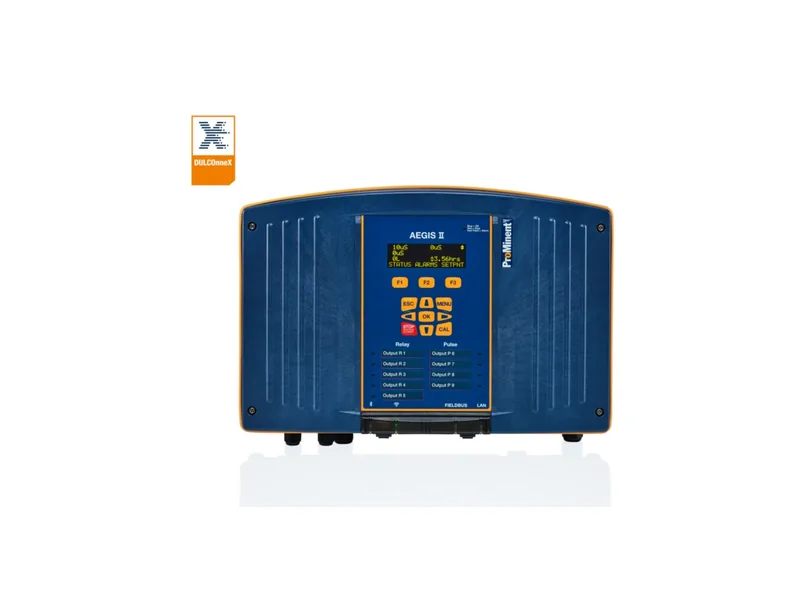
Chemical demand is modest, so one small solenoid metering pump for inhibitor and one for each biocide is typical. For control, a dedicated cooling water controller makes sense, such as the ProMinent AEGIS II, which measures conductivity, drives the bleed valve and runs several dosing pumps. See the ProMinent brand page and the controller category for other options.
Inject chemicals into the sump near the recirculating pump suction so they reach the coil quickly. Mount the conductivity sensor in the recirculating line, away from the makeup inlet, so it reads representative water rather than fresh makeup.
Common problems with evaporative condenser treatment
What maintenance teams see most often:
- Condensing pressure creeping up: coil scale. Check that inhibitor is feeding and that bleed is adequate.
- White powdery deposits on galvanized coils: white rust, typically from soft water, high pH or a new unit that was never passivated.
- Green sump and algae: biocide underfed, or sunlight reaching the sump.
- Conductivity that will not come down: a blocked or failed bleed valve, or poorer makeup water.
Never mix hypochlorite or other biocides with acidic products. Stop and depressurize pumps before maintenance, and isolate power and ventilate before entering the unit.
Conclusion
The core of evaporative condenser water treatment is continuous inhibitor feed, alternating biocides and conductivity-controlled bleed, ideally managed by one controller. Passivate galvanized coils, keep pH in check, and catch scale early. Send the number of units, coil material and makeup water analysis through the contact page and we will help size dosing pumps and a controller for your evaporative condenser.
FAQ
Why does an evaporative condenser scale faster than a cooling tower?
Spray water contacts a hot coil directly and the sump is small, so scale forms more readily.
Does it need biocide?
Yes. Spray creates aerosols, so bacterial and algae control matters, usually with alternating oxidizing and non-oxidizing products.
How should bleed-off be controlled?
Usually by recirculating water conductivity, with the setpoint based on makeup quality and allowable cycles.
What causes white rust on galvanized coils?
Typically very soft water, high pH or a coil that was not passivated before start-up. Choose zinc-friendly chemistry.
How many dosing pumps does one unit need?
Usually one for inhibitor and one or two for biocides, with a controller managing bleed and dosing together.