
Electroplating Chemical Dosing Pump for Bath Replenishment
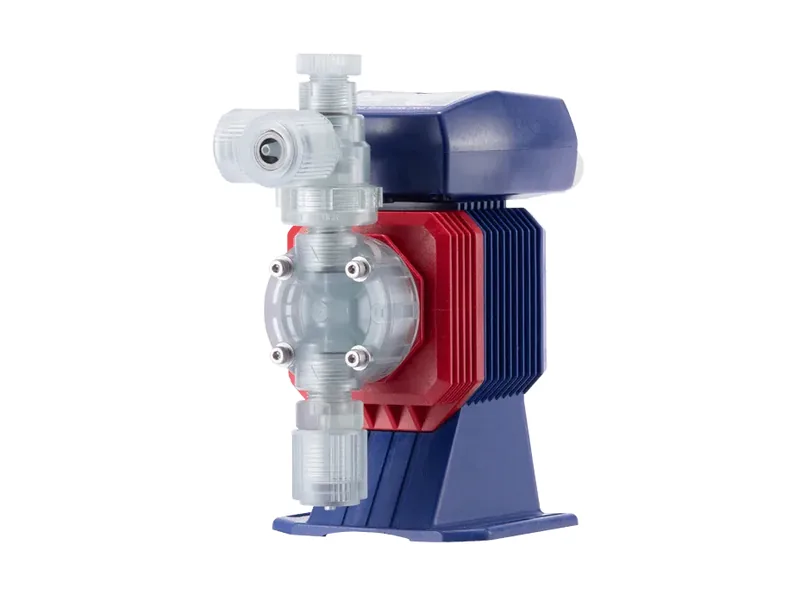
The right electroplating chemical dosing pump depends on which tank you are feeding. Pretreatment tanks for cleaning, pickling and activation consume a lot of chemistry and are usually topped up from titration results. Brighteners and other additives in the plating tank are used in tiny amounts but decide how the deposit looks, so they are best fed little and often by a small solenoid metering pump driven by an ampere-hour counter. Match wetted parts to the chemistry and give every tank its own pump and interlocks. This article is for plating engineers, maintenance staff and integrators automating plating bath replenishment. It covers the process tanks only, not the wastewater plant.
Pretreatment tanks vs plating tanks
In alkaline cleaners, acid pickles and activation dips, the chemistry is lost through drag-out and reaction, and concentration drifts down steadily. Volumes are relatively large and accuracy is less critical. The usual routine is to sample each shift or each day, titrate, calculate the shortfall and add it in one go. A transfer pump or a larger electroplating chemical dosing pump on a timer can do the adding, with lab results used to correct the setting.
Additives behave differently. Brighteners, levelers and carriers are consumed slowly, yet both low and high concentration show up straight away on the parts. Too little and the deposit turns hazy or dull; too much and it can become brittle or streaky. Adding a large scoop by hand once a shift creates a saw-tooth concentration curve, which is exactly what you want to avoid.
Ampere-hour dosing for plating additives
Additive consumption is roughly proportional to the charge passed through the bath. An ampere-hour counter totals plating current over time and sends a signal each time a set number of ampere-hours is reached. The plating additive dosing pump, usually a small electroplating chemical dosing pump, then delivers a fixed shot.
The advantage is that dosing follows production: a busy line with high current gets additive more often, and an idle line gets none. How much to add per kiloampere-hour comes from the chemistry supplier's process data, then gets fine-tuned with Hull cell tests and routine analysis.
Most counters give a pulse output, so the electroplating chemical dosing pump runs in pulse mode, one pulse triggering one or more strokes. The difference between pulse and analog control is covered in metering pump 4-20mA vs pulse control.
Choosing the electroplating chemical dosing pump
For additives, the normal electroplating chemical dosing pump is a small solenoid metering pump. An electromagnet drives the diaphragm, each stroke displaces a small volume, and adjusting stroke length and stroke rate takes the flow down to very low values. That suits little-and-often dosing.
The IWAKI EHN series solenoid metering pump is a typical example. Stroke rate and stroke length are set on the front panel, external pulse control is supported, and some versions offer automatic air venting, which helps with gassy chemicals.
Pretreatment tanks need more flow, so a larger solenoid pump or a mechanical diaphragm metering pump fits better, and some plants simply use a chemical transfer pump with level control. A simple way to decide:
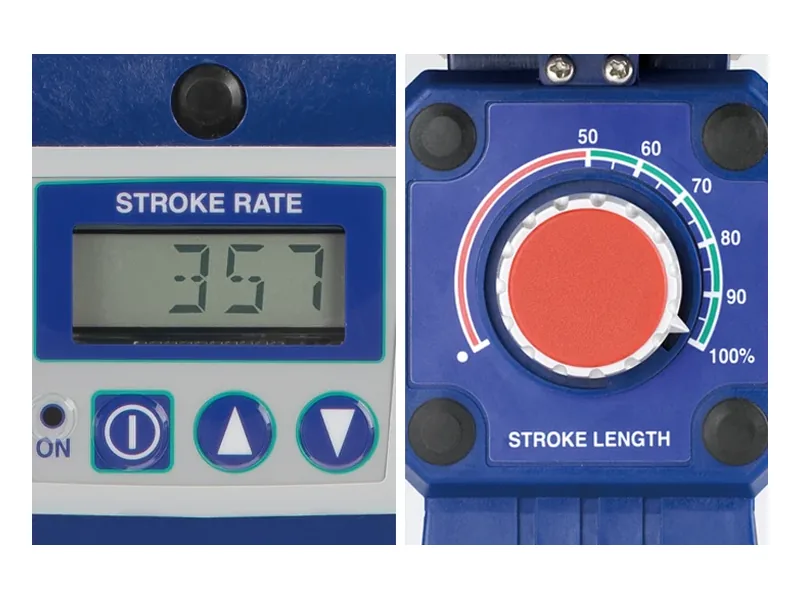
Figure 1: IWAKI EHN-R stroke rate and length controls. Image source: IWAKI official website
- Small additions tied to production: solenoid electroplating chemical dosing pump plus ampere-hour counter.
- Large top-ups based on titration: a bigger metering pump or a transfer pump.
- Many tanks and many chemicals: one pump per chemical per tank, not one pump switched between tanks by valves.
- Gassy chemistry: a pump head with automatic degassing.
Electroplating chemical dosing pump materials for bath replenishment
Plating and pretreatment chemicals are mostly acids or alkalis, some with oxidizers, so the pump head, valve balls, seals and tubing all have to suit them.
- Sulfuric or hydrochloric acid pickles: PVC or PVDF heads with FKM or PTFE seals are common.
- Alkaline cleaners: watch the temperature, since hot caustic attacks some plastics.
- Oxidizing solutions: choose oxidation-resistant seals.
- Proprietary additives: ask the chemistry supplier to confirm compatibility.
Hydrochloric acid fumes readily and forms bubbles in the head and suction line. See hydrochloric acid metering pump for details. Keep tubing and fittings compatible with the pump head material.
Laying out many tanks and many pumps
A plating line can easily have more than a dozen tanks, so plan the dosing layout early. Group the pumps in a cabinet beside the line, label each electroplating chemical dosing pump with tank number and chemical, run each suction line from its own drum, and take each discharge line straight to its tank. Put the outlet below the liquid surface or near the filter return so the chemical mixes in quickly.
Pump elevation and siphoning deserve real attention. If the drum sits higher than the bath, chemical can siphon into the tank after the pump stops, quietly overdosing it. A back-pressure valve or anti-siphon valve on the discharge is the simplest fix. We also recommend single-shot and daily total limits in the PLC that alarm and stop the pump when exceeded.
Maintenance and safety
Change drums before they run dry; an electroplating chemical dosing pump running empty delivers nothing and additive feed simply stops. A low-level switch on each drum helps. Once a week check heads and tubing for crystals and leaks and confirm the pump is stroking.
Wear goggles and acid-resistant gloves around these chemicals. Stop the pump and relieve pressure before opening a head, and flush it with water first. Rinse water and spent baths go to the treatment plant; for that side see electroplating wastewater dosing system.
Conclusion
Separate pretreatment top-ups from additive dosing. Pretreatment gets larger additions based on titration; additives get small, frequent shots from an electroplating chemical dosing pump in pulse mode under an ampere-hour counter. Choose acid- and alkali-resistant wetted parts, give each tank its own pump, fit a back-pressure valve against siphoning and set dosing limits in the PLC. Small pumps for this work are listed under solenoid metering pumps. Send the number of tanks, chemicals, addition rates and control method, and contact our engineers for a pump selection.
FAQ
Can brightener just be added by hand on a schedule?
It can, but concentration swings and deposit quality follows. Small lines with steady output can start manually; busy or demanding lines should move to an electroplating chemical dosing pump on ampere-hour control.
How is an ampere-hour counter wired to the pump?
The counter gives a pulse or dry contact that goes to the pump's external pulse input. Isolate power first and check signal type and voltage in both manuals.
Can one electroplating chemical dosing pump feed several tanks?
We advise against it. Switching with solenoid valves risks cross-contamination and poor accuracy. One pump per chemical per tank is far more dependable.
The deposit is still dull after dosing. Is the pump at fault?
Calibrate the electroplating chemical dosing pump output with a graduated cylinder first. If the pump delivers what it should, look at additive concentration, temperature and current density.
Why does the solenoid pump deliver intermittently?
Usually an air leak on the suction side, gas in the head or a valve ball stuck with crystals. Vent and clean the valves, or choose a self-degassing head.