
Dosing Line Flushing: Chemical Changeover and Shutdown Procedure
Dosing line flushing means pushing clean water through the pump head, discharge line and injection valve until no chemical is left. Two moments make it mandatory: before a chemical changeover, above all between incompatible products such as acid and sodium hypochlorite, and before a shutdown, so residue does not crystallize and block the line. The routine itself is simple: isolate the chemical, switch to flush water, let the pump push water through the whole line, confirm clean discharge and collect the waste. The hard parts are having a flush connection in the first place and disposing of the waste properly. This guide is for dosing room operators and system designers.
Why dosing line flushing matters
Changeover: incompatible chemicals must never meet
The most dangerous pairing is acid and hypochlorite, which releases chlorine gas when mixed. Some sites save a line by running acid cleaning one day and hypochlorite disinfection the next through the same pipe. Skip the flush, or do it badly, and chlorine can appear at the injection point. Acid and caustic (violent heat) and oxidizers with reducing agents are similar cases. For these switches, dosing line flushing is a safety step, not housekeeping.
Shutdown: stop crystals and solids forming
Hypochlorite, caustic soda, PAC, milk of lime and urea all crystallize or settle when they sit in a line. On restart, a crystal holds a check valve open and the pump stops delivering, or a small line is simply plugged. Flushing before any stop longer than a few days saves most of the strip-down work later. Our article on hypochlorite pump clogging explains how that scale forms.
Designing for dosing line flushing
Many dosing rooms have no flush point, so flushing means breaking pipework, and so nobody does it. At design stage:
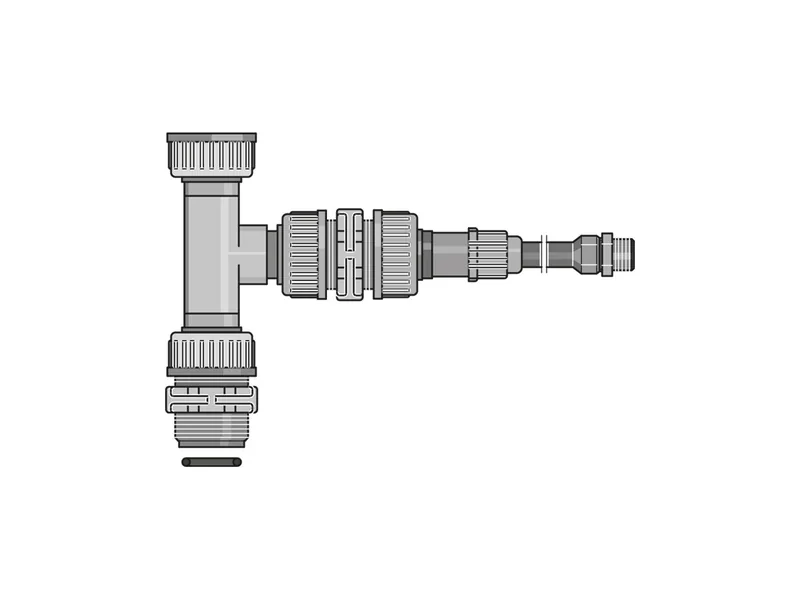
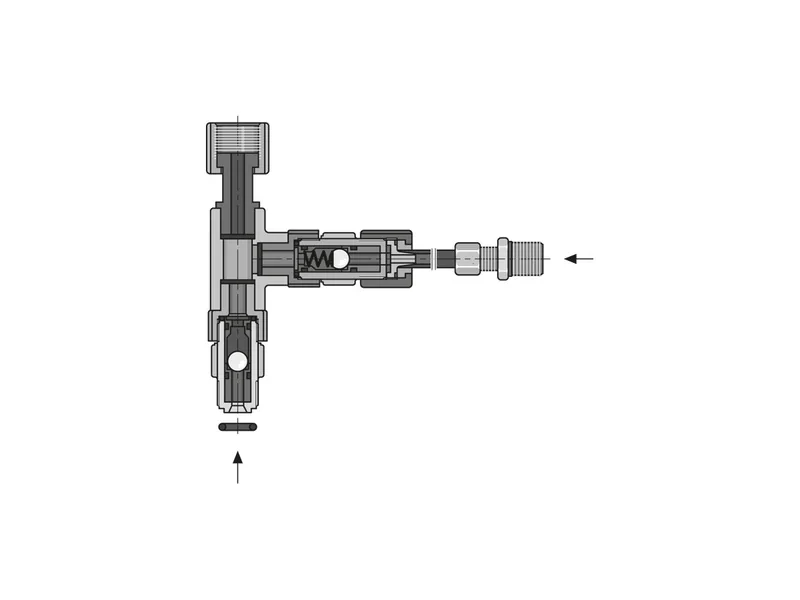
Figure 1: ProMinent flushing assembly for low-pressure metering pumps (DN 10/DN 15 connectors). Image source: ProMinent official website
- Put a tee ahead of the pump suction, one branch to the tank and one to flush water, each with its own valve.
- Fit a check valve on the flush water line so chemical cannot backflow into the water supply; on potable connections add proper backflow protection.
- Provide a drain point near the injection valve or line end so flush water can run into a collection drum.
- Think about water quality. For caustic or hypochlorite lines, softened or RO water is better, because hardness reacts with residue and leaves scale.
A ready-made flushing assembly saves building the tee yourself; see the selection section below.
Step-by-step dosing line flushing procedure
For a typical solenoid pump line:
- Stop the pump and close the tank outlet valve. If the discharge is pressurized, relieve it through the relief valve.
- Open the flush water valve so the pump draws water.
- Start the pump at long stroke and high rate to displace the line quickly.
- Catch the discharge at the injection point or drain and check color and smell, with pH paper if needed.
- When the discharge looks like the flush water, keep going for a while longer.
- Stop the pump, close the flush valve, then drain or leave the line full as required.
For an incompatible changeover, be strict at step 5. Confirm pH near that of the flush water and no residual odor before connecting the new chemical. Where possible, flush before and after the switch.
Common dosing line flushing mistakes
Do not send flush waste to a floor drain. Water carrying acid, caustic or oxidizer belongs in a drum, then neutralized or returned to a suitable treatment step. Never collect acid and hypochlorite flush water in the same container.
Back pressure valves and pulsation dampers have dead zones, so flush them longer or strip and clean them separately. A heavily scaled injection valve rarely clears with water and usually needs removing and soaking.
Valve sequence matters as well; the wrong order can trap chemical or push it backwards. Our guide to the dosing pump valve shutoff sequence covers it. And note that dosing line flushing is not the same job as hydrotesting new pipe; see dosing line pressure test for that.
How often to do dosing line flushing
There is no single interval. Use the chemical and duty to decide:
- Always flush before a changeover, a shutdown or removing a pump.
- For crystallizing chemicals on intermittent duty, flush after every stop.
- On continuous duty, combine dosing line flushing with scheduled maintenance, and do it early if flow falls or discharge pressure looks odd.
Keep a dosing line flushing log: which line, when, how long and what the discharge looked like. It pays off the next time you troubleshoot.
Choosing a flushing assembly for dosing line flushing
ProMinent offers flushing assemblies for its low-pressure metering pumps. According to ProMinent, they flush and clean the dosing head, metering line and injection valve to protect against deposits, mount on the pump's suction connector, and come in manual or automatic time-controlled versions. Material options include PP with EPDM seals and PVC with FKM seals, sized by connector. The same page lists overload protection assemblies with a back pressure valve adjustable from 1 to 10 bar, mounted on the dosing head. Match seal material to your chemical. Browse dosing accessories and our ProMinent brand page.
Conclusion
Dosing line flushing is mandatory before changeovers and shutdowns. For incompatible chemicals, flush until pH and odor match the flush water before introducing the new product; before a stop, clear anything that crystallizes. Design a valved, check-protected flush point at the pump suction, use softened water where scale is a risk, and segregate the waste. Send us your chemicals and line layout, and contact our engineers to specify flushing assemblies and a procedure.
FAQ
Can I use tap water for dosing line flushing?
Usually yes, but softened water is better for caustic and hypochlorite lines because it avoids scale.
How long should dosing line flushing take at a changeover?
There is no fixed time. Flush until color, smell and pH match the flush water, then a little longer.
Can flush water go to the floor drain?
No. Collect, neutralize or return it to treatment, and keep incompatible wastes apart.
Does a line idle for a week need flushing?
For crystallizing chemicals, yes. Flushing before the stop is far easier than clearing a blockage after.
Do I have to remove the pump to flush?
Not with a flush connection in place. Remove only heavily scaled back pressure or injection valves for separate cleaning.