
Dosing Pump Tubing Material: PVC vs PE vs PTFE Compared
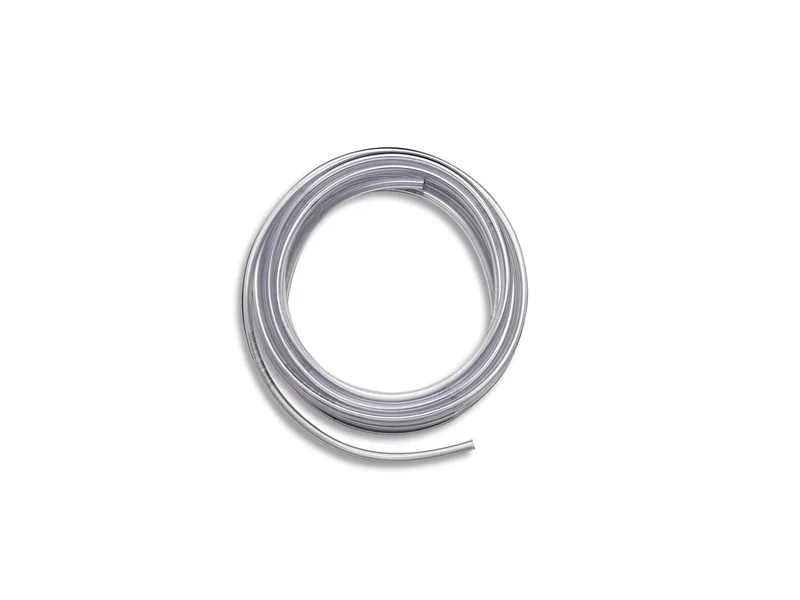
Flexible tubing is perfectly acceptable on a metering pump, and small solenoid pumps ship with it as standard. The real question is dosing pump tubing material, because pressure ratings vary by a factor of twenty or more between types. Some flexible lines are only fit for suction duty; others are rated well above 10 bar. Pick the wrong dosing pump tubing material and the tube balloons and spoils accuracy, or splits on the discharge side and sprays chemical.
Is Flexible Tubing Acceptable on a Dosing Pump?
Yes, provided three conditions are met. The dosing pump tubing material must resist the chemical. Its pressure rating must exceed the pump discharge pressure with margin. And the rating must be derated for the actual operating temperature.
ProMinent advises using only original tubing, so that the compression fitting connection, the pressure rating and the chemical resistance are all assured. In practice this means that tubing with the wrong OD tolerance or hardness will not hold in the ferrule, and the published pressure rating no longer applies.
Pressure Ratings by Dosing Pump Tubing Material
The figures below come from the ProMinent website and are permissible operating pressures at 20 °C. Sizes are written OD x ID.
Figure 1: ProMinent hoses, pipework and connectors. Image source: ProMinent official website
- Soft PVC suction line. 6 x 4, 8 x 5 and 12 x 9 mm sizes, rated at only 0.5 bar. ProMinent lists it as a suction line. Do not use it on the discharge.
- Soft PVC with woven reinforcement. 10 x 4 mm at 18 bar and 12 x 6 mm at 17 bar; the food-approved version is rated 10 bar. Suitable for suction and discharge.
- Polyethylene (PE). 6 x 4 and 8 x 5 mm at 10 bar, 12 x 9 mm at 7 bar.
- PTFE. 6 x 4 mm at 14 bar, 8 x 5 mm at 16 bar, 12 x 9 mm at 10 bar.
The same 6 x 4 mm size spans 0.5 bar to 14 bar depending on dosing pump tubing material. Ordering by size alone is not enough.
Temperature Derating
The pressure rating of any dosing pump tubing material falls quickly with heat, and this is often overlooked. ProMinent publishes these approximate factors:
- Reinforced soft PVC. 85% at 30 °C, 73% at 40 °C and 46% at 60 °C.
- PE. 75% at 40 °C and only 50% at 50 °C.
- PTFE. 75% at 50 °C, 55% at 75 °C and still 45% at 100 °C.
A rooftop dosing room in summer or a skid beside a boiler easily sees 40 °C. At 50 °C, a 10 bar PE line is good for about 5 bar. Where the chemical or the room runs hot, PTFE is generally the safer dosing pump tubing material.
Matching Dosing Pump Tubing Material to the Chemical
Always confirm dosing pump tubing material compatibility against the chemical supplier's and tubing maker's resistance charts. The pairings below are common starting points only.
PE tubing is moderately priced and resists dilute acids, caustic and most water treatment chemicals. It is widely used for sodium hypochlorite, PAC and caustic soda at low pressure. It dislikes heat and is fairly stiff, so allow generous bend radii.
PVC tubing is soft and easy to fit, and clear grades let you see gas bubbles. It suits suction lines and low-pressure duty. Soft PVC contains plasticisers, and ProMinent notes that it does not offer the same resistance as rigid PVC. Long exposure to strong oxidisers or solvents usually leaves it hard and brittle.
PTFE tubing resists almost every water treatment chemical and is typically chosen for concentrated sulphuric acid, strong hydrogen peroxide and solvent-based products. It is stiff, costly and awkward to bend, and it needs a proper tube cutter for square ends.
For hypochlorite specifically, see which pipe material suits sodium hypochlorite. For pump head materials, see choosing a corrosion-resistant pump head.
Suction and Discharge Can Use Different Tubing
The suction and discharge sides do not need the same dosing pump tubing material. Suction pressure is low, and the main risks are collapse and hidden bubbles, so clear soft PVC works well there. The discharge side carries pressure and needs reinforced PVC, PE or PTFE.
A typical arrangement is clear PVC from tank to pump, then PE or PTFE from pump to injection point. Keep the OD the same on both sides, or order a separate fitting for each. If the chemical attacks soft PVC, the suction side has to change too.
When Rigid Pipe Beats Any Dosing Pump Tubing Material
- High discharge pressure. Once pump pressure exceeds what the tube allows at operating temperature, move to stainless or rigid plastic. ProMinent lists 1.4435 stainless tube in 6 x 4 mm at 185 bar.
- Long, supported runs. Flexible lines sag and swing over distance. PVC-U, PP or PVDF pipe looks neater and stays put. ProMinent recommends PN 10 or PN 16 fittings for rigid PP and PVDF lines.
- Near walkways. Tubing gets kicked and crushed. Use rigid pipe with a protective sleeve wherever a leak would be dangerous.
Routine Checks
Whatever the dosing pump tubing material, treat it as a consumable. On each round, look for bulges, whitening or hardening along the length, crystals at the compression fittings, and any tube touching a heat source or pinched flat. Yellowed, stiff PVC or crazed PE should be replaced. Pressure-test new lines with water first, as described in dosing pipeline pressure testing.
Conclusion
Flexible tubing is fine on a metering pump if the dosing pump tubing material is right. Keep plain soft PVC on the suction side. Use reinforced PVC, PE or PTFE on the discharge and derate for temperature. Choose PTFE for strong oxidisers, concentrated acids and heat, and go rigid for high pressure or long runs. Browse dosing accessories and the ProMinent page, or contact us for advice.
FAQ
Can clear PVC tubing be used on the discharge?
Plain clear soft PVC cannot. It is rated around 0.5 bar and belongs on the suction side; use reinforced PVC, PE or PTFE for discharge.
PE or PTFE for sodium hypochlorite?
PE is usually enough at low pressure and normal temperature. Choose PTFE for long lines, gassing problems or hot rooms, and check the supplier's advice.
How often should dosing tubing be replaced?
There is no fixed interval; it depends on chemical, temperature and pressure. Replace it when it hardens, bulges, cracks or leaks at the fittings.
Can I use a garden or plumbing hose instead?
No. Household hose carries no chemical resistance or pressure data, and its OD tolerance does not suit metering pump compression fittings.
PTFE tubing is too stiff to bend. What can I do?
Use a larger bend radius or an elbow fitting at the turn. Never force a kink, which narrows the bore and leaves stress cracks.