
Dosing Pump Tubing Size: 4 mm, 6 mm or Larger Discharge Lines
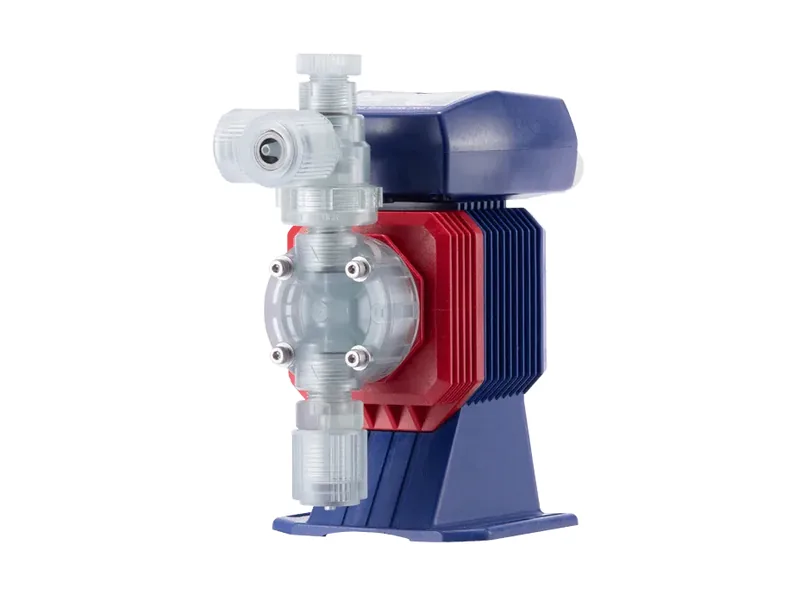
The right dosing pump tubing size is usually the one the pump head fitting was made for. When people argue about 4 mm versus 6 mm tubing, they are often holding the same tube: 4 mm inside diameter, 6 mm outside diameter. Read the ID and OD of any dosing pump tubing size correctly first, then check flow, line length and viscosity to decide whether to upsize. This guide uses published fitting data for the IWAKI EHN solenoid metering pump as the reference.
4 mm and 6 mm Are Often the Same Tube
A dosing pump tubing size is normally specified as ID x OD. The IWAKI EHN catalogue lists two tubing options for its smaller heads: 4 x 9 mm and 4 x 6 mm. Both have a 4 mm bore; only the wall thickness differs.
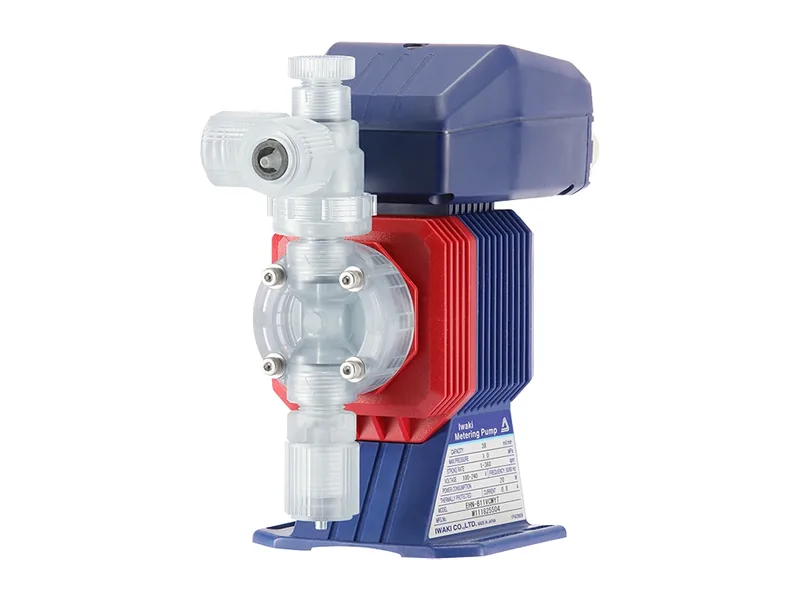
Figure 1: IWAKI EHN-YN solenoid metering pump. Image source: IWAKI official website
- "4 mm" usually means the inside diameter, which sets flow capacity.
- "6 mm" usually means the outside diameter, which decides whether the tube fits the fitting and whether the compression nut grips.
Always order by both numbers. A purchase order that says "6 mm tube" can bring 6 x 8 mm tubing that will not fit a 4 x 6 mm connection. The thicker 4 x 9 mm wall resists pressure and kinking better, while 4 x 6 mm is softer and easier to route. Use whichever matches the fitting supplied with the pump, and never mix the two on one pump.
Match Dosing Pump Tubing Size to the Pump Head
The manufacturer has already sized the fitting for the maximum flow and pressure of each head. EHN catalogue data shows the pattern clearly:
- Small heads. BN11, BN16, BN21, CN16 and CN21 deliver a maximum of 38 to 130 mL/min and take 4 x 9 or 4 x 6 mm tubing.
- Large heads. BN31, CN31 and CN36 deliver 230 to 450 mL/min and take 8 x 13 or 9 x 12 mm tubing.
So the dosing pump tubing size jumps from a 4 mm bore to 8 or 9 mm somewhere around 200 mL/min. Putting a large bore on a small pump does not help. Velocity drops, gas bubbles stay in the line and dosing becomes erratic.
When to Increase the Dosing Pump Tubing Size
The fitting size assumes normal conditions. Consider a larger dosing pump tubing size, or a switch to rigid pipe, in these cases:
- Long discharge runs. Beyond about 10 to 15 metres, friction and the inertia of each pulse push the pump discharge pressure up.
- Viscous chemicals. Polymer solutions and concentrated antiscalants build friction quickly in a narrow bore.
- Pressure near the pump limit. The EHN-BN11 is rated to 1.0 MPa, but the BN31 only to 0.20 MPa, so large heads have little pressure margin to spare.
The usual method is to keep the original fitting at the pump head, reduce up to the larger tube or pipe a short distance after the pump, and reduce back down just before the injection point.
Too Small or Too Large: What Goes Wrong
A dosing pump tubing size that is too small adds resistance. Every stroke forces its peak instantaneous flow through a narrow bore, so the head sees pressure spikes, the diaphragm and check valves wear faster, and the pump may trip on overpressure.
A dosing pump tubing size that is too large lowers velocity. Bubbles released from sodium hypochlorite or hydrogen peroxide settle in the line, and the delivered dose becomes intermittent. A bigger bore also holds more chemical, which makes draining for maintenance messier.
A solenoid pump delivers flow in pulses, and the EHN runs from 1 to 360 strokes per minute. On long lines the pulses become stronger, so a damper may be needed; see how a pulsation damper works.
Common Sizing Mistakes on Site
Plumbing-style pipe on a tiny pump. A contractor runs 20 mm PVC pipe from a small solenoid pump that delivers a few dozen millilitres per minute. Hypochlorite takes hours to move along it, gas collects and the dose drops by half. Use the original 4 mm bore tubing on small pumps.
Ordering by one number. "6 mm tube" arrives as 6 x 8 mm, which does not suit a 4 x 6 mm fitting, so two extra adapters go in and both become leak points. State the full dosing pump tubing size, ID and OD, on every order.
Downsizing a large head. A CN36 head supplied for 9 x 12 mm tubing gets 4 mm bore tubing to match an old system. Cutting the dosing pump tubing size raises head pressure, and within months the check valves no longer seal.
Fittings and Material When You Change Dosing Pump Tubing Size
- Compression nuts for 4 x 6 and 4 x 9 mm are different parts. Mixing them causes leaks or pull-outs.
- Tubing that is too soft balloons under discharge pressure and spoils accuracy. Tubing that is too stiff will not bend and cracks at the fitting.
- Choose material for the chemical first. For hypochlorite, see which pipe material suits sodium hypochlorite.
Routing and support spacing are covered in solenoid metering pump installation.
Conclusion
You rarely need to calculate dosing pump tubing size from first principles. Follow the pump head fitting and write both ID and OD on the order. Below about 200 mL/min, a 4 mm bore is typical; the next size up is usually 8 or 9 mm bore. For long lines, thick chemicals or pressure close to the pump limit, upsize after the pump. Browse solenoid metering pumps and the IWAKI brand page, or contact us if you are unsure.
FAQ
Will 4 x 6 mm tubing fit a 4 x 9 mm connector?
Generally not. The bore matches, but the 3 mm difference in outside diameter means the nut and ferrule will not seal or will not fit at all.
Should suction and discharge tubing be the same size?
The suction line is usually at least as large as the discharge. Suction is sensitive to friction and gas, so upsize it for long runs or viscous chemicals.
How long can the discharge tubing be?
As short as practical, and it depends on the layout. Above 10 to 15 metres, consider rigid pipe or a larger bore with a back-pressure valve and damper.
Will larger tubing increase pump output?
Not noticeably. Output is set by stroke length and frequency; tubing size only changes friction, so head pressure typically drops a little.
Can I use 1/4 inch tubing?
Yes, with imperial fittings. EHN accessories include a 1/4 x 3/8 inch size, which is close to metric 4 x 6 mm but not identical, so do not mix them.