
Metering Pump VFD at Low Speed: Motor Cooling and Turndown
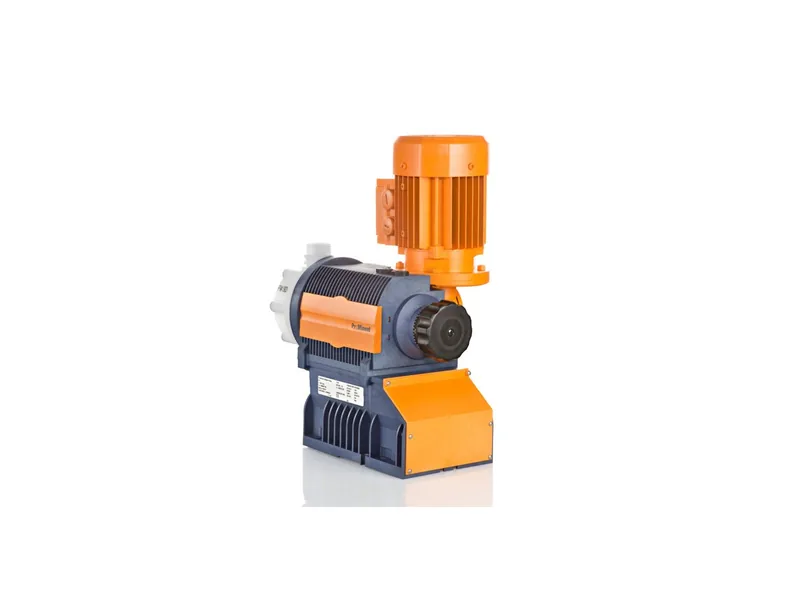
A metering pump VFD works well on a motor-driven diaphragm pump, but the real limit is low speed, not the wiring. When the motor slows down, its shaft-mounted fan slows with it, and the motor loses cooling faster than it loses heat.
That is why so many retrofit complaints sound the same: the motor housing gets too hot to touch at low flow, or the drive keeps tripping on motor overload after an hour at minimum speed. This article explains how far you can turn a pump down and what hardware it takes.
Why a Metering Pump VFD Changes Flow at All
On a mechanical diaphragm pump the motor drives an eccentric or cam through a gearbox. Stroke rate follows motor speed, and flow follows stroke rate, so a metering pump VFD gives an almost proportional flow change. If you need to convert between stroke rate and output, our guide to stroke frequency calculation covers the math.
What the drive cannot change is how the motor is cooled. That decides the usable turndown.
Turndown Depends on Motor Cooling
ProMinent publishes a clear example on the Sigma/1 basic type. Its motor options include:
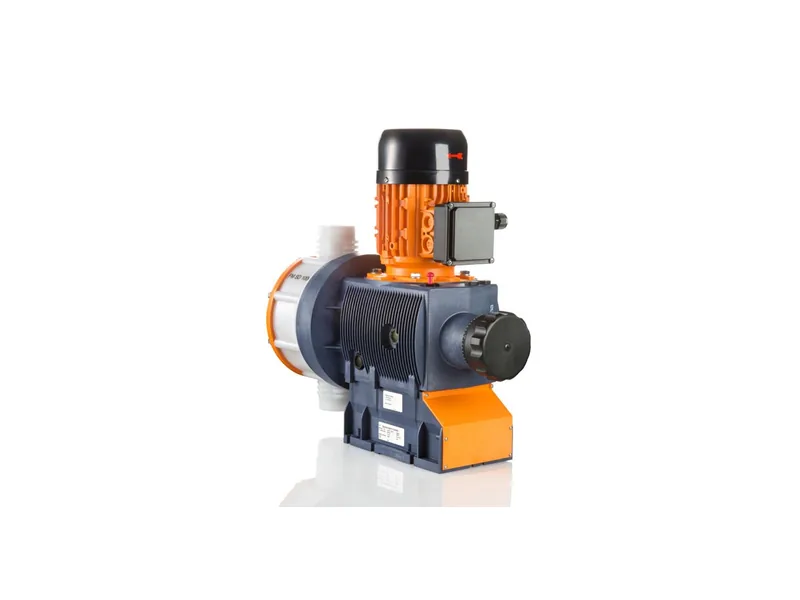
Figure 1: ProMinent Sigma/2 basic type motor-driven metering pump. Image source: ProMinent official website
- Type T: motor with PTC thermistor, speed control range 1:5.
- Type R: motor with PTC, speed control range 1:20, with an external fan rated 1-phase 230 V, 50/60 Hz, 20 W.
- Type L2: explosion-proof motor with PTC, speed control range 1:5.
Same pump, same gearbox, very different turndown. The larger Sigma/2 basic type is also a motor-driven diaphragm pump; check its own product page for the motor options offered. The difference is the separate fan. With the fan running at constant speed, airflow over the motor no longer drops when the metering pump VFD slows the shaft.
Other manufacturers follow the same logic. NEWDOSE, for example, lists an inverter motor option supplied with an independent 380 V cooling fan.
Why Low Speed Overheats the Motor
A metering pump is a constant torque load. Discharge pressure is the same on every stroke, so motor current at 10 Hz is not much lower than at 50 Hz. Slowing the metering pump VFD therefore barely cuts heat generation, which stays close to full load while the shaft fan delivers only a fraction of its rated airflow.
How to tell the motor is running hot
Frequent motor overload trips on the metering pump VFD, a housing too hot to keep your hand on, or discolored paint near the terminal box all point to poor cooling. If the motor has a PTC thermistor, wire it to the drive so the trip is based on winding temperature rather than an estimate from current. For other causes of heat, see diaphragm metering pump overheating.
Options for Adding a Metering Pump VFD to an Existing Pump
If the pump is already installed, these are the usual routes, roughly in order of cost:
- Add the drive only and limit minimum frequency to about a 1:5 range. This suits processes where demand varies modestly.
- Fit an inverter-duty motor with PTC and connect the thermistor to the drive.
- Add a separately powered constant-speed fan, the approach used on the Sigma/1 type R motor.
- Skip speed control and fit an electric stroke actuator, so the motor always runs at rated speed.
When swapping motors, match the flange, shaft and power rating. The standard Sigma/1 basic motor is 0.09 kW, and a mismatched replacement causes more problems than it solves. After the change, recheck terminal connections and rotation; our mechanical diaphragm pump wiring notes help here.
Torque and Accuracy at Low Frequency
Cooling is the first problem; two more follow. If the metering pump VFD is set to a variable torque curve meant for fans, output voltage at low frequency is too low and the pump stalls between strokes. Use a linear constant torque V/f curve with a small boost.
Accuracy is the second issue. At low stroke rates, each stroke becomes a separate slug of chemical. ProMinent rates the Sigma/1 12017 at 73 strokes per minute with a 1500 rpm motor on 50 Hz. At one fifth of that speed you get around 15 strokes per minute, and in a small pipe with short mixing time the concentration swings become visible. Shortening the stroke and keeping the metering pump VFD in the middle of its range usually gives smoother dosing.
Safety at Low Speed
A mechanical diaphragm pump keeps building pressure against a closed discharge. ProMinent advises fitting overflow protection on mechanically deflected diaphragm pumps, and the Sigma/1 includes an integrated relief and bleed valve. Slower speed means pressure rises more slowly, not that a closed valve is safe.
Recalibrate after commissioning the metering pump VFD, because flow typically drifts from a straight line at the low end. The procedure in our metering pump flow adjustment guide applies.
Conclusion
A metering pump VFD is a sound choice for diaphragm pumps as long as low-speed cooling is planned. A shaft-cooled motor is generally good for about 1:5, while a 1:20 range needs a separate fan and PTC protection. Where that is not enough, combining stroke length with speed, or moving to an electric stroke actuator, tends to be more stable. Send us your pump model and motor nameplate through our contact page and we can check what your pump allows.
FAQ
How low can a metering pump VFD run?
It depends on motor cooling. Shaft-cooled motors typically allow about 1:5, and motors with a separate fan and PTC can reach 1:20, per the pump maker's data.
Does low speed shorten diaphragm life?
Generally not. Diaphragm wear depends mainly on stroke count, pressure and chemical, so slower running means fewer strokes. The motor is the part at risk.
Does the external fan need its own supply?
Yes. Power it separately and interlock it with the drive run signal, ideally with a short run-on after the pump stops.
Is an electric stroke actuator better than a VFD?
Each has its place. A VFD is simpler to retrofit but limited by cooling, while a stroke actuator keeps motor speed constant at higher cost.
Can an explosion-proof motor run on a drive?
Yes, if the motor is certified for inverter duty. The Sigma/1 L2 motor has PTC protection and a 1:5 range; do not modify certified motors on site.