
District Heating Water Treatment: Makeup Water Dosing Guide
District heating water treatment does not end at the softener. After softening and deaeration, makeup water still needs chemical conditioning: an alkali to hold circulating water in a mildly alkaline pH range, an oxygen scavenger to remove residual dissolved oxygen, and often a corrosion inhibitor to protect the network. A district heating network is a closed loop, so chemicals stay in the system for a long time. But when leaks or unauthorized draw-off raise the makeup rate, the chemicals leave with the water. That is why the dose has to follow makeup flow. This guide is for utility water chemists, heat plant and substation operators, and suppliers of heat interface units.
Why softening alone is not enough for district heating water treatment
Many substations treat a softener as their entire district heating water treatment and assume the job is done once hardness is low. In a hot, long pipe network, corrosion is the real enemy:
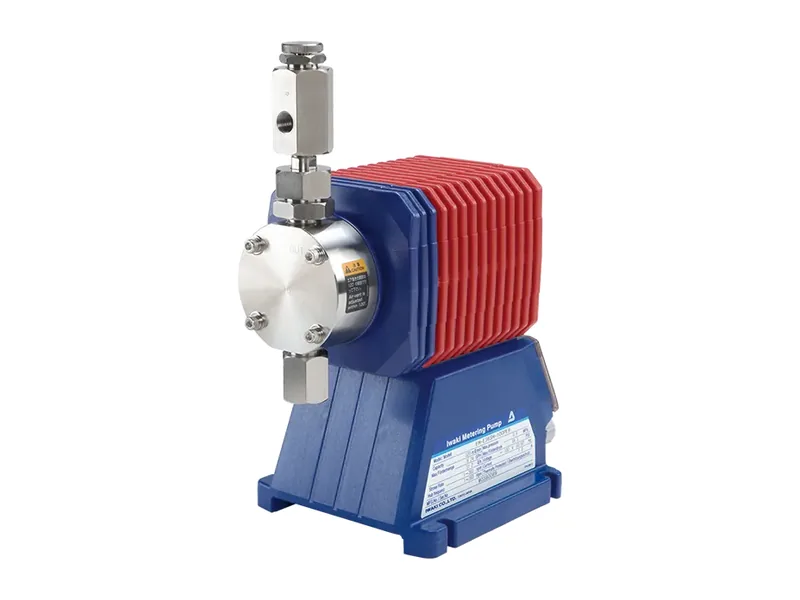
Figure 1: IWAKI EH-E series solenoid unit with stainless steel liquid end. Image source: IWAKI official website
- Softening removes calcium and magnesium, not dissolved oxygen or carbon dioxide, so carbon steel still rusts.
- Rust settles in heat exchangers, valves and customer radiators, cutting flow and fouling exchangers.
- Low pH makeup water speeds corrosion noticeably.
So district heating water treatment is usually three steps: softening, deaeration and chemical conditioning. The first two are equipment. The third is makeup water dosing.
Chemicals used in district heating water treatment
Alkali for pH control
Sodium hydroxide or trisodium phosphate raises circulating water pH into the mildly alkaline range your local standard specifies, which helps steel form a stable protective film. Too low and corrosion accelerates; too high and copper parts or aluminium radiators may suffer. Set targets from your local standard and network materials.
Oxygen scavenger
Thermal or vacuum deaeration always leaves a little oxygen, and an unstable deaerator can leave much more. Chemical scavengers such as sodium sulfite clean up the rest. Sulfite adds dissolved solids, so test the residual and do not overdose.
Corrosion inhibitor
Older networks, mixed metallurgy or weak deaeration may justify a blended inhibitor. In district heating water treatment, your chemical supplier should specify product and dose from water analysis; the metering pump simply delivers it accurately.
In any district heating water treatment program, keep each chemical in its own tank on its own pump. Never mix sulfite with an oxidizing product. The chemistry is similar to boilers; see our overview of boiler feedwater chemical treatment.
Flow-proportional dosing when water losses are high
This is where district heating water treatment differs most from boiler treatment. Chemicals are stored in the network, so every liter of new makeup needs its share.
Flow-proportional dosing uses a water meter with pulse output on the makeup line. Every set volume sends a pulse to the metering pump, which makes one or more strokes. More makeup, more chemical; no makeup, no chemical.
Why not dose on a timer? Because water loss changes constantly:
- During initial filling at the start of the season, makeup is very high.
- Leaks or customers draining water can push makeup up suddenly.
- In steady operation, makeup is small.
Timed dosing underdoses at high makeup and overdoses at low makeup. Some utilities also add a tracer dye to makeup water to find unauthorized draw-off, and that suits proportional feed too. The control logic is explained in dosing control methods: manual, flow-proportional and closed loop.
Substation dosing in district heating water treatment
Large networks have a primary circuit, treated centrally at the heat plant, and secondary circuits fed at each substation. Substations are often unmanned, so substation dosing equipment must be simple and dependable:
- Interlock the dosing pump with the makeup pump so it stops when makeup stops.
- Fit a low-level switch on the chemical tank and send the alarm to the SCADA system.
- Use a solenoid metering pump that accepts pulse input, sized for that station's maximum makeup rate.
- Inject at the makeup pump outlet or soft water tank outlet, where makeup and circulating pumps provide mixing.
Substations are spread out and a patrol may take a full day. Size tanks to last at least one patrol cycle, or a station can run dry unnoticed.
Off-season layup and district heating water treatment
Do not drain the network after the heating season; air entry makes corrosion worse. The usual practice is wet layup: keep the network full of softened water, hold pH and scavenger residual at layup targets, and test and top up regularly. Makeup is tiny now, so switch pumps to manual low-flow operation. Closed-loop care has a lot in common with chilled water closed loop chemical dosing.
Pump selection for district heating water treatment
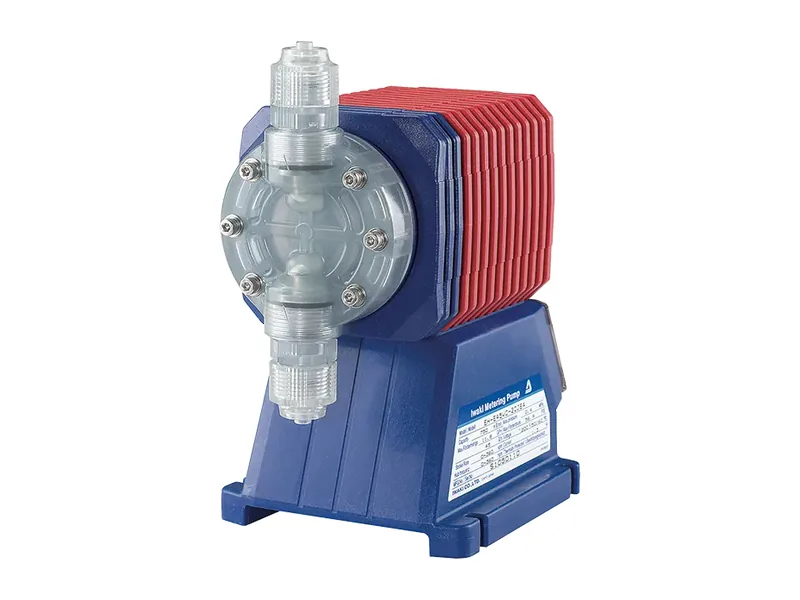
For heat plants with larger makeup flows and pulse or analog control, consider the Iwaki EH-E series large-capacity solenoid metering pump. Iwaki lists a discharge capacity range of 340–1250 mL/min, maximum discharge pressure range of 0.2–1.0 MPa, and main materials PVC, GFRPP, PVDF, SUS316 and PTFE. The controller has 0–20 mA analog input and pulse input as standard, with 1:n and n:1 pulse modes where n is 1–999, plus a STOP input. If the injection point pressure exceeds the pump rating, move to a mechanical diaphragm pump. Small substations can use smaller models; see our Iwaki brand page and solenoid metering pumps.
Conclusion
Good district heating water treatment means conditioning makeup after softening and deaeration: alkali for pH, scavenger for residual oxygen and inhibitor where needed. Pace the dose to makeup flow with a pulse water meter. Give unmanned substations interlocks, alarms and enough tank volume. Keep the network full on wet layup in the off-season. Send us your network volume, makeup range, injection pressure and chemicals, and contact our engineers to size the pumps.
FAQ
A substation has a softener. Does it still need dosing?
Yes. Softening does not remove oxygen, so at minimum control pH and scavenge oxygen.
What happens if sulfite is overdosed?
Dissolved solids and conductivity rise, and excess sulfite is wasted. Control it by residual testing.
How do I connect a pulse water meter to the pump?
Wire the meter's pulse output to the pump's external input and set strokes per pulse, or pulses per stroke.
Makeup suddenly jumped. Should I dose more?
Proportional dosing follows automatically. But a sudden jump usually means a leak, so find it first.
Should the network be drained after the heating season?
No. Wet layup with controlled pH and scavenger residual protects the pipes better.