
Coriolis Flow Meter for Chemical Dosing: Density, Pulsation, Install
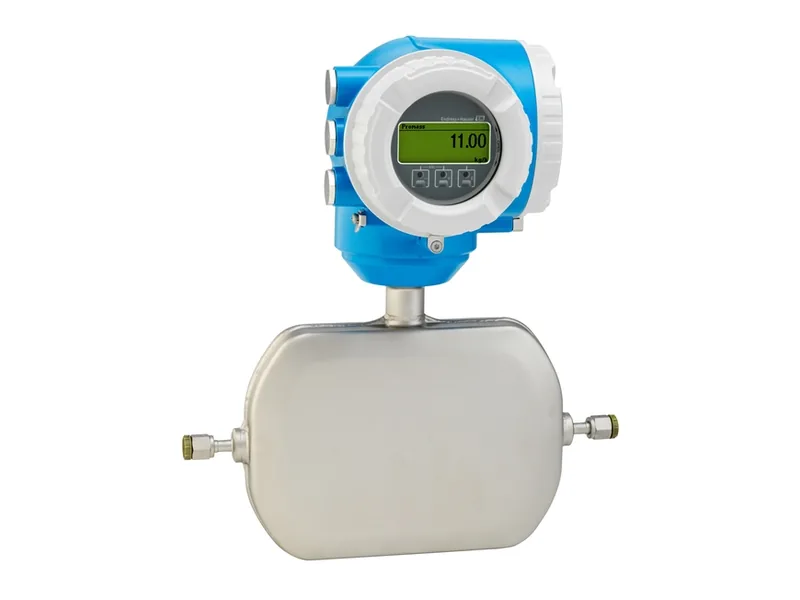
A Coriolis flow meter measures mass flow directly and reports density and temperature as well, which gives it two jobs on a chemical feed line: confirming how many kilograms of chemical the pump really delivers, and checking solution strength from density. To make that work you need the bore and pressure drop sized correctly, an installation that keeps gas out of the tubes, and a sensible way to handle metering pump pulsation. This article is for dosing system designers, skid builders and the instrument staff who maintain chemical feed in water and process plants.
What a Coriolis flow meter actually measures
The measuring tube is driven to vibrate. Liquid moving through it causes a tiny twist that is proportional to mass flow, which is the Coriolis effect. The tube's resonant frequency depends on the density of the liquid inside, so the same Coriolis flow meter measures mass flow and density at once, with an internal temperature reading for compensation.
Compared with a mag meter, a Coriolis flow meter does not need a conductive liquid, and it measures mass rather than volume, so temperature-driven volume changes do not leak into the dosing figure. That matters where chemical consumption is tracked in kilograms or as active ingredient.
Checking chemical strength with density
Many chemicals have a known density-to-concentration relationship, especially simple two-component solutions such as sodium hydroxide, sulfuric acid and hydrochloric acid. A Coriolis flow meter can therefore estimate strength, which is useful for:
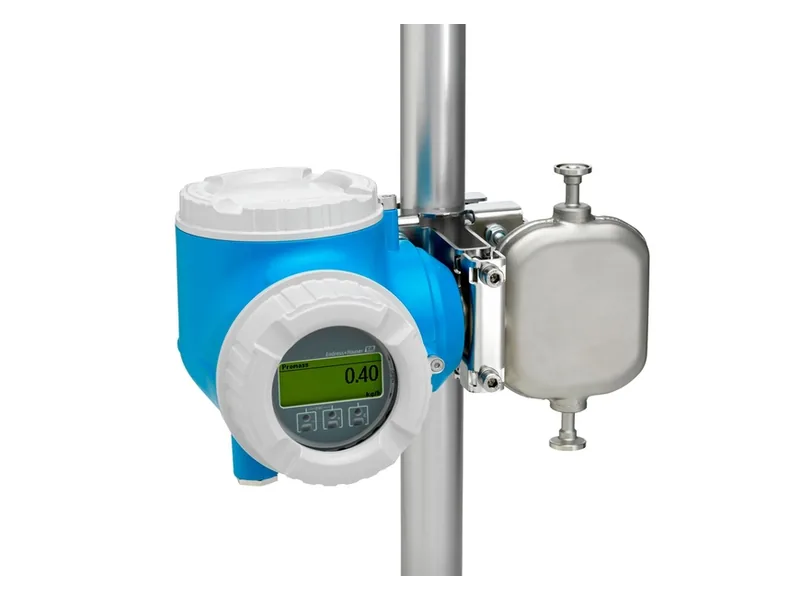
Figure 1: Endress+Hauser Proline Promass A 300. Image source: Endress+Hauser official website
- Checking delivered strength while unloading a tanker, and stopping early if it is clearly off.
- Confirming the ratio after inline dilution.
- Verifying batch strength at the outlet of a make-up tank before it reaches the dosing line.
Density-to-concentration only works for simple solutions with a known curve. Multi-component products like PAC or blended antiscalants can change density for reasons other than strength, so treat the value as a trend, not an assay. Temperature has a large effect on density too, so compare at the same reference temperature. Inline dilution design is covered in inline dilution dosing systems.
Reading a Coriolis flow meter under pump pulsation
A diaphragm metering pump delivers in strokes, so flow in the line is pulsed and the instantaneous value swings hard. A Coriolis flow meter copes with pulsation better than many volumetric meters, but it is not immune.
What usually works on site
- Fit a pulsation dampener at the pump discharge to flatten the flow profile.
- Install a back pressure valve downstream of the meter so the line stays pressurized and siphoning or backflow cannot occur.
- Increase the damping time in the transmitter and read the average instead of the instantaneous value.
- Verify dose rate with the totalizer, for example one hour of accumulated mass against the pump setting, rather than chasing the live reading.
Small pumps at short stroke and low frequency deliver tiny volumes per stroke, sometimes with slight backflow, and the reading will jitter. Compare the totalizer with a calibration column instead of worrying about every spike. The column method is explained in metering pump calibration.
Small bore means pressure drop
Low dosing flows lead to a small Coriolis flow meter size and narrow tubes, so pressure drop becomes real. Viscous liquids such as polymer solution or neat antiscalant raise it further.
Give the supplier viscosity, maximum flow and allowable pressure drop for sizing, then check the pump. The metering pump has to overcome injection point back pressure plus every loss in piping, valves and the mass flow meter for chemical dosing. Miss the meter's share and the pump runs closer to its pressure limit, often delivering less than set. For the wider comparison of meter types on dosing skids, see dosing pump flow meter selection.
Orientation: keep gas out
A Coriolis flow meter on liquid service is most vulnerable to entrained gas. Bubbles pull the density reading down and distort mass flow with it.
- On horizontal pipe, mount with the tubes pointing down so gas cannot sit inside them.
- Vertically, flow upward so bubbles are carried through.
- Avoid high points, and avoid vertical downward runs that discharge to atmosphere.
- Fix the meter body firmly and support the pipe where vibration is strong.
Sodium hypochlorite and hydrogen peroxide release gas as they decompose. Put the Coriolis flow meter in the pressurized section between the pump discharge and the back pressure valve, where pressure keeps gas in solution. Zero the Coriolis flow meter only when it is full, valves on both sides are closed and the liquid is still. Zeroing with bubbles present locks the error in.
Relieve pressure before removing the meter, wear protective gear with strong acids or caustic, and collect drained chemical properly.
The Endress+Hauser Proline Promass A 300 is a single-tube Coriolis flow meter built for very low flow rates, which fits chemical dosing duty. Confirm line size and pressure drop with the manufacturer's sizing tool.
Conclusion
On chemical feed, a Coriolis flow meter does two things: it measures dosed mass directly, and it checks strength and dilution ratio through density. Use density for concentration only where the relationship is known. Handle pump pulsation with a dampener, back pressure valve and the totalizer. Include viscosity and pressure drop in the pump's pressure budget, and mount the meter so gas cannot collect, with gassing chemicals in a pressurized section. Low-flow mass meters are listed under flow meters. Send the chemical, strength, viscosity and flow range, and contact our engineers to size the meter and check pressure drop.
FAQ
Can a Coriolis flow meter handle polymer solution?
Yes, but check pressure drop. Polymer is viscous, so a narrow tube can cost a lot of pressure; go up a size if needed and confirm the pump can cope.
Can density tell me the available chlorine in hypochlorite?
Not reliably. Hypochlorite also contains sodium chloride and caustic, so density does not track available chlorine alone. Lab titration is still needed.
The pump is small and the reading keeps jumping. Is that normal?
On pulsed flow it is common. Raise damping, use the totalizer, and check that the dampener and back pressure valve are working.
Does a mass flow meter need straight run?
Generally little or none, which is one of its advantages. Orientation, gas and vibration requirements still apply.
How often should I zero a Coriolis flow meter?
Typically at commissioning, after removal and after a big change in process conditions. Zero only with a full, bubble-free, still line.