
Calcium Chloride Metering Pump: Head Materials and Crystal Control
For most jobs, the right calcium chloride metering pump is a diaphragm pump with a plastic liquid end: PVC or PVDF head, PTFE-faced diaphragm, ceramic or PTFE check balls, and seals confirmed against the maker's chemical resistance chart. Skip 304 stainless. The pump type is rarely what goes wrong, though. Crystals growing on valve seats, and solution drawing in moisture when the pump sits idle, cause far more callouts. This guide is for operators and buyers feeding CaCl2 in fluoride removal, chiller brine top-up, concrete admixture plants and de-icing brine production.
Why CaCl2 is hard on a calcium chloride metering pump
Calcium chloride is neither a strong acid nor a strong base, so people tend to treat it as harmless. The problem is the chloride ion. Chloride attacks weak spots in the passive film on stainless steel and starts pitting: small, deep holes that keep growing while the surrounding surface still looks bright. Valve seats, threaded joints and other crevices suffer first. Higher concentration, higher temperature and longer standing time in the head all make it worse.
The second issue is moisture. Solid calcium chloride pulls water from the air, and an open bag turns into a lump overnight. The solution behaves the other way round: mix it strong, let it cool or let water evaporate, and it drops crystals. Those crystals like to sit between the check ball and the seat. The valve no longer closes, the calcium chloride metering pump keeps clicking, and very little chemical reaches the line.
What pitting means for a dosing pump
Pitting is localized corrosion. On a calcium chloride metering pump it shows up as weeping joints and output that slowly drifts, long before anything looks thin or damaged from the outside. That is why it catches people out.
Choosing a calcium chloride metering pump by flow and duty
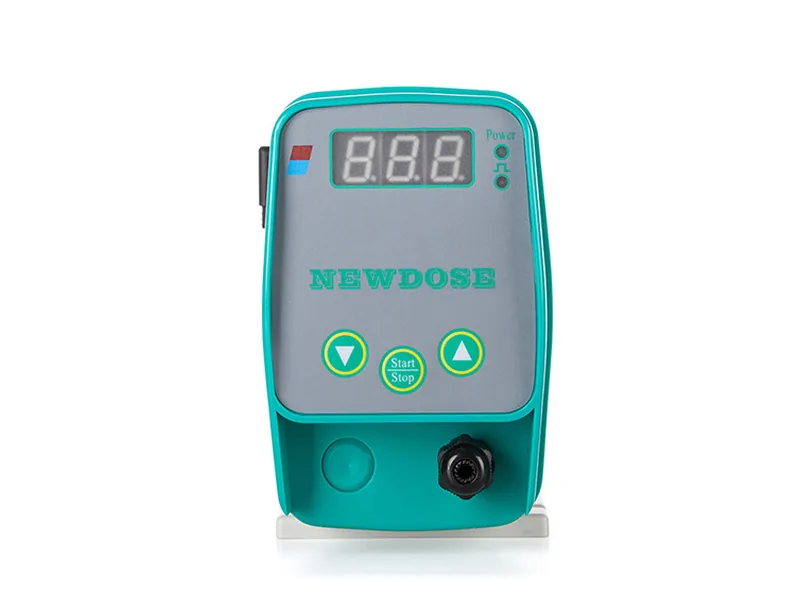
For small doses at modest pressure, a solenoid calcium chloride metering pump does the job. Examples are the NEWDOSE DFD manual and DP pulse-controlled solenoid pumps, which are offered with PVC, PVDF and other head materials. Browse the wider range of solenoid dosing pumps if you need a different control option.
For higher flows, continuous duty or higher pressure, move up to a motor-driven mechanical diaphragm pump. NEWDOSE covers this with its NDJ, NDWS, NDWL, ND1000 and ND2000 series.
What about a plunger pump? We usually advise against it. Plunger pumps rely on packing, and CaCl2 solution that dries on the plunger leaves a crystalline film that grinds the packing like sandpaper. Leakage only increases. A diaphragm keeps the liquid away from the drive, so this wear path does not exist.
Liquid end materials for a calcium chloride metering pump
Pump head. At ambient temperature, PVC and PVDF both work well. PVC is common and fine for normal room temperature duty. PVDF tolerates higher temperatures and a wider range of chemicals, so pick it when the brine runs warm or you simply want more margin. PP heads are used too, but check concentration and temperature limits on the maker's chart first. For a broader comparison, see our guide to metering pump material compatibility and the NEWDOSE pump head material options.
Stainless steel. 316 resists chloride better than 304, yet long contact with strong, warm calcium chloride can still pit it. Unless you need a metal head for pressure or hazardous area reasons, plastic is the safer choice for a calcium chloride metering pump.
Balls and seals. Ceramic or PTFE balls are hard and shrug off crystal abrasion. FKM and EPDM O-rings are both common; confirm the choice against the maker's chart and the real composition of your product, because technical grade calcium chloride may carry other salts.
Stopping crystals in a brine chemical feed pump
Most problems we see on a calcium chloride metering pump come from a handful of habits:
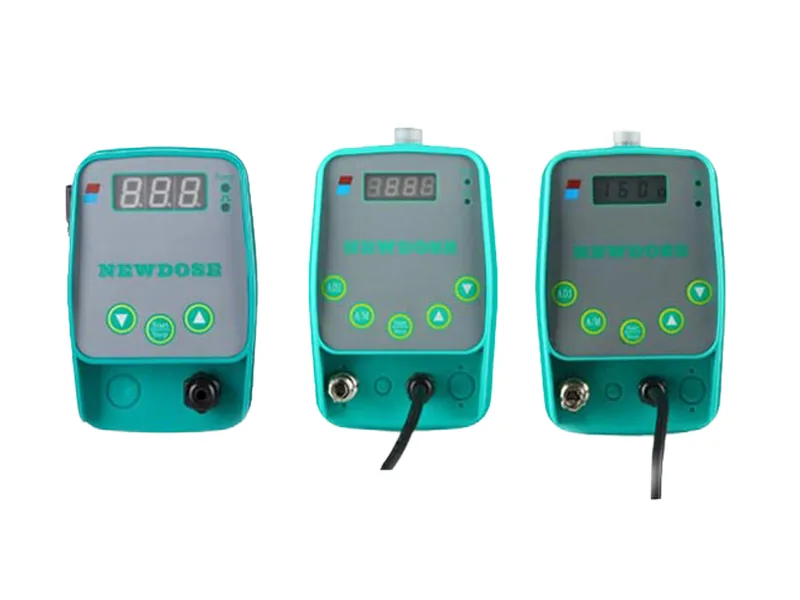
Figure 1: NEWDOSE solenoid diaphragm metering pump range. Image source: NEWDOSE official website
- Mixing too strong. Operators mix concentrated batches to save time, and the first cold night brings crystals. A slightly weaker solution at a higher pump setting is easier to live with.
- Open tanks. Water evaporates, the surface layer concentrates, and a white crust forms on the tank wall and suction tube. Fit a lid.
- No flush at shutdown. Liquid left in the calcium chloride metering pump head concentrates, and next morning the balls are glued to their seats.
- Long, thin suction lines. Low velocity lets fine crystals and dirt settle, and suction resistance climbs.
When mixing, add water to the tank first, then add the solid while stirring, and only start the calcium chloride metering pump once everything has dissolved. Dissolving CaCl2 releases a lot of heat, so wear gloves and eye protection and keep warm solution off your skin.
Flushing and shutdown routine
Fit a flushing tee with clean water at the calcium chloride metering pump inlet and run water through the head and discharge line for a few minutes before stopping. For long shutdowns, flush and then drain the head completely. If a valve has already crystallized, soak it in warm water rather than scraping the seat. Outdoor lines need insulation in winter; our winter dosing system checklist covers the details.
Installation details for calcium chloride dosing
If the discharge is close to atmospheric pressure, add a back pressure valve so the calcium chloride metering pump cannot siphon and overdose. Add a relief valve as well, because a line blocked by crystals will otherwise build pressure until something in the liquid end gives way. Keep the foot valve clear of the tank bottom so undissolved solids are not drawn in.
On fluoride removal skids, calcium chloride often runs next to PAC and polymer pumps. Label every line and every flush connection clearly. Mixed chemicals react and scale, and the resulting blockage is easy to misdiagnose as a pump failure.
Conclusion
The best calcium chloride metering pump for ambient duty is a diaphragm pump with a PVC or PVDF head and ceramic or PTFE balls; avoid 304 stainless. Use a solenoid pump for small, intermittent doses and a mechanical diaphragm pump for large or continuous duty. After that, crystals are the main enemy: keep the mix moderate, cover the tank, flush at shutdown and insulate in winter. Send us your concentration, temperature, dose rate and discharge pressure and contact our engineers to confirm the pump and head material.
FAQ
Can I use a 316 stainless head for calcium chloride?
You can, but it is not the first choice. 316 handles chloride better than 304, yet high concentration, warm liquid and long standing time can still cause pitting. Plastic heads give fewer surprises.
Why do the check balls on my CaCl2 dosing pump keep sticking?
Almost always crystals. Remove the valves, soak them in warm water, then review your mixing strength and shutdown flush. If it keeps happening, dilute the batch and add a permanent flush line.
Solenoid or mechanical diaphragm calcium chloride metering pump?
Base it on flow and running hours. Small, intermittent doses suit a solenoid pump. Large flows and round-the-clock running suit a mechanical diaphragm pump, which also tends to need service less often.
Is tap water fine for making up the solution?
Usually yes. With very hard water, scale can add to crystal build-up in the valves over time, so softened water stretches cleaning intervals where it is available.
What tubing works for a calcium chloride feed line?
PVC, UPVC and PE are all common at ambient temperature. Keep fittings and valves in compatible plastics, avoid carbon steel and galvanized pipe, and protect outdoor runs from sunlight and frost.