
Dosing Line Pressure Relief Valve for Wastewater Chemical Feed
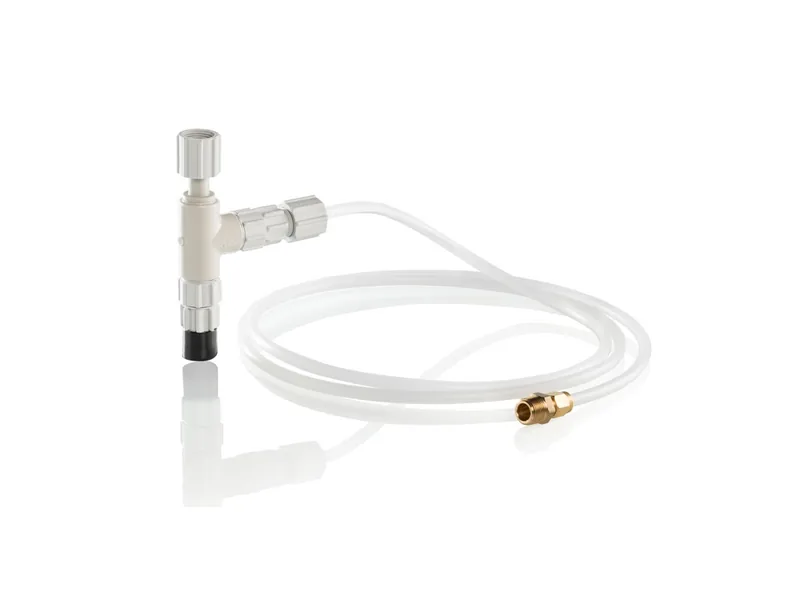
A dosing line pressure relief valve exists because a metering pump is positive displacement. Block its discharge and pressure keeps rising until a pipe, pump head or diaphragm gives way. The relief valve's job is to send the chemical back to the tank before that happens. Choosing one well means settling five things: where it goes, what it is set to, whether it can pass full flow, where the relieved liquid ends up, and whether the materials survive the chemical.
This is written for wastewater plant operators and the engineers who design their chemical feed systems. Relief versus back pressure valves, and internal versus external relief, are covered elsewhere on our site. Here we focus on selecting and installing the external valve on the dosing line itself.
Why wastewater dosing lines dead-head so often
Wastewater feed lines block more often than those in clean-water plants, and the reasons are mundane:
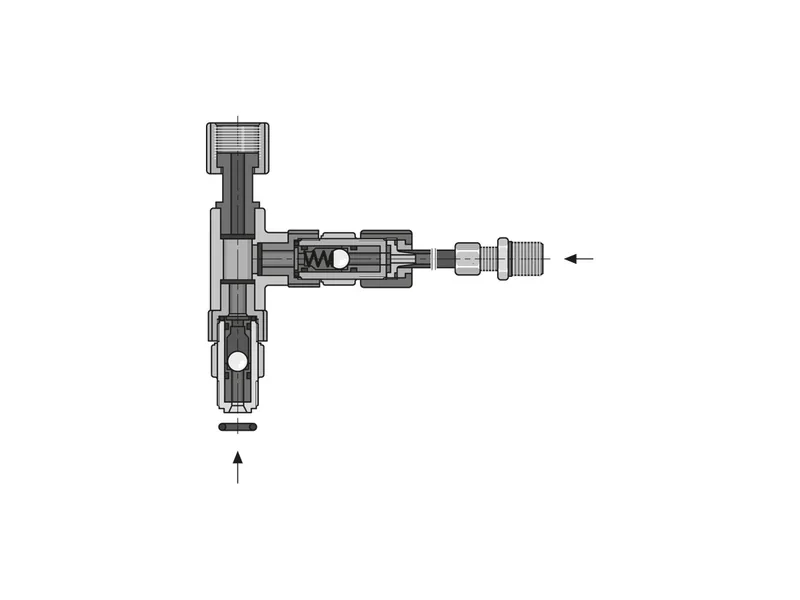
Figure 1: ProMinent flushing and relief valve assembly drawing. Image source: ProMinent official website
- An isolation valve left shut after maintenance, or the wrong sequence during a duty/standby changeover.
- PAC or ferric chloride scaling up the injection quill until the opening shrinks.
- Biofilm growing inside long carbon-source lines.
- Outdoor runs freezing in winter.
- Injection into a pressurized main whose pressure swings.
Any one of these leaves the pump pushing into a line that goes nowhere. Without a dosing line pressure relief valve, the first casualty is usually a PVC union or the pump head.
Where the dosing line pressure relief valve belongs
Install it between the pump discharge and the first isolation valve, as close to the pump as practical. One rule matters above all: there must be no closable valve between the pump and the relief valve. Otherwise one closed valve makes the relief valve useless.
If two pumps share a common header, fit a relief valve on each pump discharge. A single valve on the header leaves the short run from each pump to the header unprotected.
Setting the dosing line pressure relief valve
Set pressure has to sit above the highest working pressure and below the rating of the weakest component in the line. That weakest point may be the pump head, but it is often a plastic pipe, a union or a pulsation dampener. Highest working pressure includes injection point pressure, line friction, back pressure valve setting and pulsation peaks.
Set it too low and the valve cracks during normal running, quietly recycling chemical to the tank so the pump seems to run but the dose is short. Set it too high and it protects nothing. A step-by-step method is in how to choose the relief valve set point.
Check relieving capacity, not just size and set point
Many people choose a dosing line pressure relief valve by connection size and set pressure, and stop there. A dosing line pressure relief valve must pass the pump's full output when fully open, and because metering pump flow pulses, check it against peak flow, not average flow.
Viscous polymer makes this worse. Higher viscosity means more resistance through the valve, so pressure may overshoot the set point well before the flow is relieved. Go up a size or ask the manufacturer for capacity data on viscous fluids.
Routing the dosing line pressure relief valve return
The return line should normally run back to the chemical tank, entering through the top, with the outlet above liquid level or somewhere you can see it. That way anyone walking past can tell whether the valve is relieving. Put no valve on the return, and avoid long vertical climbs that add back pressure.
Returning to the pump suction is not recommended. Liquid circulating between pump and valve heats up, and sodium hypochlorite in particular decomposes faster and releases gas. Strong acids, caustic and hypochlorite should not be relieved to a floor drain either; it is unsafe for people and corrodes floors and drains.
Matching materials to the dosing line pressure relief valve duty
Wastewater chemicals make very different demands:
- PAC and ferric chloride are aggressive; PVC or PVDF bodies are typical, and ferric chloride should not go into stainless steel.
- Sodium hypochlorite brings oxidation and gas, so body and seals must be checked specifically for it.
- Sulfuric acid and caustic depend on concentration and temperature, and the O-rings need checking along with the body.
- Carbon sources and polymer are less corrosive; the concerns are fouling and viscosity.
Most relief valves used in chemical dosing are diaphragm-type, with the spring isolated from the liquid, so corrosion resistance comes down to body, diaphragm and seals. Accessories such as the ProMinent flushing and relief valve assemblies for low-pressure pumps put the relief function right at the pump head, and the same material check applies.
Passing valves: the problem nobody notices
Debris and crystals from PAC or ferric chloride can lodge on the seat so the valve does not close fully. It leaks a little chemical back all the time. The pump looks fine, the gauge reads normally, yet the real dose is low and effluent quality drifts. A leaking dosing line pressure relief valve is rarely the first suspect.
The check is simple: look for drips at the return line outlet. Pull and clean the seat on a schedule, more often for scaling chemicals. For valves that fail repeatedly, see why metering pump relief valves get damaged, and for the whole system work through our wastewater dosing fault-finding sequence.
Conclusion
Select a dosing line pressure relief valve in this order. Fit it between the pump and the first isolation valve with nothing closable in between. Set it above the highest working pressure and below the weakest component's rating. Check capacity at peak flow and at the chemical's viscosity. Return relieved liquid to the tank where it is visible. Confirm materials for the specific chemical. In service, watch the return line so a passing valve does not starve the process. Browse fittings on our dosing accessories page and the ProMinent brand page, or send your chemical, pump flow and pressure and pipe material and contact our engineers.
FAQ
My pump has a built-in relief valve. Do I still need a dosing line pressure relief valve?
Usually yes. The internal valve mainly protects the pump; the line between pump and isolation valve generally still needs external protection.
Why does my dosing line pressure relief valve keep lifting?
Most often the set point is too close to working pressure, or something downstream is blocked. Check the injection quill and strainer, then recheck the setting.
Can the return line discharge to a floor drain?
Not for corrosive or oxidizing chemicals. Returning to the tank is safer, wastes no chemical and keeps people away from splashes.
How often should a dosing line pressure relief valve be inspected?
Check the return outlet for drips on routine rounds, then strip and clean on a schedule that suits the chemical. PAC and ferric need more frequent attention than carbon sources.
Should I fit a pressure gauge between pump and relief valve?
Yes, it helps confirm the lift pressure and spot a blocked line. Use a diaphragm-seal gauge so the chemical does not attack it.