
Ballast Water Treatment System Dosing: Biocide and Neutralization
A ballast water treatment system typically needs metering pumps in two places: biocide injection while ballasting, and neutralizer injection before discharge to bring total residual oxidant (TRO) down. Both are paced by actual ballast pump flow and checked against a TRO analyzer. The chemistry is rarely the hard part on board. Limited space, vibration, ship motion and salt spray are what shape the pump and piping design. This guide is for BWTS designers, shipyard outfitting engineers and ship engineers. It does not go into regulatory detail; follow the system's type approval documents and class requirements.
Types of ballast water treatment system
Almost every ballast water treatment system filters first and then disinfects. By disinfection method, they fall into three broad groups:
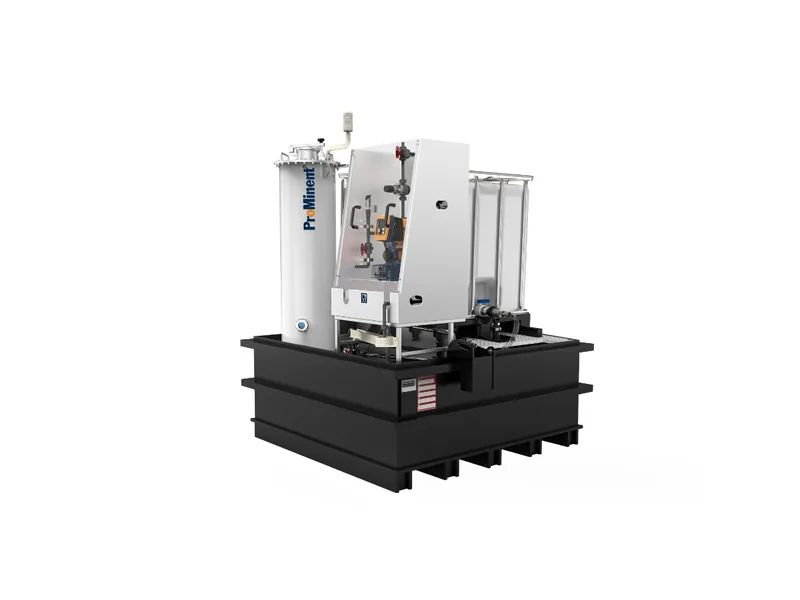
Figure 1: ProMinent chemical dosing station with spill tray. Image source: ProMinent official website
- UV systems use ultraviolet lamps and generally need no chemical dosing.
- Electrochlorination systems draw a side stream of seawater through an electrolytic cell, generate hypochlorite on site and inject it back into the ballast main.
- Chemical injection systems dose a ready-made biocide, such as sodium hypochlorite solution or another approved active substance.
Electrochlorination and chemical systems both leave residual oxidant in the ballast water, so most of them neutralize before discharge. Either way, the ballast water treatment system depends on metering pumps; the difference is whether the biocide is made on board or drawn from a tank.
Ballast water chemical dosing during ballasting
In a ballast water treatment system, the biocide injection point is usually on the ballast main downstream of the filter. The filter removes large particles and organisms first, so less biocide is consumed and results are steadier.
Leave a mixing length after the injection point and put the TRO sample point where mixing is complete, not right next to the injection quill, or the analyzer reads a local spike. Use an injection quill that reaches the middle of the pipe. Seawater velocity is high, so choose quill materials that resist both seawater and oxidant.
In a chemical ballast water treatment system, sodium hypochlorite gasses as it decomposes, which gas-locks pump heads, especially in a hot engine room. Choose self-degassing heads and avoid high points in the line; see sodium hypochlorite dosing gas lock.
Neutralization before discharge
During deballasting, the ballast water treatment system TRO analyzer measures residual oxidant. If it exceeds the discharge requirement, the controller starts the ballast water neutralization dosing pump. Sodium thiosulfate or sodium bisulfite solution is common, usually made up on board from solid chemical.
Neutralizer demand depends on two variables: deballasting flow and TRO concentration. Higher flow or higher residual means a faster pump. Underdosing fails the discharge limit; overdosing wastes chemical and can pull down dissolved oxygen in the discharge. Flow feedforward with TRO feedback trim is the sensible approach.
Make sure solid neutralizer is fully dissolved before use. Fit the make-up tank with a mixer and keep the suction off the tank bottom so undissolved crystals are not drawn in.
Wiring flow-paced dosing
Dose demand in a ballast water treatment system is never constant. Ballast pumps start and stop, run in parallel and serve different tanks, so flow keeps changing. A typical flow-paced arrangement:
- A flow meter on the ballast main sends a 4–20 mA signal to the controller.
- The controller converts the target concentration into pump stroke rate and drives the metering pump by analog or pulse signal.
- TRO readings trim the output, adding a little when low and backing off when high.
Pump turndown must cover minimum and maximum ballast flow. If one pump cannot, split the range across two. How flow pacing and closed-loop control work together is explained in dosing control methods.
What ships demand from pumps and piping
Shore-side dosing skids moved onto a ship as part of a ballast water treatment system often run into trouble. Ballast water chemical dosing on board needs extra attention to:
- Space. Engine rooms and pump rooms are tight. Keep the skid compact but leave room to remove pump heads and valves.
- Vibration. Main engine and pump vibration reaches the metering pumps and lines. Mount pumps on a rigid base and support lines with flexible sections so fittings do not loosen and weep. Troubleshooting tips are in metering pump vibration.
- Ship motion. Roll and pitch slosh the tank surface and can uncover the suction. Draw from a sump at the tank bottom and add a delay to the low-level switch so motion does not trip the pump.
- Salt spray and heat. Enclosures and pumps need adequate ingress protection, fasteners should be corrosion resistant, and chemicals should be stored away from heat sources.
- Spill containment. Put drip trays under tanks and pumps so leaks do not reach the deck or bilge.
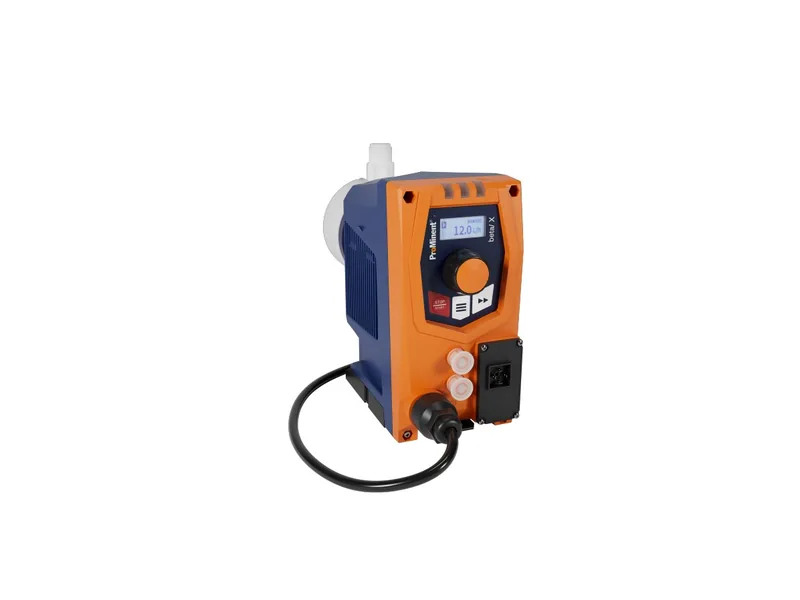
Solenoid metering pumps are compact and easy to pace, which suits the wide flow swings of a ballast water treatment system. The ProMinent beta/X solenoid metering pump is one common choice, paired with a chemical station that has a spill tray; select model and head material for each chemical. More models are listed under solenoid metering pumps.
Before servicing any ballast water treatment system pump, stop it and relieve pressure before opening heads or lines, and wear goggles and gloves with both hypochlorite and neutralizer. Electrochlorination produces hydrogen, so do not modify its vent lines or ventilation.
Conclusion
Chemical dosing in a ballast water treatment system has two stages: flow-paced biocide injection after the filter while ballasting, and neutralizer injection paced by flow and TRO before discharge. Use flow feedforward with TRO trim, and make sure pump turndown covers the full ballast flow range. Shipboard conditions drive the details: self-degassing heads, rigid mounting and line support, sump suction, salt-spray protection and drip trays. Send us the ballast pump flow range, chemicals, target concentrations and available space, and contact our engineers to put together the dosing package.
FAQ
Does a UV ballast water treatment system need dosing?
Generally no biocide or neutralizer is needed. Some systems still use cleaning chemicals, depending on the design.
Thiosulfate or bisulfite for neutralization?
Both are used. Stick to the chemical named in the system's approval documents rather than substituting your own.
Ballast flow varies a lot. Is one pump enough?
It depends on turndown. If minimum and maximum flow are far apart, use two pumps in stages or a pump with a wider adjustment range.
Ship motion keeps making the pump lose suction. What helps?
Move the suction to a sump at the tank bottom, add a few seconds of delay to the low-level switch, and fit anti-slosh baffles if needed.
Does electrochlorination still need a ballast water neutralization dosing pump?
Yes. The biocide is generated electrolytically, but neutralizer before discharge still comes from a metering pump.