
Ammonia Removal Chemical Limits: Why It Cannot Replace Biology
An ammonia removal chemical will not take the place of a biological nitrogen plant on a wastewater stream that runs high in ammonia, day after day. Chemical methods, most often breakpoint chlorination or an oxidant sold as an ammonia remover, fit low or intermittent loads, emergency spikes, and short stretches when the biology is upset. This is for process and plant operators, and for engineers sizing the feed system. It stays on where the chemical belongs and where it fails. It is not a dose-estimation manual and not an analyzer selection guide.
What an ammonia removal chemical is usually doing
On the plant floor, an ammonia removal chemical is usually an oxidant that drives free ammonia or ammonium toward nitrogen gas. Breakpoint chlorination is the classic route. Raising pH with caustic and stripping the gas is a different process: the chemical only adjusts alkalinity, and it does not replace the stripper itself. In either case you pay in chemical use, by-products and safety. More stroke does not mean unlimited removal.
How to estimate a hypochlorite dose for breakpoint work is already covered in breakpoint chlorination for ammonia removal; this article will not repeat the arithmetic. If you need to watch effluent ammonia, ammonia analyzer selection covers the instrument. The only point here is that analyzers lag and can be disturbed by residual chlorine and turbidity, so a drifting reading should not lock the metering pump on its own.
When an ammonia removal chemical is enough, and when it is not
A practical split looks like this:
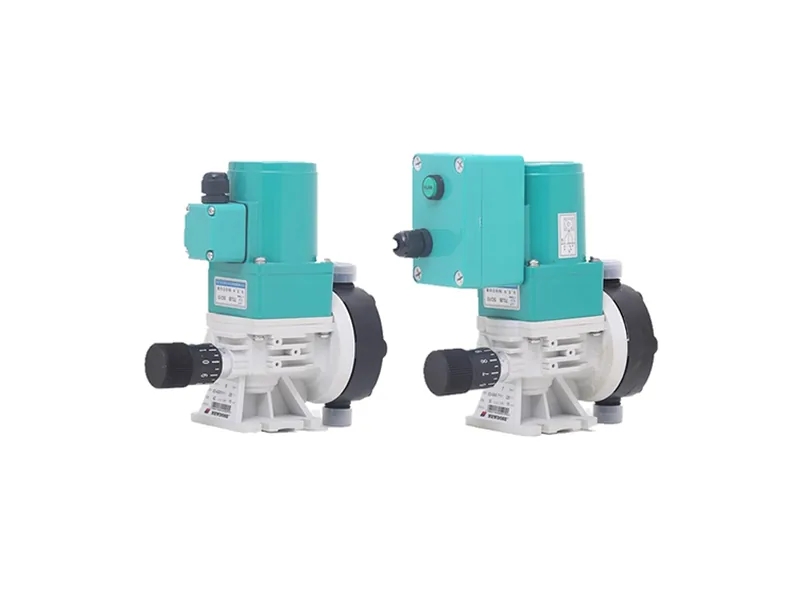
Figure 1: NEWDOSE Ecodose mechanical diaphragm pump. Image source: NEWDOSE official website
- Inlet ammonia is low and discharge is intermittent, and the plant already has a sodium hypochlorite system: an ammonia removal chemical is often enough, and a biological train may not be justified for ammonia alone.
- The load is high and continuous, as in many industrial or municipal plants: nitrification and denitrification remain the main process. An ammonia removal chemical is a polish, a shock-load tool, or a temporary aid when biology slows in winter.
- If the biology has already collapsed, a chemical dose can cover a few days. It should not become the long-term substitute. Chemical use, residual chlorine and by-products climb quickly.
Organic nitrogen and ammonia are not the same measurement. Oxidation mainly hits free ammonia and ammonium; organic nitrogen often passes through. If a large share of the nitrogen is organic, adding more ammonia removal chemical may leave the residual swinging. Check the lab fractions before you change the process.
Limits you will hit even when the residual looks good
Even a correctly applied ammonia removal chemical runs into hard limits. Oxidant is consumed by color, COD and other reduced matter, so the useful dose is higher than a textbook ammonia ratio, and residual chlorine may exceed the discharge cap and need quenching. Chloramines and disinfection by-products travel with the dose, which matters for reuse or chlorine-sensitive downstream steps. Opening the stroke further will not make those disappear.
The pH window is narrow. Breakpoint chlorination loses efficiency if the water is too acidic or too alkaline, and odor and corrosion can get worse. Alkali stripping has its own crystallization and gas-collection problems; materials and heat tracing for caustic are in caustic soda metering pump selection. Using an ammonia removal chemical all winter as a permanent fix usually just trades a biology problem for chemical cost and residual chlorine.
Dissolved salts and sludge also rise if you lean on oxidant for a long time, which is unfriendly to reuse and to membranes. Meeting the ammonia number for a week does not mean the chemical route can replace biology.
Residence time and mixing matter as much as the pump stroke. If the ammonia removal chemical and the wastewater do not meet for long enough, or if the dose is added into a dead zone, the residual will look erratic and operators often respond by opening the stroke. Fix the injection point and contact time first. When the inlet flow swings, a flow-paced signal is more stable than a fixed stroke, and the dose should still be trimmed against lab ammonia and residual chlorine, not against a single online blip.
Pumps and safety
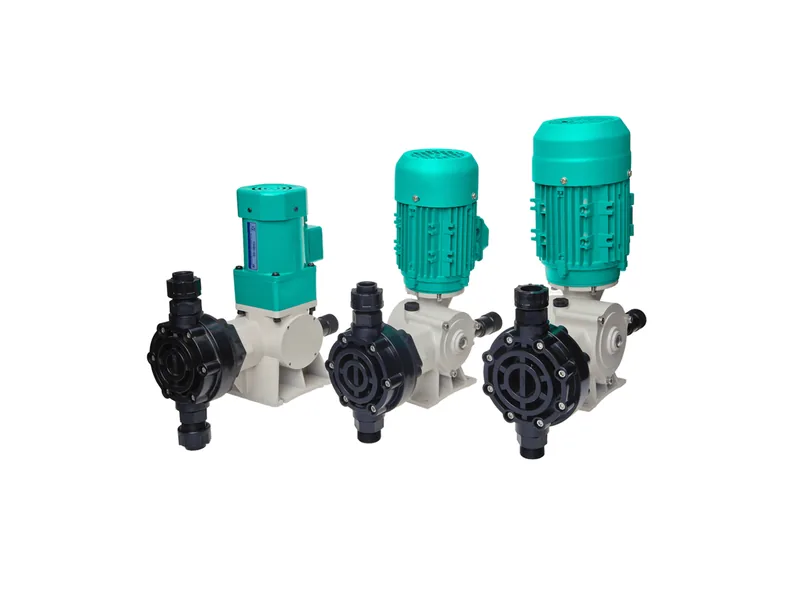
Sodium hypochlorite and caustic are the usual feeds. Both corrode, crystallize and can gas. Hypochlorite needs a compatible, degassing head and piping without dead legs; skid layout is covered in hypochlorite dosing skids. Caustic needs crystal control and winter tracing. NEWDOSE mechanical diaphragm pumps in series such as NDWS, NDWL or Ecodose are often used on these clear liquids; match the head material to the chemical. Do not share an unflushed line with acid or polymer.
Hypochlorite and strong alkali can burn, and they can release gas. Depressurize and flush before you open a pump, wear protection, and keep the dosing room ventilated. Send the chemical name, concentration, temperature, flow and pressure and contact us for selection to match the head and the control.
Conclusion
An ammonia removal chemical cannot simply replace biology. Continuous high ammonia still belongs in a biological nitrogen process; the chemical belongs on low load, intermittent discharge, emergencies and polishing. Watch residual chlorine, by-products, organic nitrogen and chemical use together, not the ammonia number alone. Have inlet ammonia and organic nitrogen, the discharge limit, the existing feed system and the flow ready, and contact us for selection.
FAQ
Can a larger ammonia removal chemical dose always drive ammonia lower?
No. Once you are outside the reaction window, or other demand has consumed the oxidant, more chemical mainly raises residual chlorine and by-products. Check pH, chlorine demand and the nitrogen fractions before you open the stroke.
Can we run an ammonia removal chemical all winter if the biology slows down?
It can cover a short spell. It is a poor main process for an entire winter, because chemical use, residual chlorine and by-products climb. Protect the biology, and use the chemical only in the hours when the residual is at risk.
If ammonia is only slightly above the limit, do we have to build a biological plant?
Not always. On a low concentration, a modest flow or intermittent discharge, the existing hypochlorite system may be enough. The long-term load, not a single excursion, decides whether biology is required.
Why is total nitrogen still high after an ammonia removal chemical is added?
Organic nitrogen may not have been oxidized, or intermediates after breakpoint chlorination may affect the test. Split ammonia, organic nitrogen and total nitrogen in the lab before you change the process.
Is a specialty ammonia removal chemical pumped differently from sodium hypochlorite?
Many specialty products are still oxidants, so head materials, degassing and flushing are similar to hypochlorite. Always check the supplier data for the actual chemical. Do not assume one head fits every drum.