
Analyzer Flow Cell Installation and Sensor Mounting Location Guide
Good analyzer flow cell installation starts before you touch the flow cell. The sensor has to see water that is fully mixed, has finished reacting, and actually represents the stream you want to control. Then it needs steady flow, no bubbles and room for maintenance. Get the sample point wrong and a perfect chlorine, pH, ORP or turbidity sensor will still feed your dosing pump bad numbers. In our experience most complaints about inaccurate online analyzers end up being installation problems. This guide is for design engineers, skid integrators and plant controls staff. Sample line routing is a separate subject, so here we stay with the measuring point and the sensor mounting.
Sample point selection before analyzer flow cell installation
Is the chemical mixed yet?
Mounting a sensor right after the injection point is the classic mistake. Freshly injected chemical travels in streaks. If the sensor catches a strong streak it reads high, a weak one and it reads low, and the controller chases both.
Place the measuring point far enough downstream that the chemical is evenly mixed. Static mixers, elbows and pumps shorten that distance, while long straight pipe stretches it. When in doubt, take grab samples at a few distances and compare. Where the results stop changing, mixing is done. No analyzer flow cell installation can fix a streaky sample.
Has the reaction finished?
Chlorine needs contact time before the residual settles. pH correction in well-buffered water also takes a while. A sensor too close to the dosing point measures water that is still reacting, and the loop misjudges what it has achieved.
Is it the water you are controlling?
For a storage tank, measure the outlet, not the inlet. For a pool, measure return water from the basin, not the freshly dosed supply. If the sample point and the control target do not match, even a textbook analyzer flow cell installation only makes the loop look closed.
Analyzer flow cell installation: giving the sensor stable conditions
A flow cell, also called a bypass fitting or sensor housing, takes a small side stream from the main line, passes it over the sensors, and sends it to drain or back to the process. The sensor is shielded from main line pressure and velocity swings, and you can service it without shutting down the process.
The points that matter in any analyzer flow cell installation:
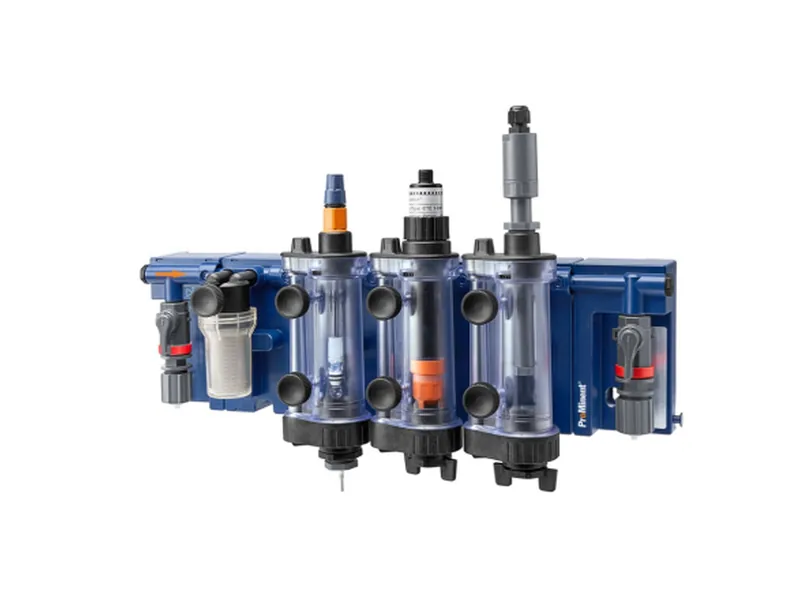
Figure 1: ProMinent BAMa modular sensor bypass armature. Image source: ProMinent official website
- Steady flow within the sensor's range. Amperometric chlorine sensors are flow sensitive. Fit a regulating valve and a flow monitor at the inlet, and alarm on low flow.
- No bubbles. Bubbles stuck on a membrane or in a turbidity light path make the reading jump. Flow bottom to top and put the outlet high so air leaves on its own.
- Easy flushing. Provide a drain at the bottom and a strainer upstream, and flush sandy water regularly.
- Space for service. Leave room above the cell to pull a full-length electrode, and space beside it for buffers and tools.
- Free drainage. The drain must sit below the cell outlet and never be submerged, or the cell will pressurize or back up.
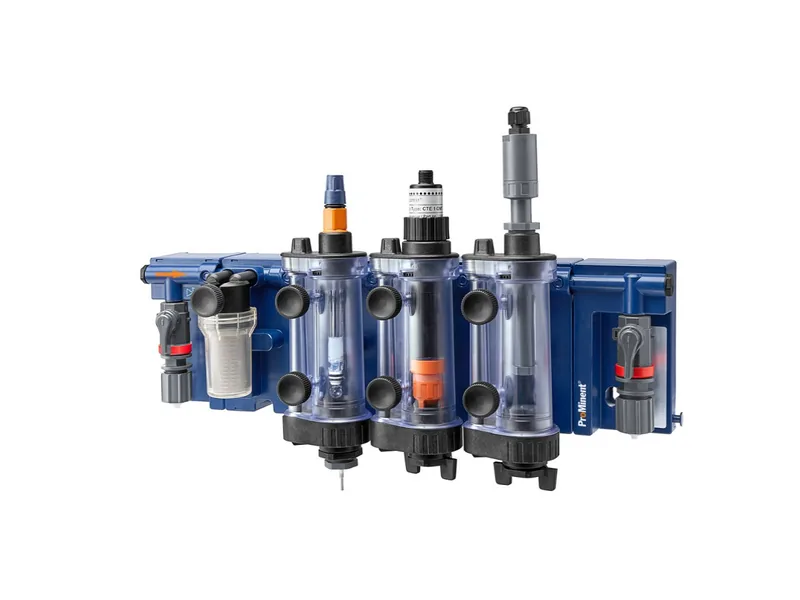
The ProMinent BAMa modular sensor bypass armature is a useful reference for what a well-designed flow cell offers. It is installed in a bypass of the main process line, lets you combine several functional modules in one fitting, such as flow monitoring, a filter, venting and potential equalization, uses bayonet fittings for quick sensor changes, and makes the parts that need cleaning accessible without tools.
Grounding and potential equalization
pH and ORP signals are tiny. Stray potentials carried by the sample water make them drift. Every analyzer flow cell installation for pH or ORP should include a potential equalization pin, and you should run signal cables apart from power cables. This step is easy to forget and slow to diagnose later.
Inline vs bypass sensor: which mounting suits your plant?
Inline mounting puts the sensor straight into the pipe or basin through a holder. Compared with an analyzer flow cell installation, there is no sample delay and no sample water wasted. The downside is maintenance, which may need a shutdown or a retractable holder with an isolation valve, and you have less control over velocity and bubbles.
A practical rule set:
- Large pipes with steady flow and clean water, or open tanks and channels, suit inline sensors.
- Flow-sensitive measurements such as free chlorine or chlorine dioxide, and multi-parameter panels, are steadier in a flow cell.
- Wastewater with solids needs automatic brushes or air cleaning inline, or a flow cell with wide passages that can be flushed.
Either way, do not mount sensors at the top of a pipe, where air collects, or at the lowest point, where sludge settles. The side of the pipe, slightly below center, is usually safest.
Linking a well-installed analyzer to the metering pump
The analyzer signal goes to a controller or PLC that adjusts the metering pump. The farther an analyzer flow cell installation sits from the injection point, the longer the delay and the gentler the tuning must be. Our article on pH dosing control and probe placement covers overshoot caused by lag. For chlorine sample points and analyzer choice, see online residual chlorine monitoring. Jumping turbidity readings are often a mounting and bubble issue, explained in turbidity meter reading fluctuation.
After analyzer flow cell installation, confirm the online value against lab grab samples before you switch to automatic.
Conclusion
Successful analyzer flow cell installation follows a simple order: choose the sample point, then the mounting style. The point must be mixed, reacted and representative. The flow cell needs steady flow, no air, a drain, service access and proper grounding. Inline mounting fits large pipes and basins, while flow cells suit flow-sensitive and multi-parameter duties. Browse our water quality analyzer range or the ProMinent product lineup, and send us your P&ID with the parameters you need to contact our engineers about sample points and mounting.
FAQ
How far downstream of the dosing point should the sensor be?
There is no fixed distance. The chemical must be mixed and largely reacted. Confirm with grab samples at different points.
In an analyzer flow cell installation, should sample water return to the process?
It depends. Drinking water and product water usually go to drain. Process water can return where permitted, at a point with lower pressure than the tap.
Is a flow cell more accurate than an inline sensor?
Not by default. Under stable conditions both are accurate. Where flow swings or bubbles are common, a flow cell controls those conditions better.
Can a pH sensor be mounted horizontally during analyzer flow cell installation?
Most gel or liquid-filled pH electrodes need to point downward at an angle. Follow the sensor manual.
Do several sensors in one flow cell interfere with each other?
Usually not, provided the flow is stable and potential equalization is in place.